LLMs are still moving fast.

LLMs are still moving fast. I’d seen some speculation that a plateau is approaching, but so far it has not arrived. I’ve been out of the loop less than three weeks, and while I was gone: Google’s Gemini had a PR disaster, Anthropic launched its Claude 3 model family, and Groq launched its public web app (not to be confused with Grok).

The Groq launch made enough waves that despite being unplugged, I heard about it during our honeymoon and tried it out. The speed is impressive. Using Groq was a good reminder that on any dimension, one product’s “good enough” can be another’s differentiator. Six months ago, a one-, five-, or even ten-second wait for an answer from ChatGPT was absolutely worth it. The technology was so new and the conversations so valuable that the wait was both understandable, and obviously worth it. If you’d told me then that some new model (or in this case, some new architecture+hardware) was faster, I would not have been so excited. What I still want most is the better (more intelligent) model, not the faster one. I would have said speed is nice, but it’s clearly a secondary concern. That’s still how I feel, but my experience with Groq has made this a much closer call than I would have expected or predicted.

Groq’s primary product appears to be the chip and the architecture, not the chatbot, so I don’t expect to see my usage migrate from ChatGPT to Groq. Maybe OpenAI will acquire them. But it did get me reflecting on what would get me to change products, or adopt additional products for specific tasks. Over the past few months, 95% of my LLM usage has been via ChatGPT. I will try a new product when it launches—I tried out Gemini Pro 1.5 for a few days before we left on our trip, before its issues surfaced. I will also try different products when I want different opinions—for a recent research project I was asking the same questions simultaneously to ChatGPT, Gemini, and Claude. But so far, nothing has come close to displacing ChatGPT as my go-to LLM. The first-mover advantage is real, and OpenAI’s pace of innovation has been fast enough to retain their early lead, at least for me. But Groq reminded me that the race is far from won.

Honeymoon Day 18: Torres del Paine to Santiago

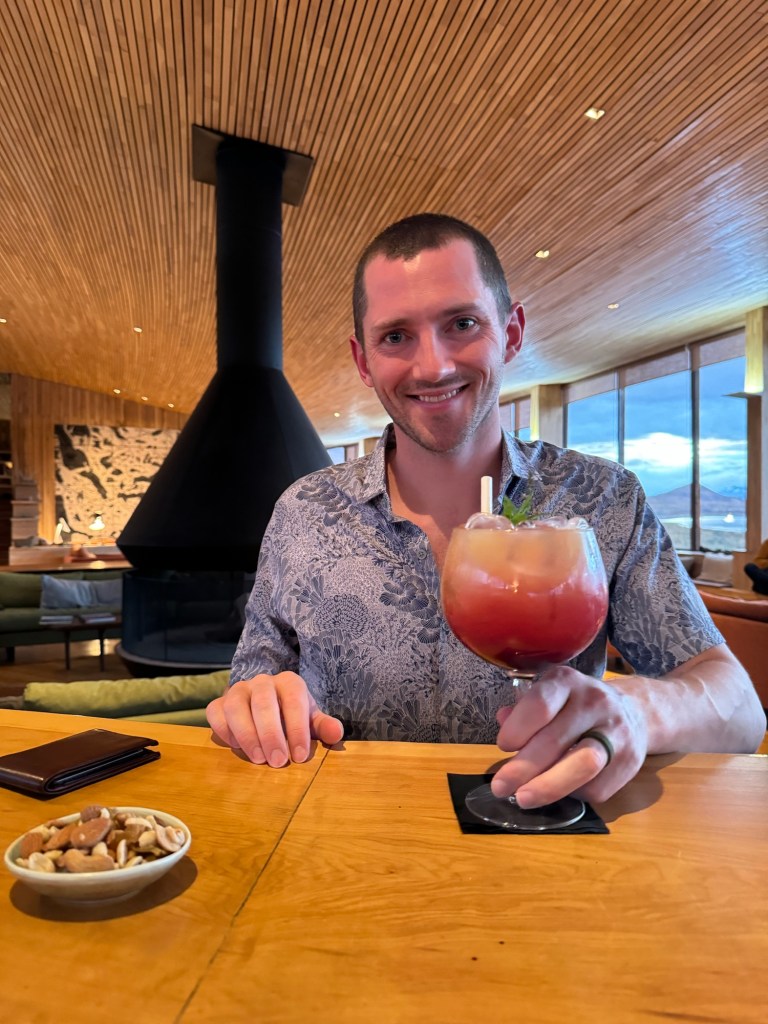
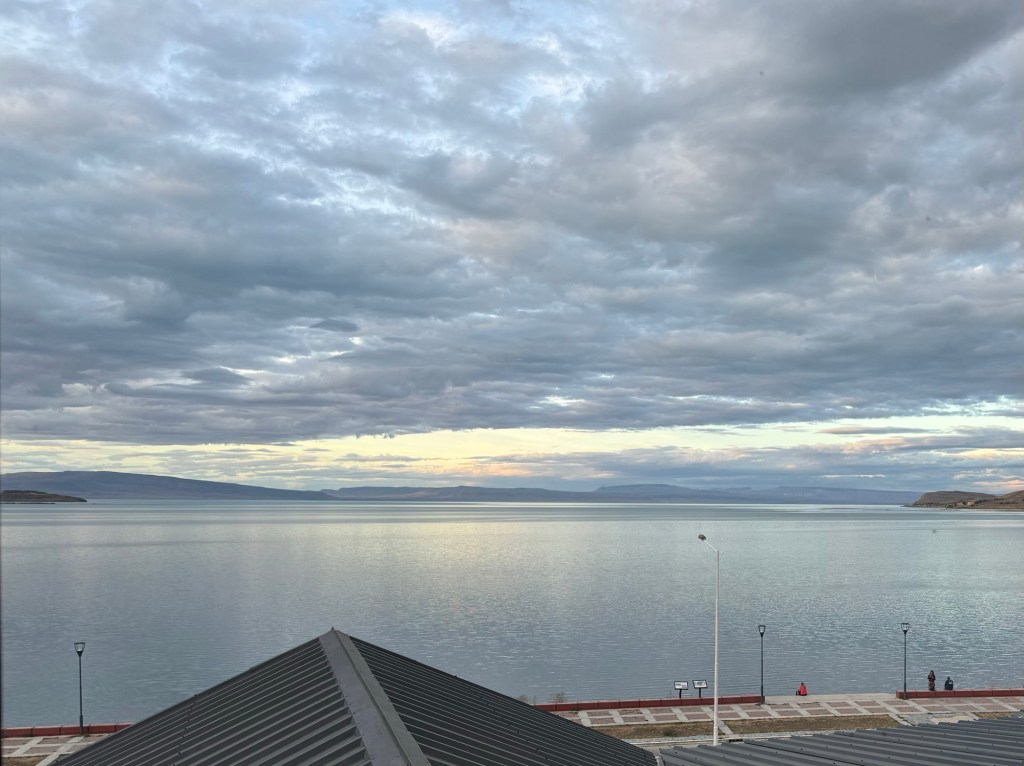
The view from the restaurant at Tierra Patagonia hotel.
The stars over our final night in Patagonia.
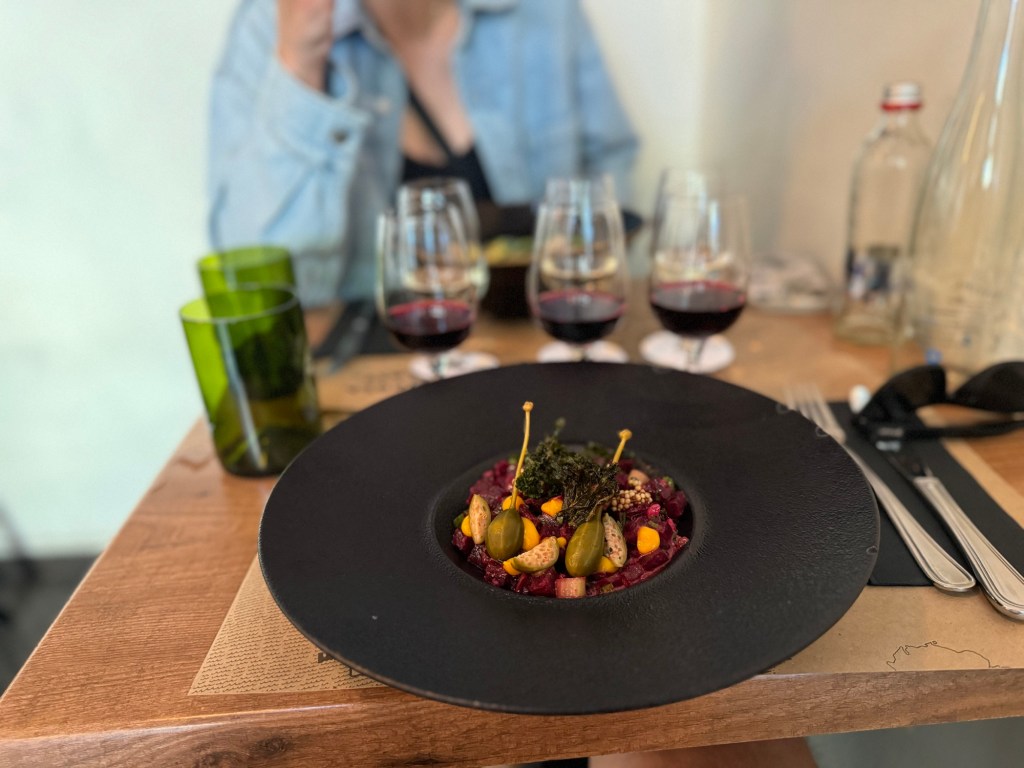
Chilean wine tasting and beet tartare at Bocanáriz in Santiago.

We are at the airport in Santiago, waiting to board our flight home. It’s sad, but it’s time. Today we had an early wake up, flew from Puerto Natales to Santiago, and had just a few hours to explore the city before returning to the airport.

In the next few days I’ll hopefully post some reflections and more pictures from the trip. For now, I’m too tired. See you stateside.

Honeymoon Day 17: Tierra Patagonia Recovery and Relaxation Day

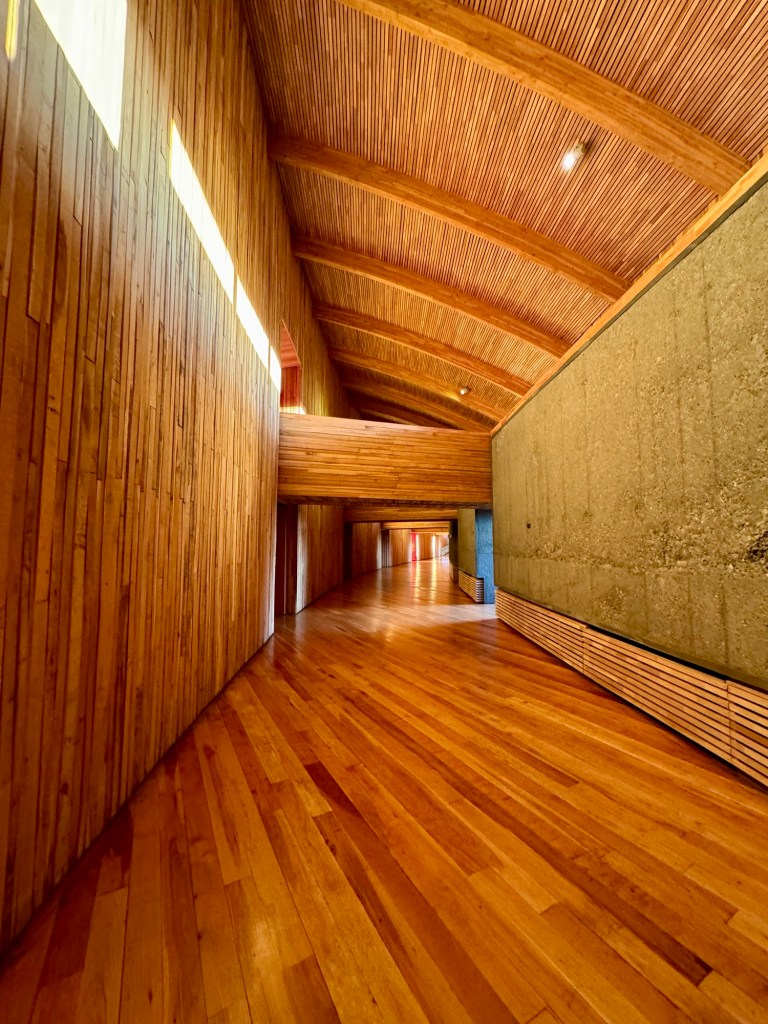
The hotel is made mostly of Lenga (southern beech), one of only three species of tree growing in the park.
Back in the saddle. Again I had the horse with the attitude. We rode in a line, and he HATED being in the rear. When behind any horse other than our gaucho’s in the lead, he would push right up to the next horse’s rear, and nudge it onward with his nose! His name, Aguardiente, is apropos.
The “Jack Sparrow,” today’s cocktail-of-the-day by bar director Shlomith. Rum, homemade banana liqueur, pineapple juice, coconut bitters. (aka Just when I thought our trip couldn’t get better, they gave me a tiki drink.)

After yesterday’s big hike (similar distance, but 1,000 vertical feet more than our big one in El Chalten), we needed a less strenuous day. We went horseback riding in the morning, and spent the rest of the day relaxing in the hotel and spa. In the lobby we found a coffee table book of Chile’s fanciest hotels, where we learned a little more about this place:

Its architects, Cazú Zegers, Rodrigo Ferrer, and Roberto Benavente, sought to create a structure with a sense of place, a geo-poetic work in which the key element was beech wood worked to resemble the texture of the old-time sheep barns on the ranches where they once dried the wool and leather.”

Destinos de Lujo by Ana María Lopez & Marí Paúl

Tomorrow, we have to start the journey home! Unless we are hired by Kine, the hotel’s cheery Excursion Director. (We have inquired.)

It will be hard to leave this place. It is so special here—both the park and the hotel. But we’ll have a full day in Santiago before our overnight flight, so there will be some time to transition and enjoy a bit more adventure before getting back to Chicago.

Honeymoon Day 16: Base of the Towers /// French Press above the French Valley

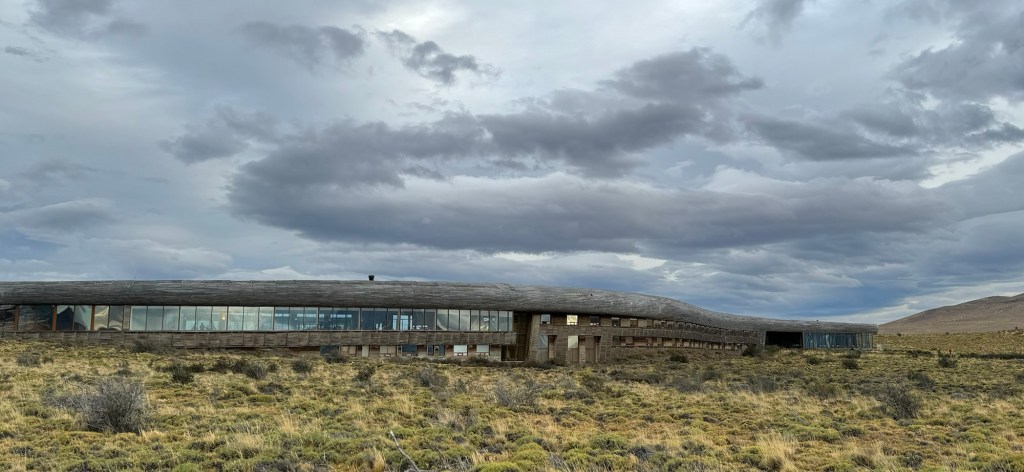
Tierra Patagonia Hotel in Chile, our last stop. It’s like nothing we’ve ever experienced.
Base of the Towers in Torres del Paine National Park.
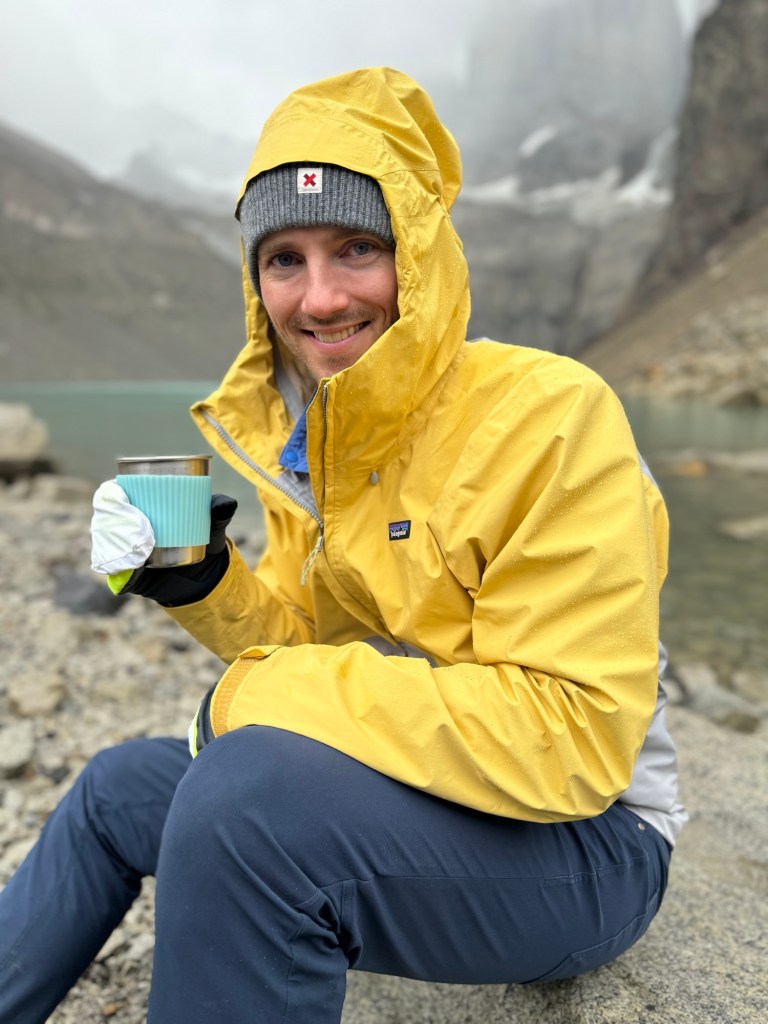
Our guide surprised us with hot French press after lunch; fuel for the descent as the weather turned.
Cold, wet, happy. Before the rain, I had on my NU bucket hat, and Kelly said I looked like this guy.

Today was the big trek in Torres del Paine. After a ~3.5-hour climb, the clouds opened just enough to see the towers (las torres) for a few minutes while at the lookout. As we finished lunch, the clouds returned and the rain, cold, and wind picked up, making the descent a bit treacherous. But we made it safely, and the day was amazing. Yet another wonderful guide, Diego, made our trip extra special with lots of info about the terrain, flora, and fauna—he’s an avid birder. And also with surprises: delicious fresh coffee at the top, and champagne at the bottom. We learned that paine is native Tehuelche for “sky blue,” so the park’s name is a mix of Spanish and native language meaning something like “Towers of the Blue Sky.” We also learned that another feature, the French Valley, is named for the former landowner, a Frenchman. Apparently this was private land (!) before being donated to the park.

Our hotel, Tierra Patagonia, is mind-bogglingly beautiful, and in perfect harmony with the landscape. This hotel was the inspiration for our whole trip, and it has exceeded our hopes. I’ll post more photos tomorrow, and hopefully learn and share more about its history and architecture. For now, we are recovering with some tub time, sauna, pool, and then off to dinner.

Honeymoon Day 15: El Calafate to Torres del Paine /// Two Pumas, Two Avalanches, 100 Flamingos, and a Baby Armadillo

Arriving at our hotel outside Torres del Paine national park, the Excursion Team uses these two “visual aides” to explain the trek options.
Parque Nacional Torres del Paine. The “Horns” on the right side are granite topped with sedimentary rock; at the far end of the French Valley (center) is the “Shark Fin.”
The “Patagonian Winds,” a house specialty.

Arriving in Chile, we had an extremely lucky day. We went out for a short hike, and immediately saw a baby armadillo, followed by two pumas (aka mountain lions), and a flock of flamingos. Armadillos are rarer to see than pumas here, but seeing two pumas together is even rarer. On the hike, we saw a huge avalanche, that looked and sounded like a huge waterfall.

Tomorrow we’re doing one of the big hikes in the park, and we can’t wait. The granite peaks here are stunning, we can see them from our hotel. It’s a rainy day tomorrow, so we may not have a great view on the hike. We’ll see!

Honeymoon Day 14: Guanacos and more Guanacos

Estancia 25 de Mayo, a ranch whose property runs from the edge of El Calafate almost to the Chilean border. There you will see hundreds, if not thousands, of wild guanacos.
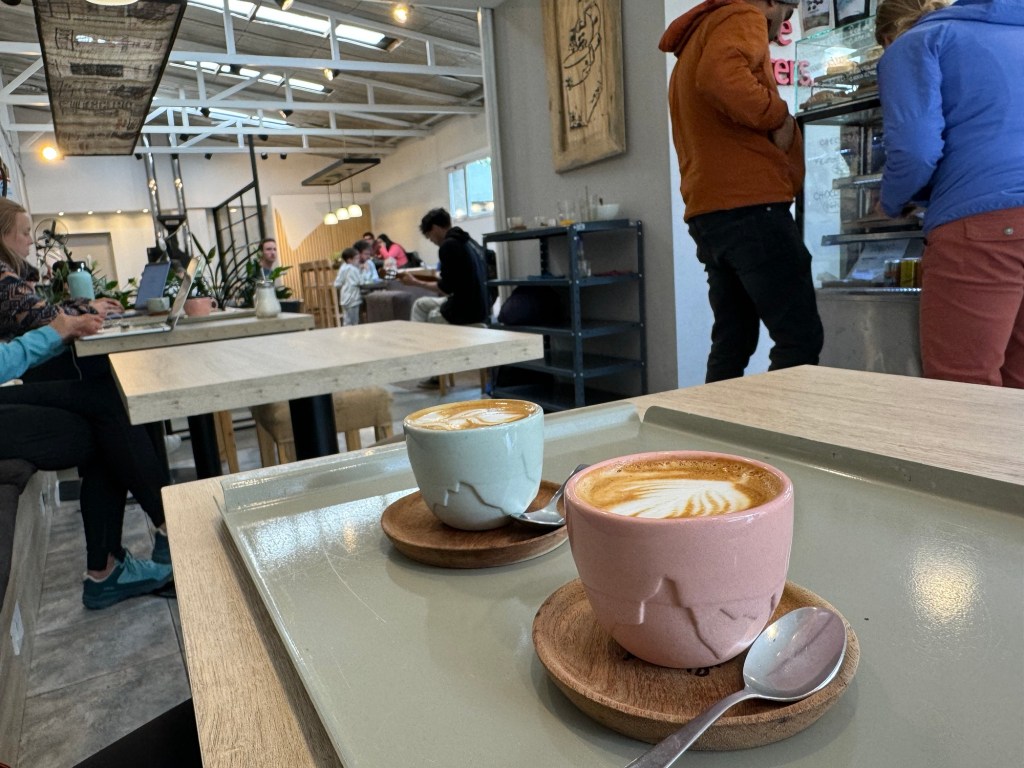
El Calafate Coffee Roasters. The chic Andes-themed espresso cups are from SaV Ceramics. You can see the roaster in the back.
Tub time at the hotel.

Our day began with a drive around Estancia 25 de Mayo, a huge ranch named for Argentinian Independence Day. It’s also home to a 2,000 year-old native tribal gravesite, and the oldest settler house in the area. Our guide Christian is a former pro skater who was roommates in California with Chad Muska (the one with the backpack, remember?). Now he’s a nature guide and absolutely loves his job. Every plant and animal he showed us, it was like he was seeing it for the first time. We had a blast with him. He drove an old forest green Land Rover, a totally mechanical car with no electronics at all. Going uphill the engine chirped and squealed. “That’s the stereo today,” said Christian. There are guanacos everywhere, even though the properties are all fenced off, they just jump over the fences and roam and graze freely. “The guanacos are the real landowners,” said Christian. The tour finished at La Seccion, “the section house,” which is like a guest house / owner’s weekend house at the estancia.

Christian dropped us off Calafate Coffee Roasters, where we enjoyed excellent coffee and atmosphere. We wanted to buy some of the cool mugs but were worried they wouldn’t survive the trip. Tipping in US dollars never gets old here—even one or two dollars gets a big reaction from people. They thank you sincerely. They may show their coworkers, who also thank you. Or sometimes they pocket it right away without showing anyone. Either way, there’s a constant sense of an economy hungry for dollars, and of people hungry for financial stability. Putting dollars into the economy at the very micro level feels meaningful. When we tipped our guide Christian, he looked at us intently and said, “I will save this.”

We finished the day at the hot tub and then dinner, both at the hotel. Tomorrow we cross into Chile and head for Torres Del Paine, our final, and maybe most epic, stop on the trip.

Honeymoon Day 13: Perito Moreno Glacier

By necessity, we were up in plenty of time to see this beauty of a sunrise. Because of the Andes to the West, water from this lake runs all the way to the Atlantic Ocean, via Rio Santa Cruz.
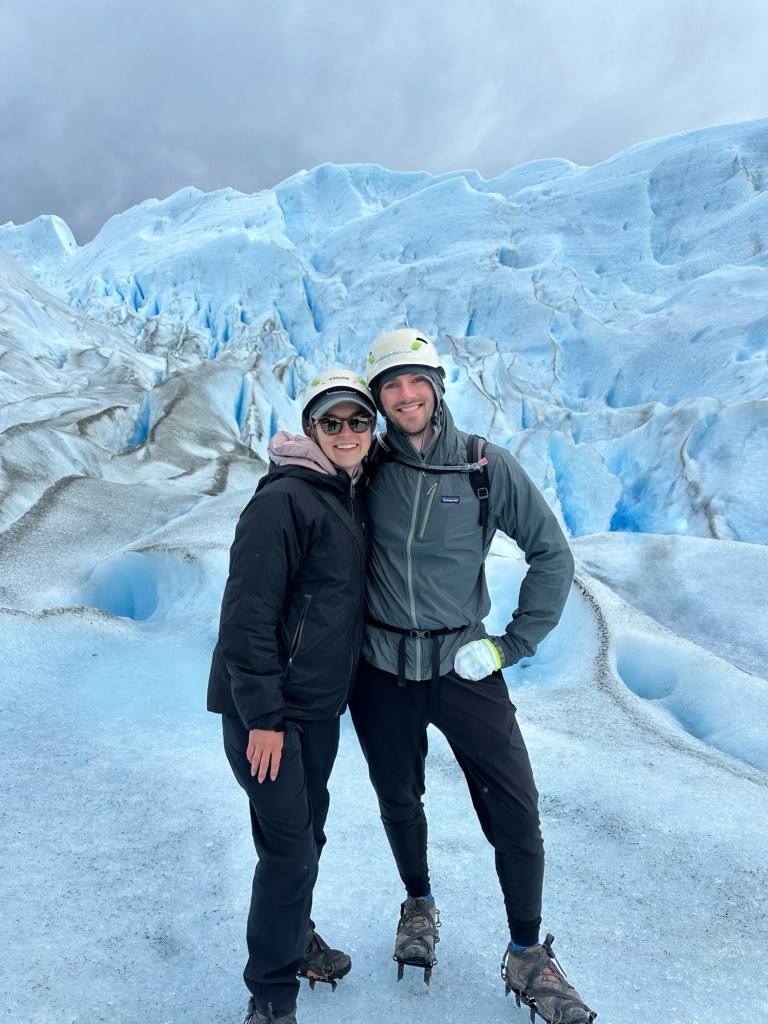
Crampons for ice trekking.
At the end of the glacier trek, the guides cut off a piece of ice and served everyone a celebratory whiskey, over ~400 year-old rocks.

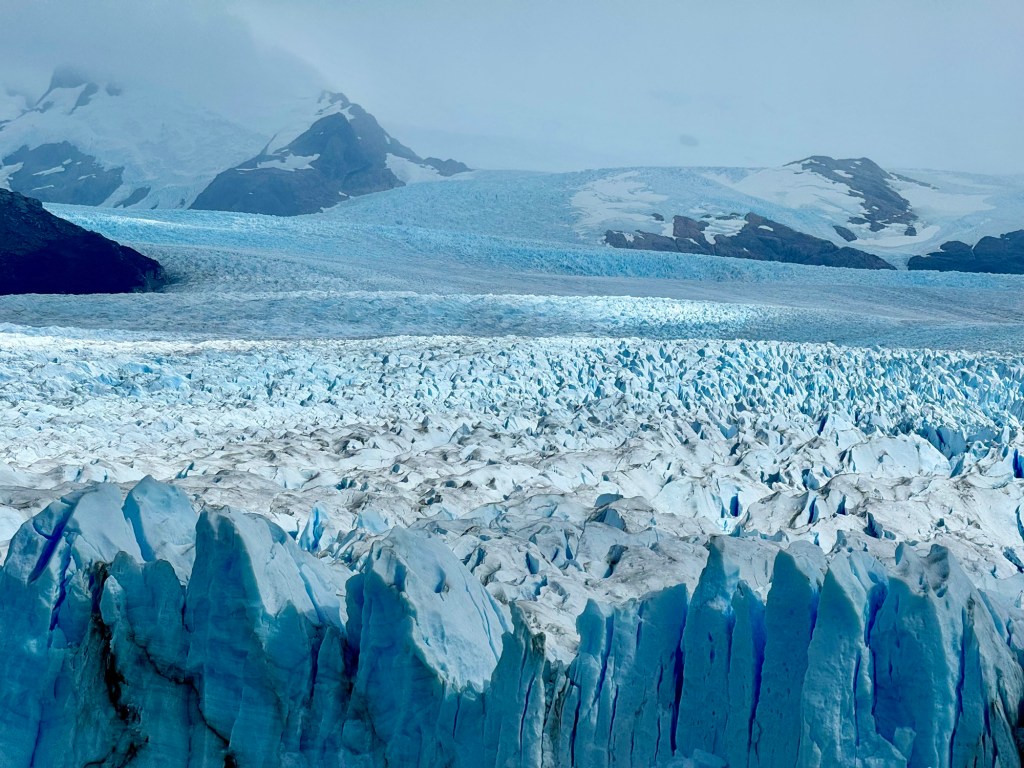
Hiking on the glacier. I think it will take a long time, maybe years, before the significance of this experience fully sinks in for me. The Perito Moreno Glacier, about 1.5 hours west of El Calafate, is named for the famed explorer. Moreno discovered and named just about every place we’ve visited on this trip. You drive to the national park, continue to the end of the road, and board a boat to cross to the glacier. After a short hike you get your crampons and helmet, and walk around on a tiny area of the massive 100 square mile glacier. After the hike, and having enjoyed a whiskey on-the-glacial-rocks, you ferry back and view the glacier’s eastern and northern faces from a network of catwalks on the adjacent hills. It’s summer here, and it’s hot. As always during summer, on display is the hypnotic, quaking sight and sound of apartment-building-sized ice chunks cracking, tilting, and crashing into the water 200 feet below. The sound is like something from an another dimension, mechanistically translated to ours.

Tomorrow, we’re looking forward to a more relaxed day, visiting a nearby ranch. But for now, I’m going to cheat and add some more pictures—the usual three won’t cut it today. “¡Chao!”


I stepped on my own toe with these bad boys.
Five miles of ice, flowing downhill at 5 feet per day.
This electric blue is an optical effect; only blue light reflects from the super-compressed ice, which has few air bubbles. Long wavelengths are absorbed. But if you break a small piece off and hold it up, it’s perfectly clear.
Maybe spatial photos on Apple Vision Pro will do it justice? iPhone certainly does not.

Honeymoon Day 11: Mate and Recovery Hike

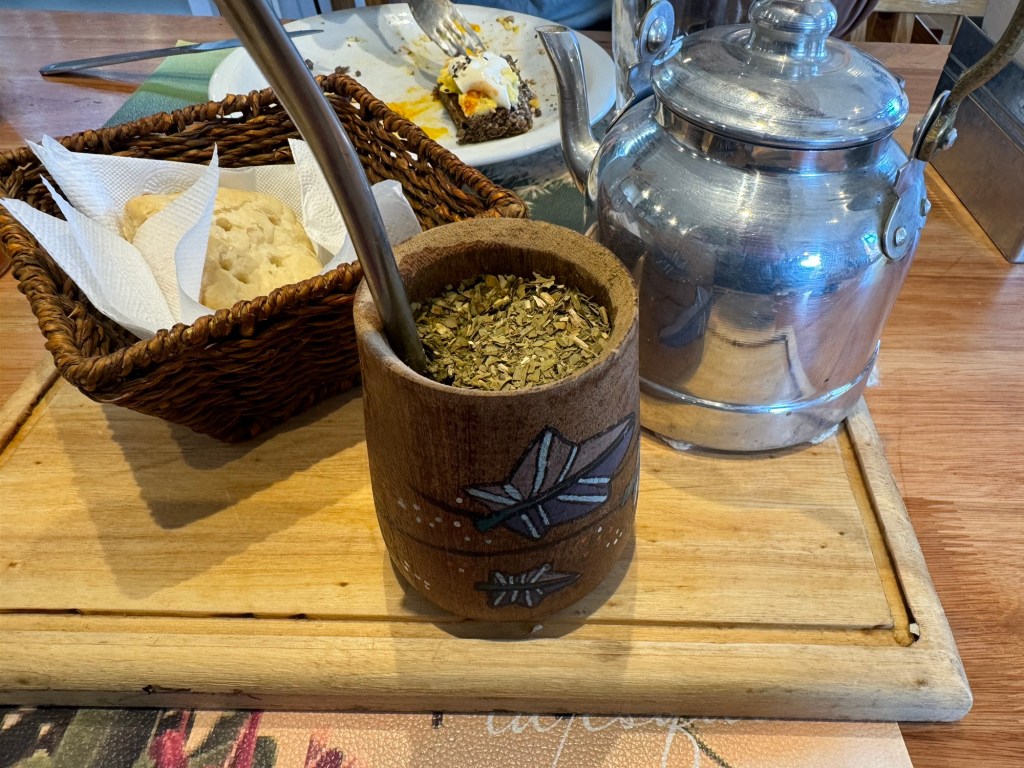
My first real mate experience. It is bitter and very strong. My head was swimming!
El Chalten, Tehuelche for “smoking mountain,” or “holy place.” Our home for the past few days. The town shares its name with the mountain, which is also called Fitz Roy to distinguish it from the other “Chaltens” in the area.
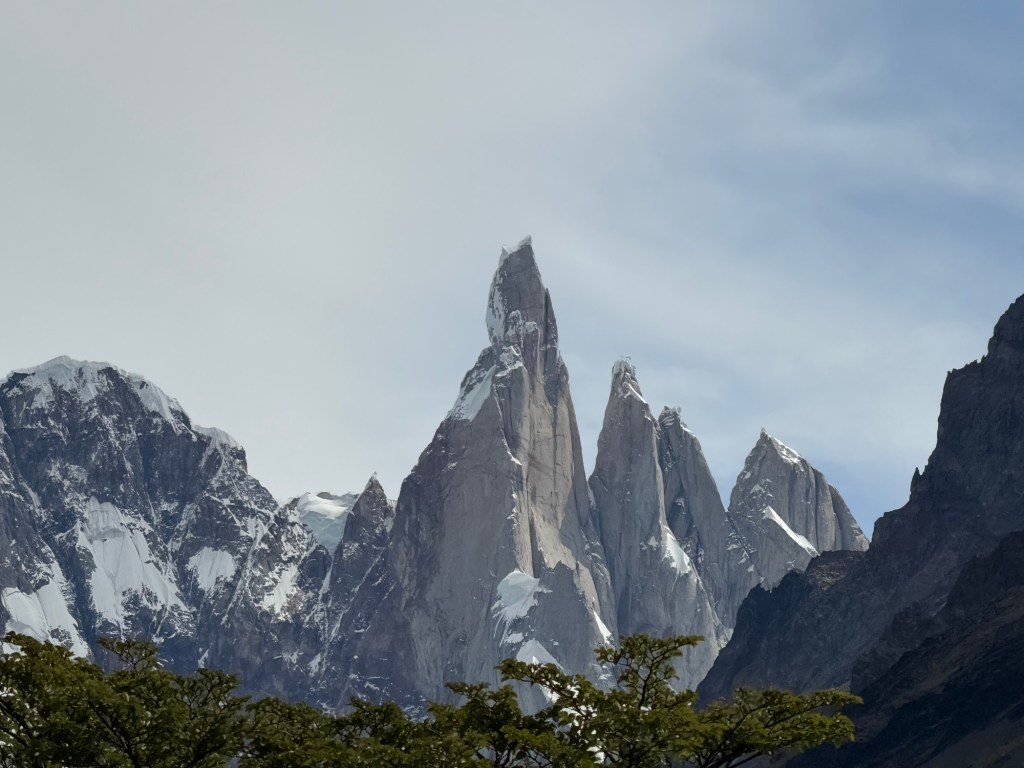
Cerro Torres peak. From our “recovery” hike today.

One of the first things about you notice in Argentina is the mate culture (🗣️👂“mah-tay”). Everyone has his or her own little mate cup, sometimes a glass or metal mug, but often a traditional gourd wrapped in leather. You fill the cup with the tea leaves in the morning, and bring a giant thermos of hot water with you throughout the day, pouring a little water and taking a few sips when you need a boost. Native people drank it through their teeth and spit the leaves, but now people use a metal straw with a wire or mesh filter at the bottom. Even on our domestic flights, we see plenty of mate, sometimes with the gourd, thermos, and snacks all in a little square leather carrier with a handle. I had my first mate at La Esquina here in El Chalten, and it was an experience. I’d been warned to be careful, as it is “quite stimulating,” but still I wasn’t ready for the amount of caffeine—I was wired and my head was swimming! The taste is super bitter, definitely something I’d need to get used to. They encourage newbies to add honey, but of course I had to be hardcore.

Later we went for a short hike for a different view of Cerro Torres, then had dinner with our friends Claire and Cenk, and more of what our new friend Leo called “the best ice cream in the galaxy.” He may be right, it is that good!

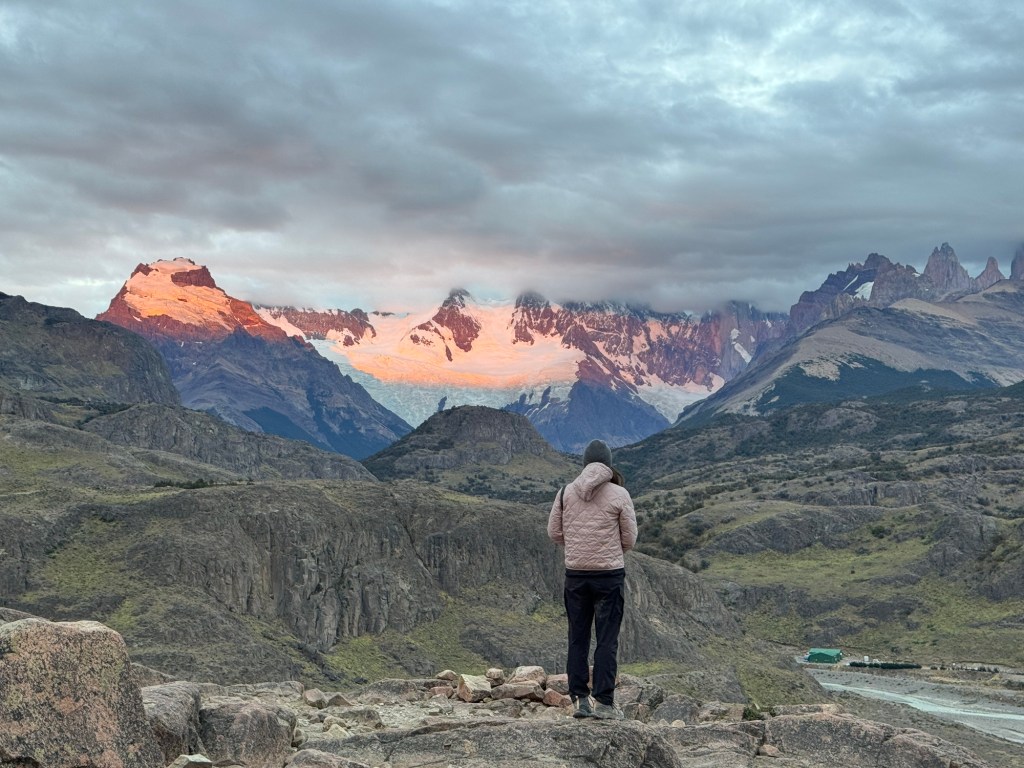
Tomorrow we’re looking forward to a pre-dawn hike to see the sunrise hit the Fitz Roy range, then driving back to El Calafate for our next stop.