For introverts like me.

As a follow-up to yesterday’s post, I want to share another tip from the Tim Ferriss Show. This tactic will be helpful to introverts like me. And it will help you be a better, more authentic person!

All introverts know the feeling of wanting to exit a conversation at a party. It’s not that you don’t like someone, or that you’re uninterested. You just need a break. Yesterday, podcast guest Kevin Rose shared the best, and kindest, tactic I’ve ever heard for bowing out. Rather than awkwardly dancing around it, hit your desire head on. Here’s what you say:

There are a few other people here I need to catch up with, but before I do, I really want to hear more about [that last interesting thing you said.]”

This accomplishes three things:

  1. Signal. Gracefully let the person know you’d like to exit the conversation.
  2. Complement. Boost the person by showing you’re listening, and that the things they care about interest you.
  3. Bonus time. Unlike all other tactics for exiting a conversation, you’re not trying to end the conversation now, and you’re not making an excuse. You’re telling the truth. And you’re displaying genuine interest. The end of the exchange is re-framed. Now, you both view the next few minutes as worthy investment of even more time together, because you’re both enjoying the conversation.

Of course this all works better when you really do care and really are interested. This is something I’ve had to work on, and maybe that will be another post. For now, the best trick for really caring about what any person is talking about is, ask better, deeper, more direct, more interesting, and weirder questions.
The podcast where I heard this tactic. And here is the book where he heard it.

How to avoid regret*.

(*At least, how to avoid regretting your own prior commitments.)

Two tactics:

  • “Hell Yes, or No.”
  • “Pretend it’s tonight.”

I believe Derek Sivers coined these two related ideas. But I heard them secondhand on the Tim Ferriss Show and from Seth Godin, respectively. They are both rules that you can impose on yourself, to avoid committing to things that you’ll later regret signing up for.

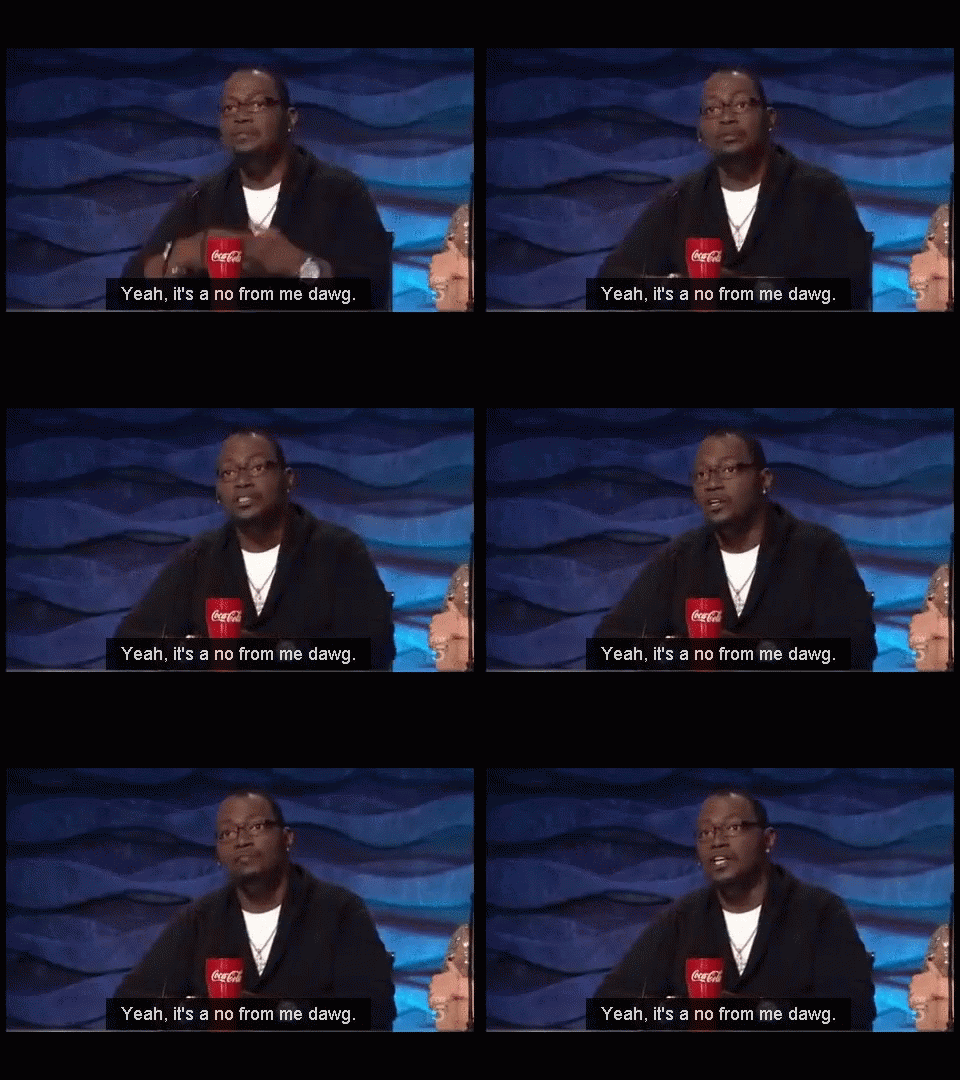
“Hell Yes, or No” means, if you’re about to say yes to something, it should be obvious yes, a slam dunk, a no-doubter. If you’re wavering, trying to talk yourself into it, feeling pressured, saying yes out of guilt … any or all of these, feeling even a hint of doubt … then it’s a no.

Preach, Randy.

The second tactic, “Would I do this thing tonight?” reduces the number of future things you commit to, by raising the salience of your own daily energy level, which most people tend to overestimate for their future selves. When you’re invited to do something next week / next month / next year, it’s easy to say yes. Future You tends to never be tired, overwhelmed, in the mood for a night at home. Current You thinks only about the virtues of the proposed commitment. Current You sees the proposal as an opportunity, and forgets or ignores the cost.

But Future You will have stuff going on. Future You will not be as poised, calm, and energized as you imagine him to be. So impose the rule and ask yourself, would I change my plans, drop everything, make the drive … whatever, in order to do this thing tonight. It’s a special case of “Hell Yes, or No,” that works better specifically for time commitments, social plans, events, etc. Because even though you’re obviously busy this week, it’s hard to remember that you’re likely to be equally busy, that week. This trick will reminds you. It forces you to make salient what it actually feels like to plan your day around an event, to move things around amidst real-world logistics, not the Platonic Ideal of a Calendar week. If the thing were happening tonight, and you’d happily drop whatever else was going on and move commitments to attend, say yes. If going tonight sounds like a slog, chances are it will feel that way in a few weeks, when it’s time to get up and go. So just politely decline.