Every moment an eternity.

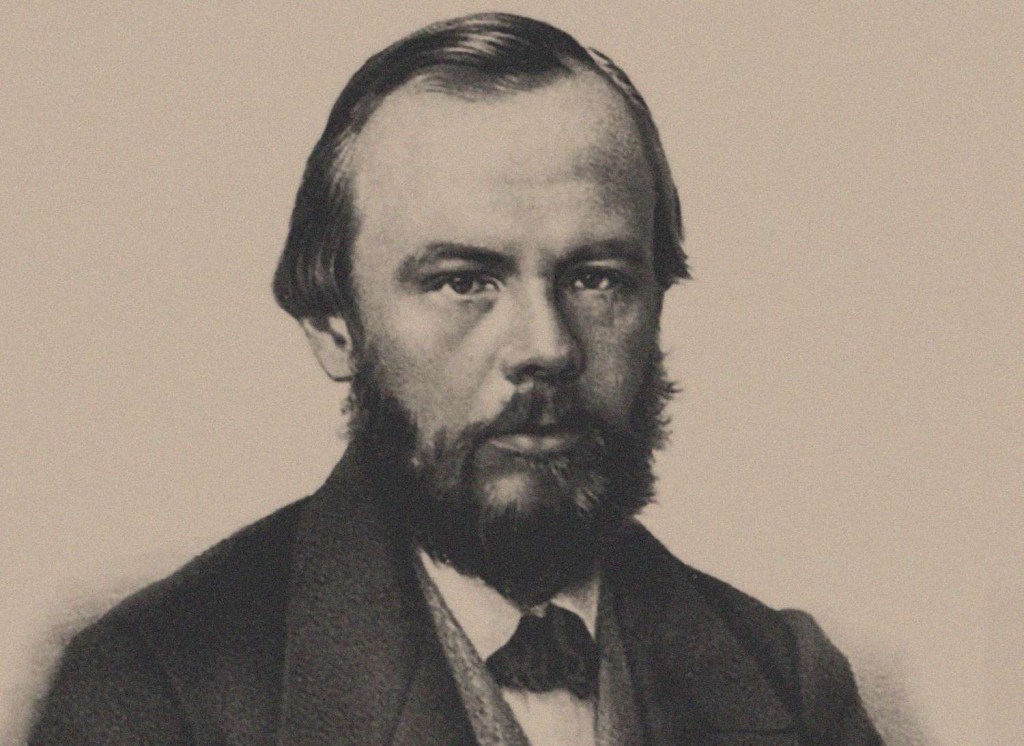
Hours after he stood in front of a real firing squad in what turned out to be a mock execution, Fyodor Dostoyevsky, wrote to his brother Mikhail:

When I look back at the past and think of all the time I squandered in error and idleness, lacking the knowledge I needed to live; when I think of how I sinned against my heart and my soul, then my heart bleeds. Life is a gift, life is happiness … Every moment could have been an eternity of happiness! If youth only knew. Now my life will change, now I will be reborn.

The execution was staged to make Tsar Nicholas look merciful when the actual sentence was handed down for Dostoyevsky’s political subversion: four years of hard labor in a Siberian prison camp. In the letter, he is describing the feeling that grabbed him in what he genuinely believed were his last moments on earth. As he saw the sunlight glinting off of a church steeple, the people moving through the square, and other everyday sights, he tried to fully experience each moment, stretching each into a brief infinity.

I’d heard the story of the mock execution, but only learned about the letter a few weeks ago, and the novelist’s turn of phrase has been rattling in my head ever since. It has become an effective mindfulness device. “Every moment an eternity,” I think to myself lately, any time I manage to catch a moment of mindfulness amidst the normal rush of daily life.

Meditation trains our minds to be present, not just in the few minutes of actual practice each morning, but throughout the rest day. Breaking the spell of distraction, over and over again, is the only goal. And this thought has helped me succeed at that goal more often over the past few weeks.
London photo recap.

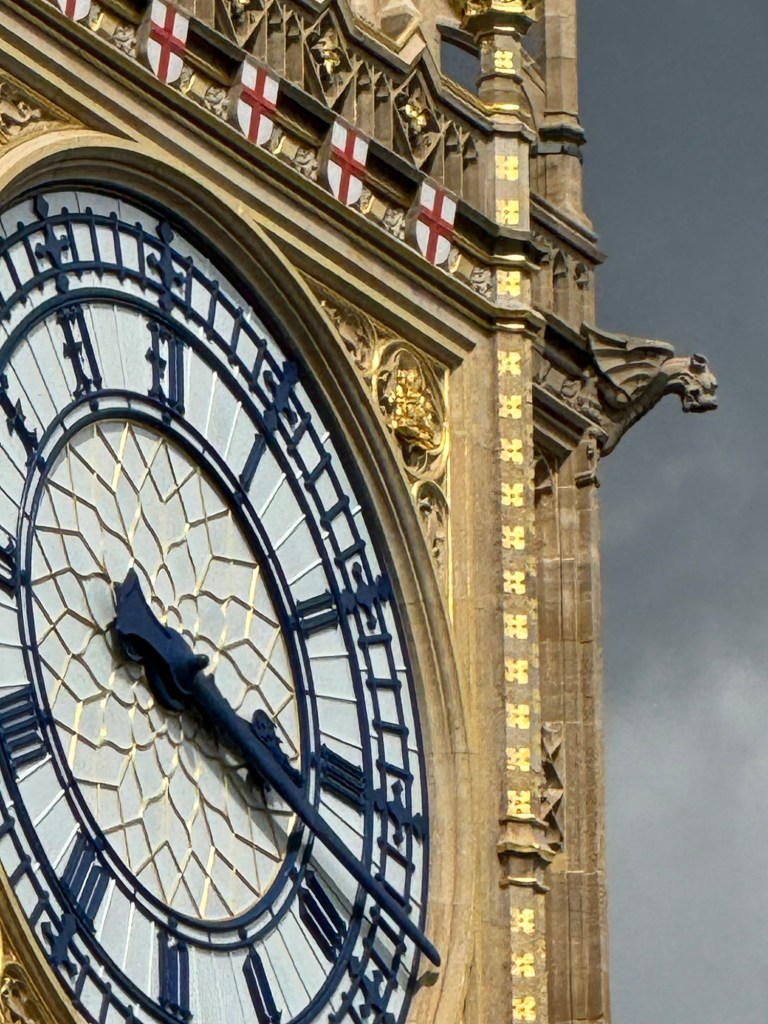
Big Ben after its Covid facelift.
I’ve been fascinated since childhood by gargoyles, and these may be the coolest I’ve seen in person.
Shoutout iPhone 25x zoom!
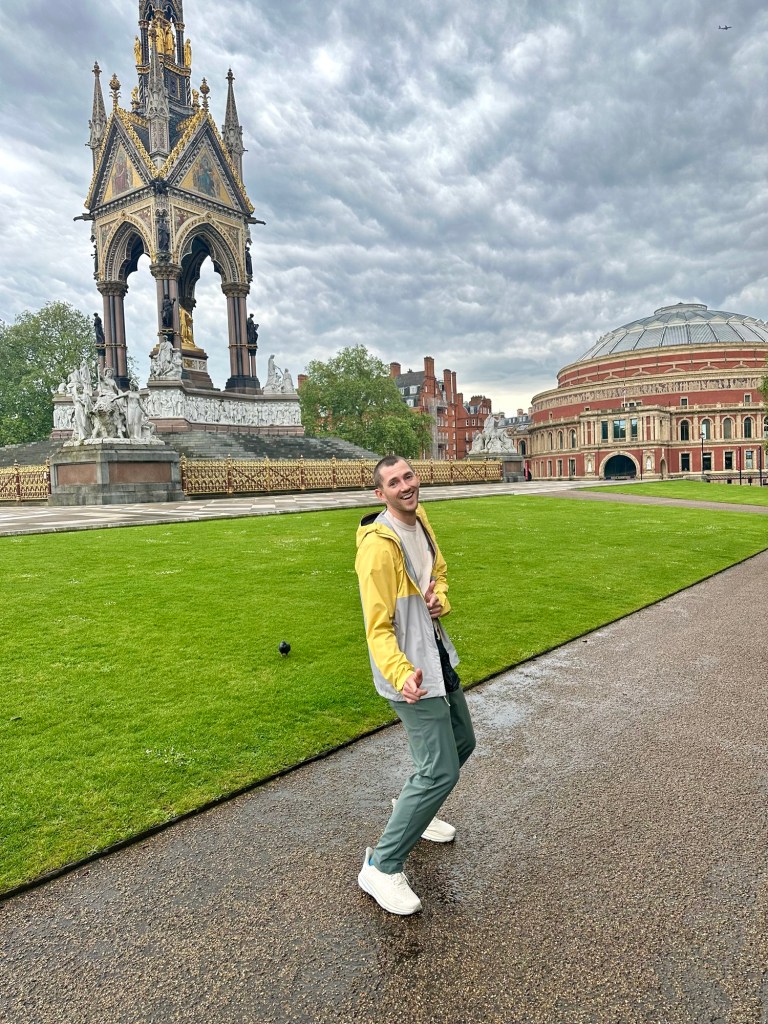
Goofing around in front of the Prince Albert Statue and Royal Albert Hall in Kensington Gardens. Queen Victoria commissioned the monument in memory of her beloved husband.
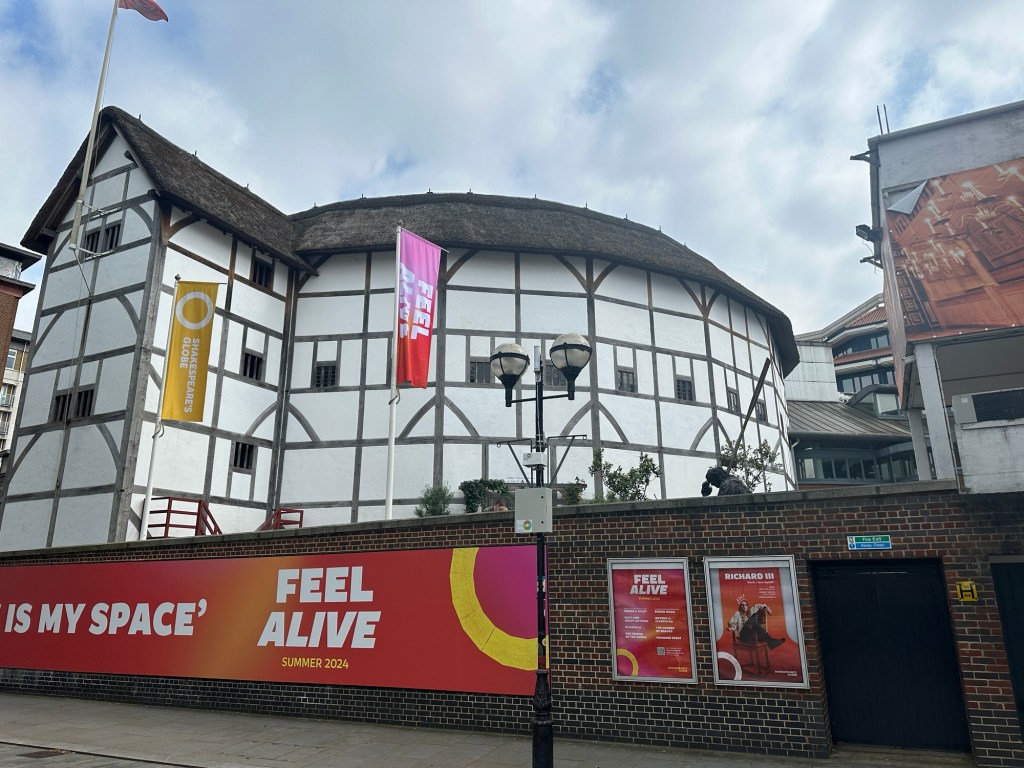
Shakespeare’s Globe Theater, rebuilt replica of the original, lost in the fire of London.
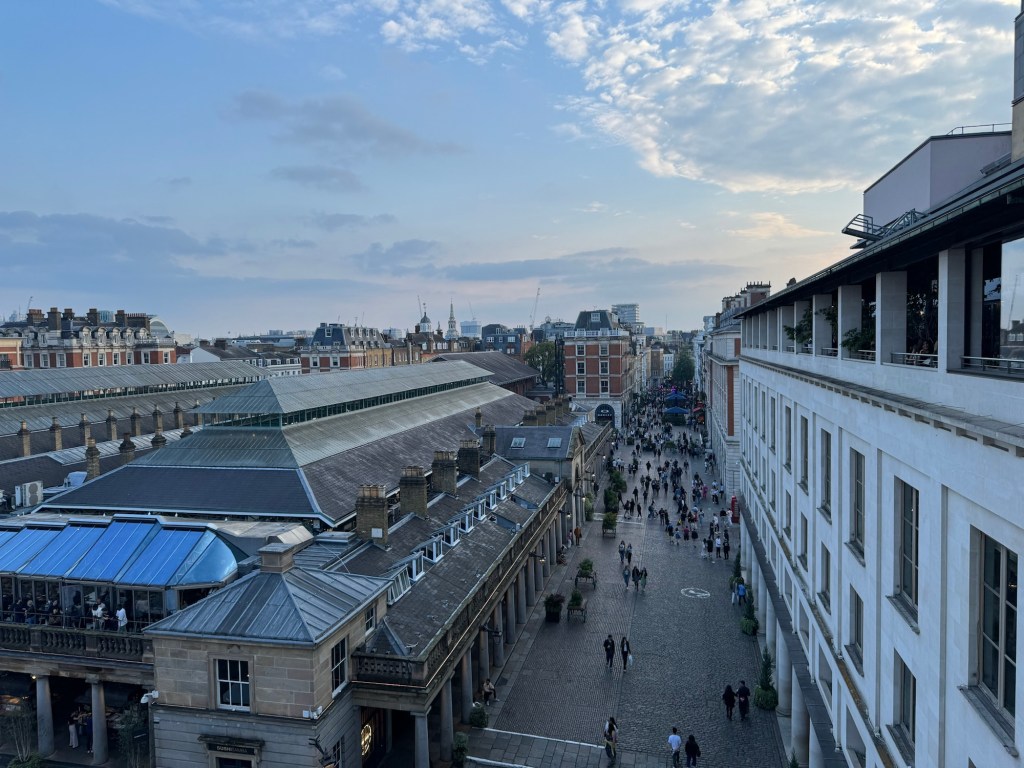
Borough Market from above. Food and drinks worth fighting the crowds.
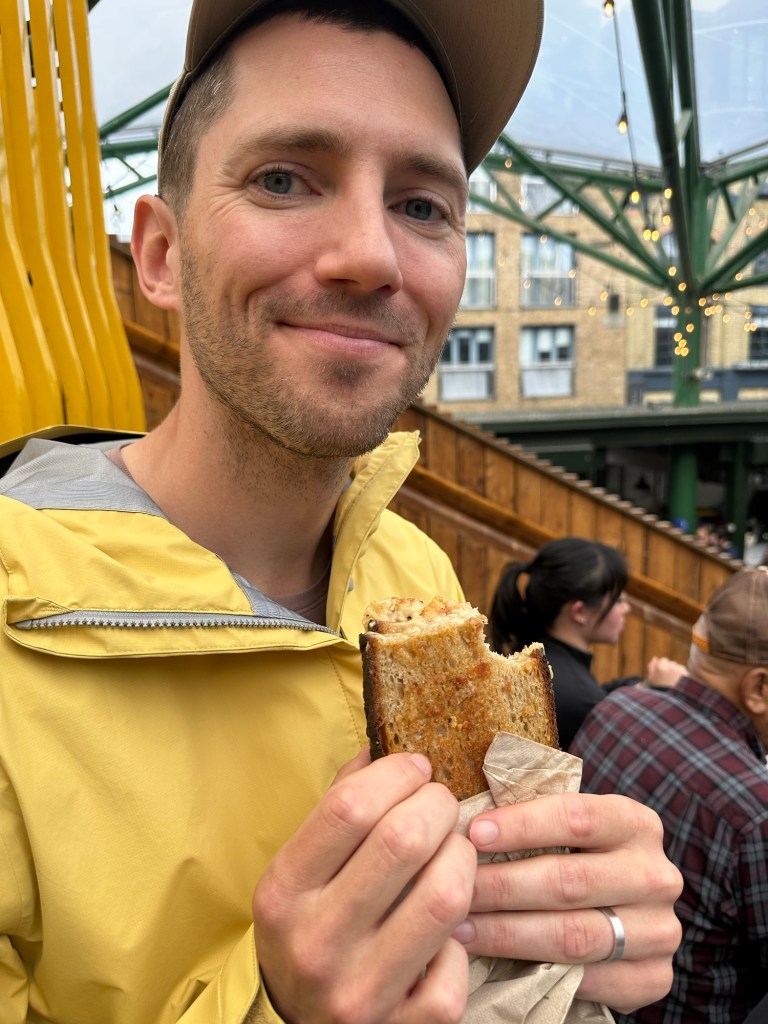
Famous cheese toastie from Kappacasein Dairy in the market. I had one ~8 years ago, and have been waiting for my chance to get back.
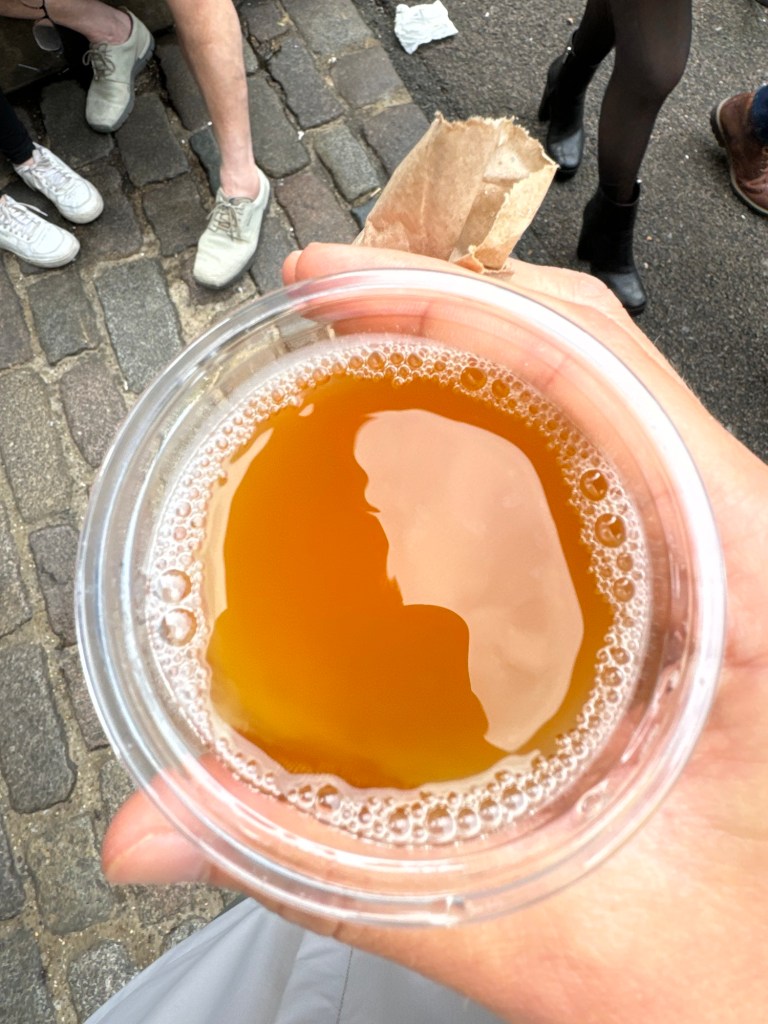
Bone dry cider … the proprietor tried to convince me to taste before buying, because so many people send it back. It’s a strange experience to get apple flavor with zero sweetness, but I loved it.
Where’s Waldo?
Drinks at the bar on the London Opera House balcony.
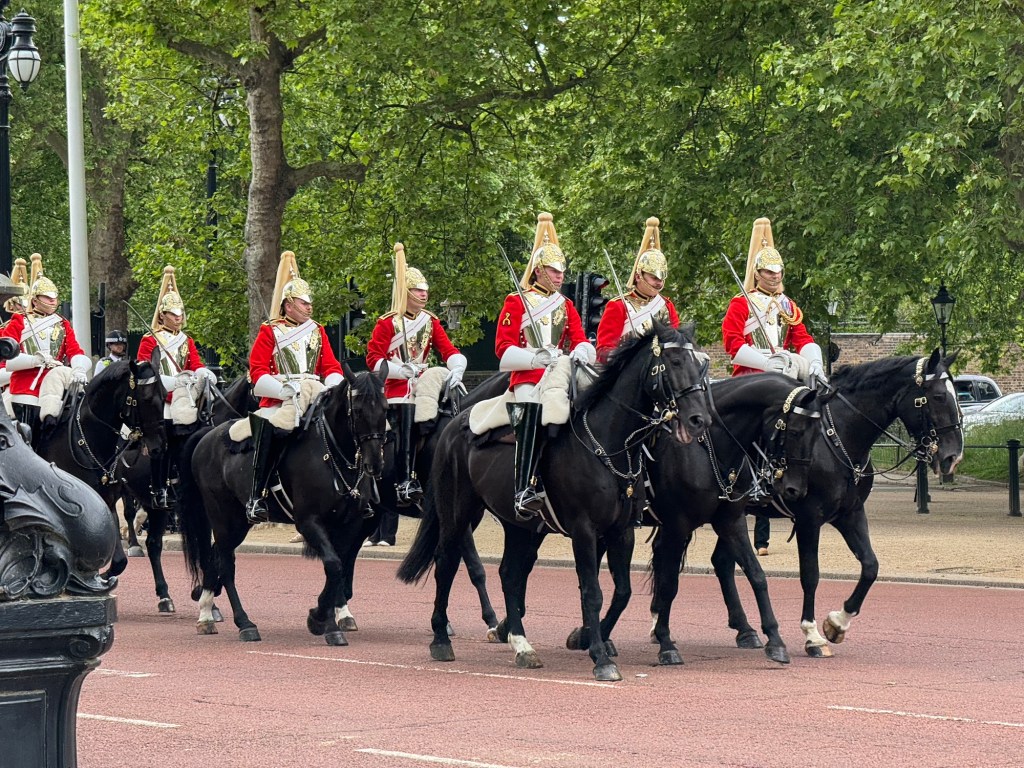
The type of thing you see near Buckingham Palace.
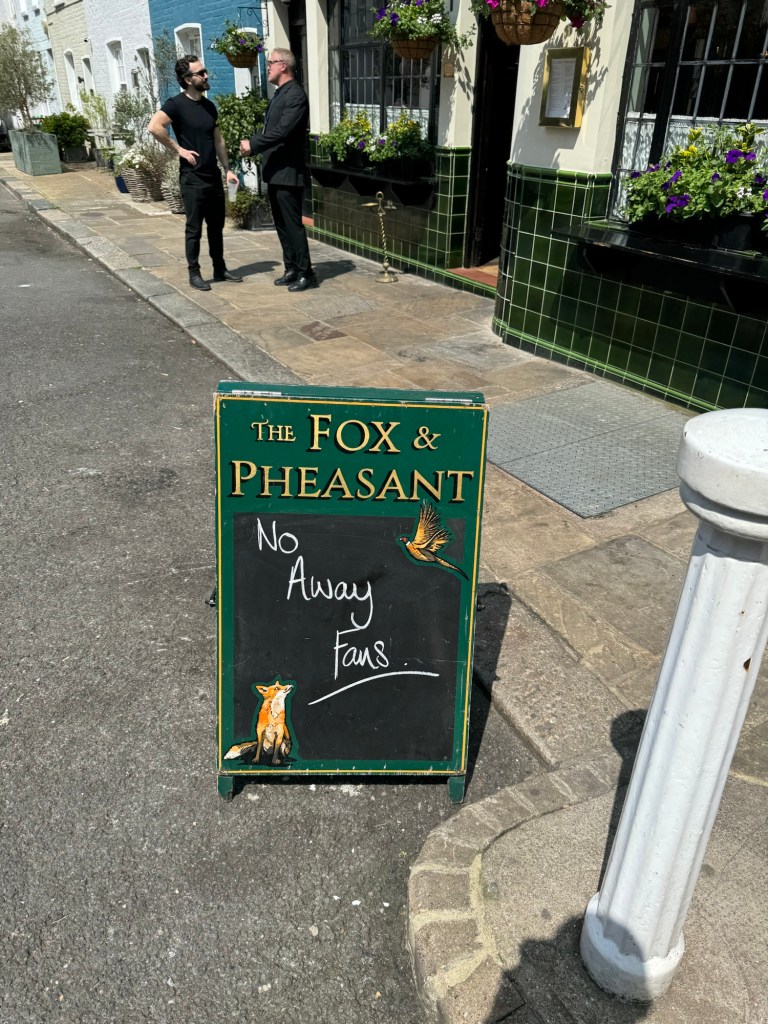
In Chelsea on a game day.
Birthday brunch for a friend, at one of the best pubs for the famous Sunday Roast, traditional dishes and Real Ales.
Ordering a Real Ale with an American accent (cask ale with natural carbonation, served not that cold), the bartenders will usually try to politely ask if you actually know what you’re in for. I love them, they are fresh and drinkable!
The Opera House.
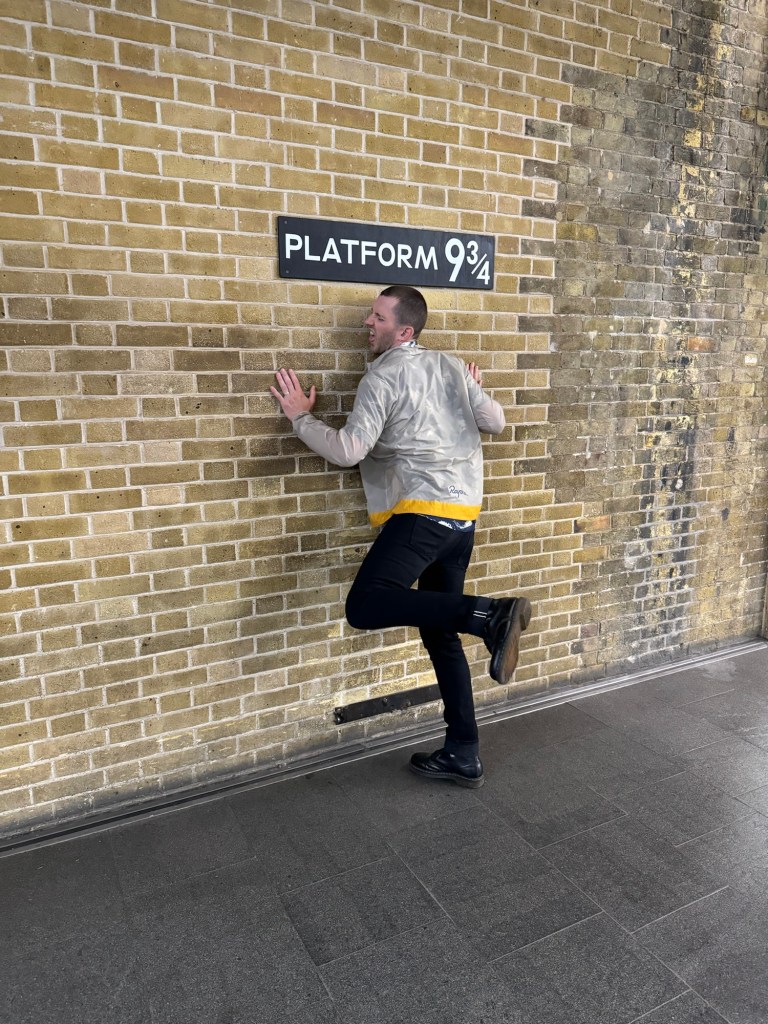
Sort of a bummer, there used to be a Harry Potter luggage cart and scarf here for a free photo opp. Now there’s a gift shop and they only have the props out during the day, and you have to wait in line. Luckily we were there after hours.
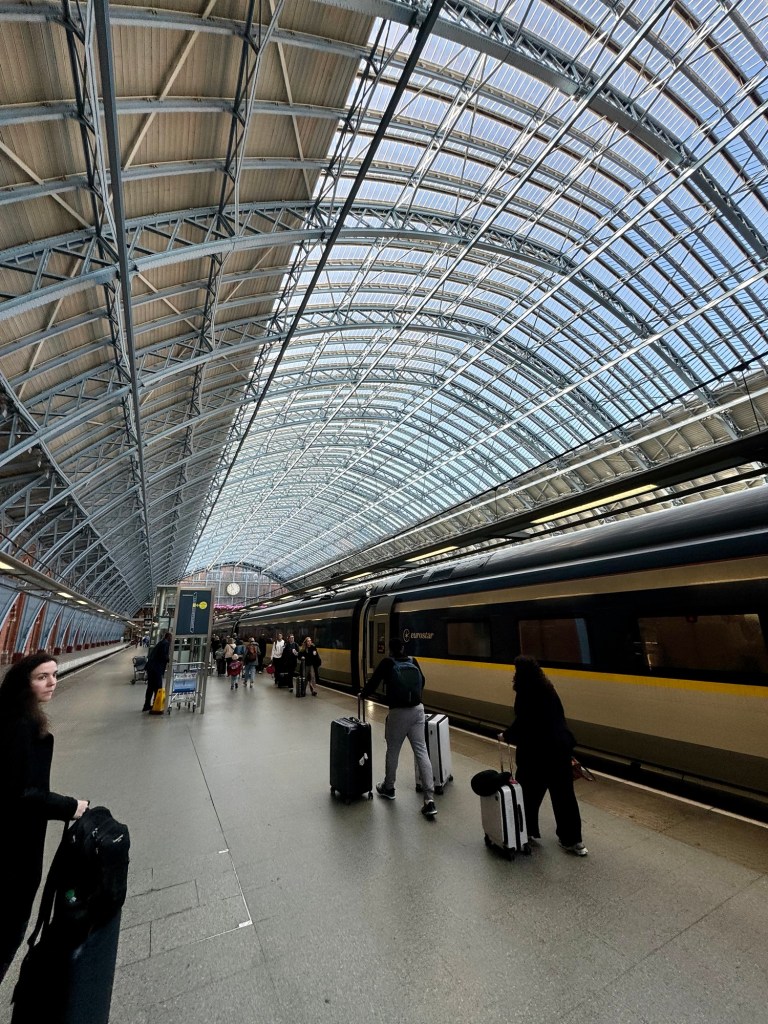
Leaving for Amsterdam by train. Traveling cross-border on trains in Europe is such a pleasant and calm experience, there’s nothing like it.

Cycling in Amsterdam.

For someone who already loves cycling, doing it in Amsterdam for the first time is a peak experience. For someone who grew up in Amsterdam, you may be ruined for cycling almost anywhere else.

Only a city built before cars can have bike infrastructure so fundamental to its design. By comparison, Chicago, New York, and other US cities are maddeningly bad. It’s so easy to do this up front on streets built for people and horses, but so hard to retrofit streets built for cars.

The feeling of riding there is impossible to describe, it’s a different dimension, like skiing on ice your whole life and then discovering powder. It’s like visiting a new planet, where everyone is nice to each other all the time, and can’t imagine being mean. Here are my observations of what makes Amsterdam so special for cyclists:

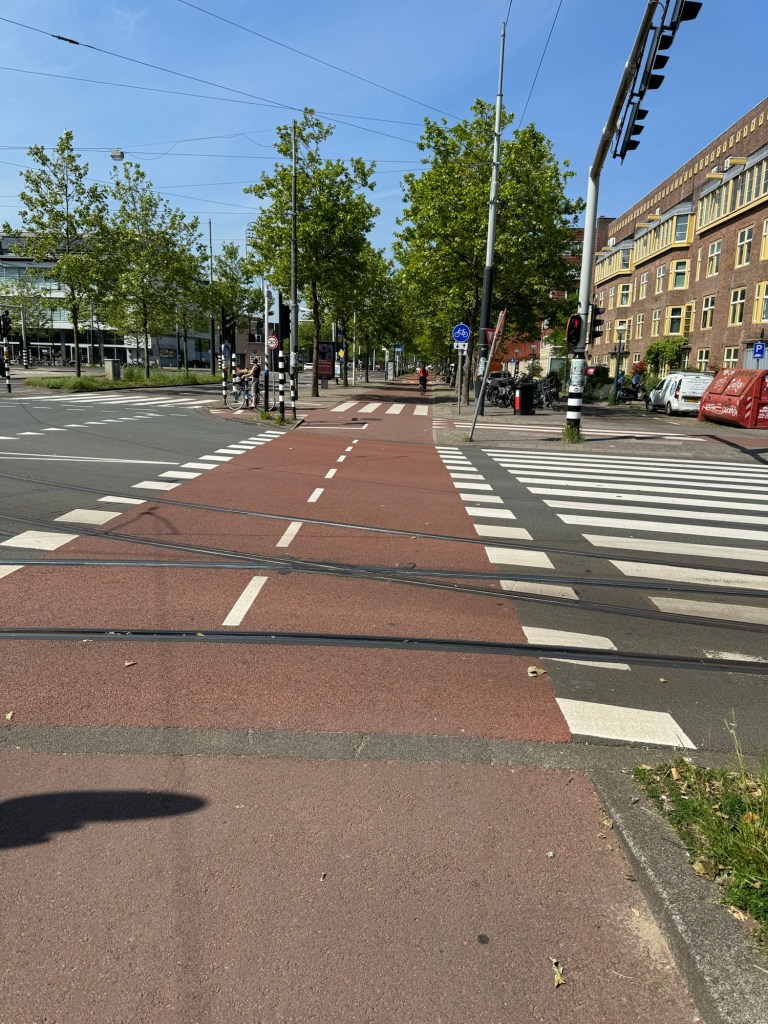
  • Three levels, for each its own. In the second photo below, you see a typical street near the city center. The sidewalk, bike path, and road are three distinct surfaces and/or levels. It’s impossible to overstate the feeling of safety and ease this creates, when your entire ride, not just portions, are protected. And when the protected areas are not carved out of a road or sidewalk, but there by design.
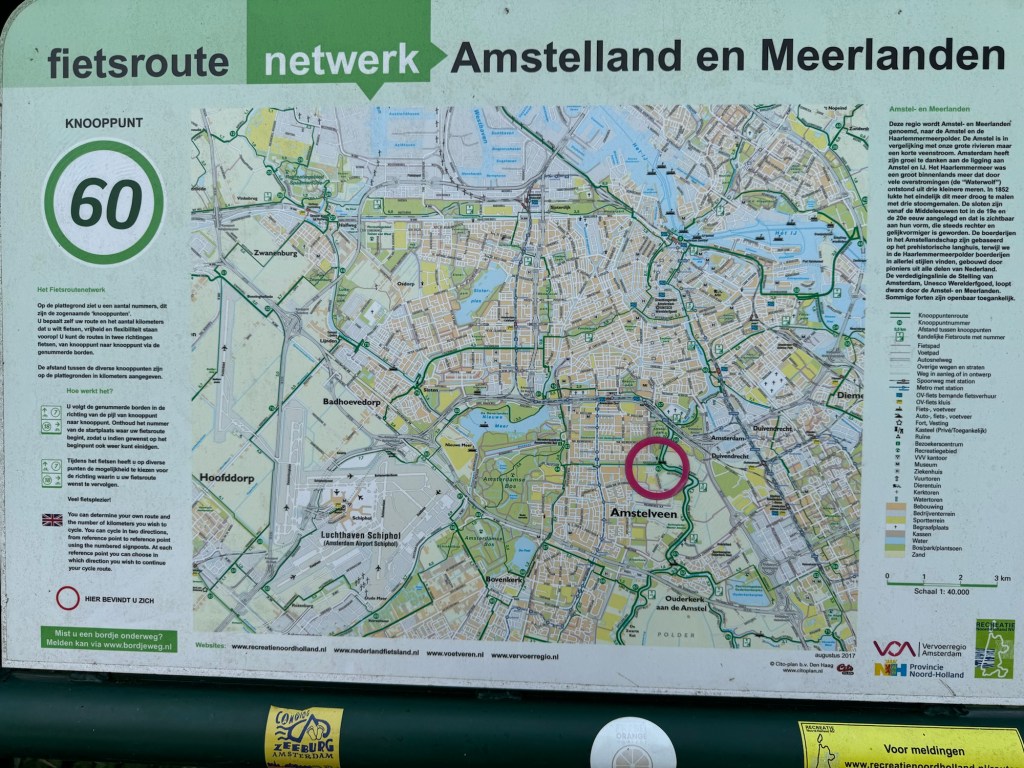
  • Bike grid and handy maps. Also pictured below, you can see the fietsroute (bike route) system, where major destinations are numbered, and highly visible signs guide you along your route. Major intersections and numbered destinations have large, easy to read maps, to help you find your next waypoint. Once you have it, just follow the signs with your number, and go!
  • Ped&bike bridges and interchanges. Most canal crossings are pedestrian and bike only, and along the greenway bike routes, all highway crossings have dedicated interchanges always separate from the road. Again, the feeling of safety is so pervasive that it feels like you’ve been doing something wrong most of your life.
  • Strength in numbers. Cyclists and bikes are just everywhere. Hundreds are bikes are parked in busy areas and tourist destinations. You can spot a tourist because we’re the only ones who forget to check before wandering across a bike lane.
  • Bikes of all shapes. Cargo bikes, commuter bikes, road bikes, cruisers, and any thing else you can think of. The Urban Arrow style of commuter bike is super common, and it’s a happy feeling to be constantly passing by moms and dads touting kids. I saw a pair of guys riding with full sets of golf clubs on their backs.
  • Streets are for people. In the city, cars really do feel like visitors with precarious status. They drive gingerly, inching through intersections and around corners, giving people, bikes, scooters, trams, and strollers the right of way. Many cars are miniature. I felt wrong calling an Uber to pick me for the airport, and I wasn’t even certain it would be able to reach me because I’d seen so few cars on my street.
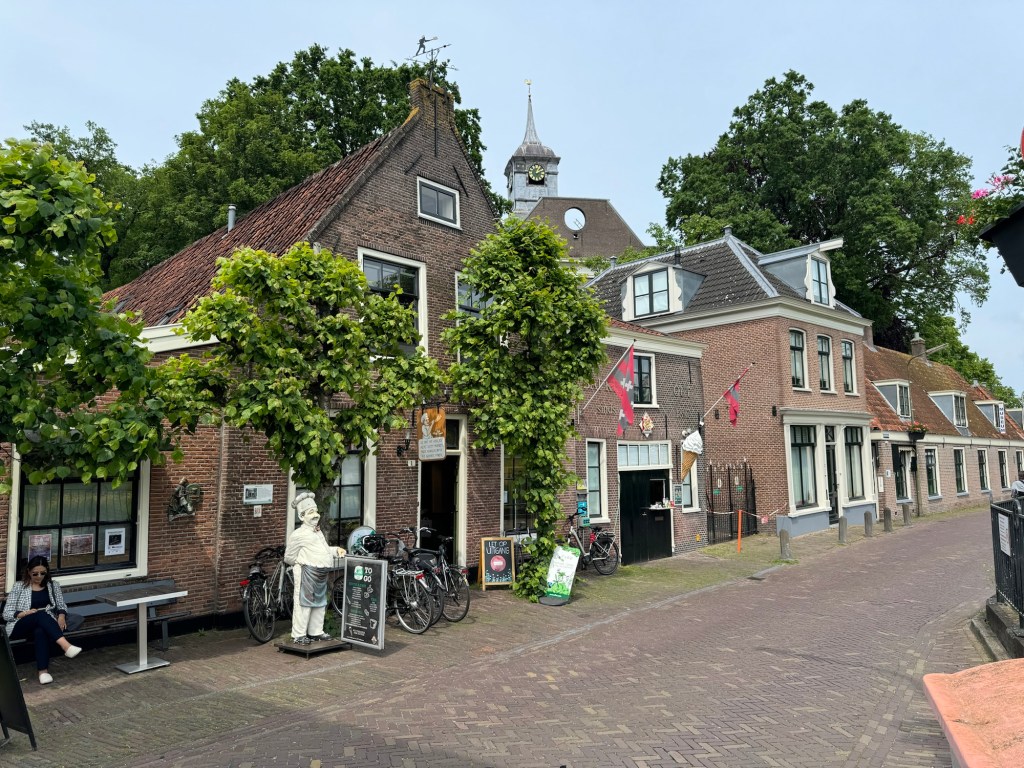
A pedestrian bridge cover one of the ubiquitous canals.
Sidewalk, then bike path, then road.
Kicking of my bike adventure.
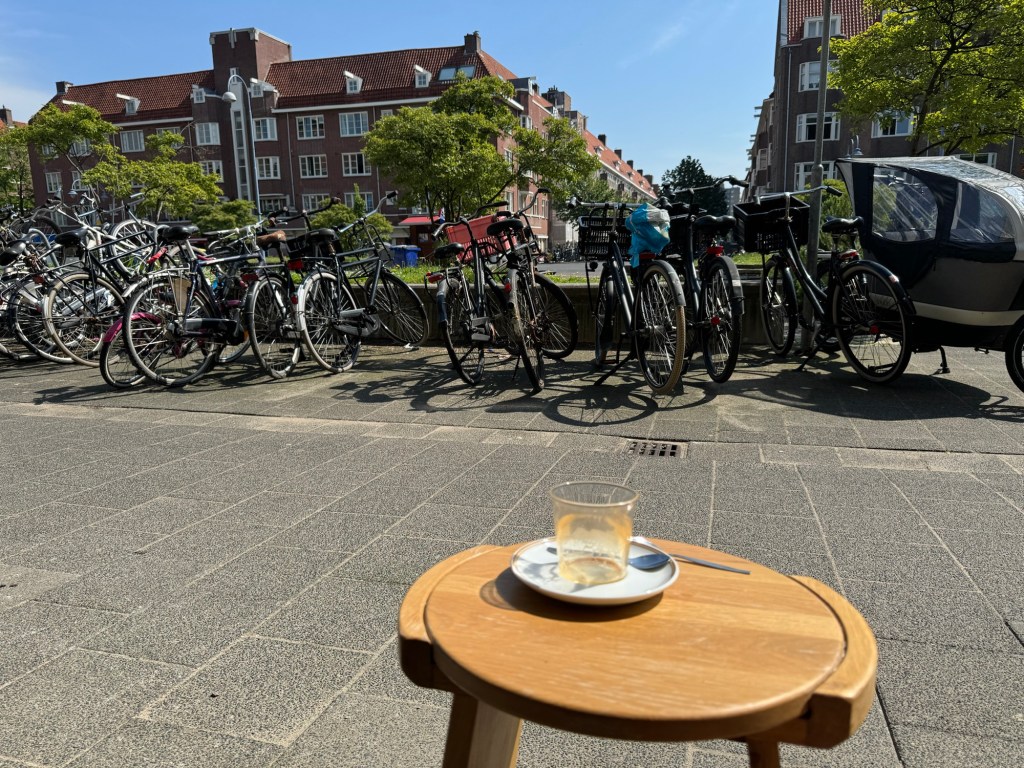
Typical bike parking. This sight is everywhere.
On my long ride, I was never sharing a surface with cars for more than about 40 feet at a time.
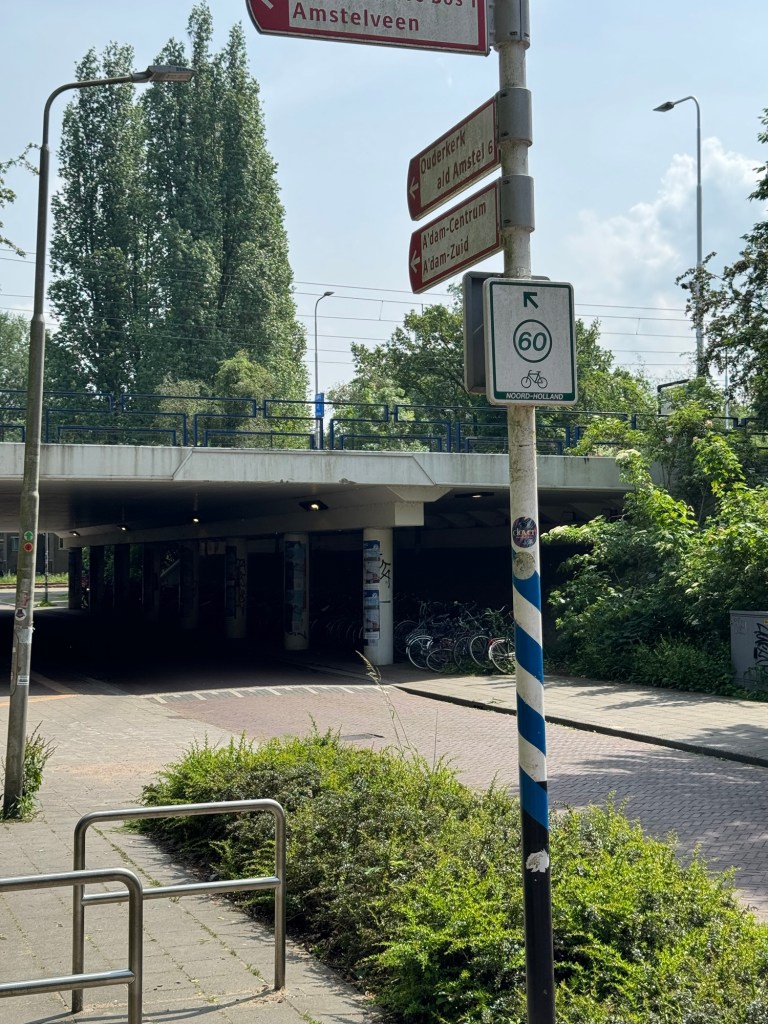
Signs along the bike network guide you to your destination.
60 was the number for the quaint village of Ouderkerk aan de Amstel (pics below), about 9 or 10 miles outside the city.
I took a different route back to the city, following the river and waypoints 50, 57, and then 56, then I was back!
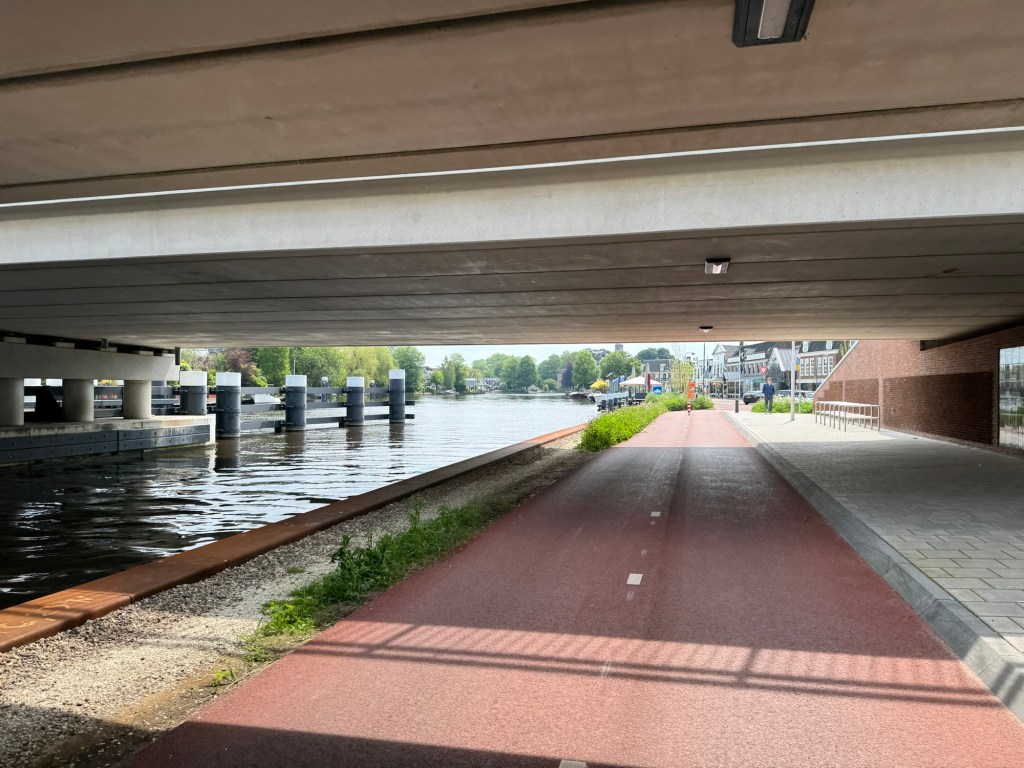
Above is a major highway which would have separated me from the village. The underpass is nice, but there’s also a bike interchange above, allowing you to cross the river without ever going near the actual road.
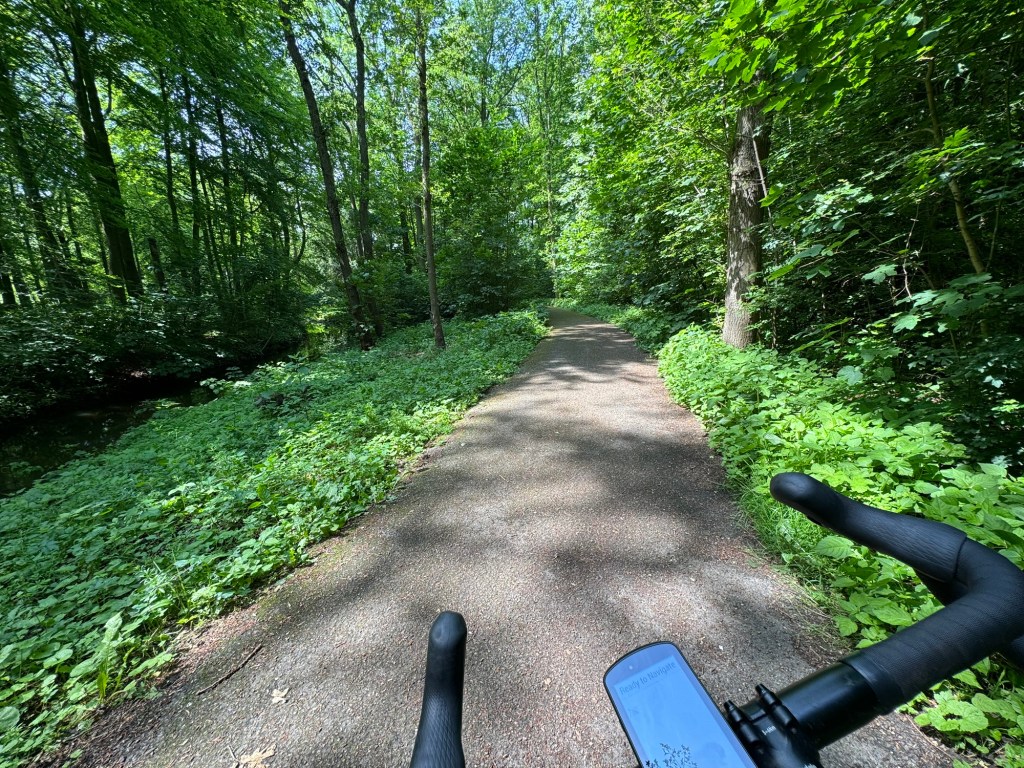
Riding through Amsterdamse Bos (Amsterdam Forest), a giant wooded park on the south side of the city.
I won.
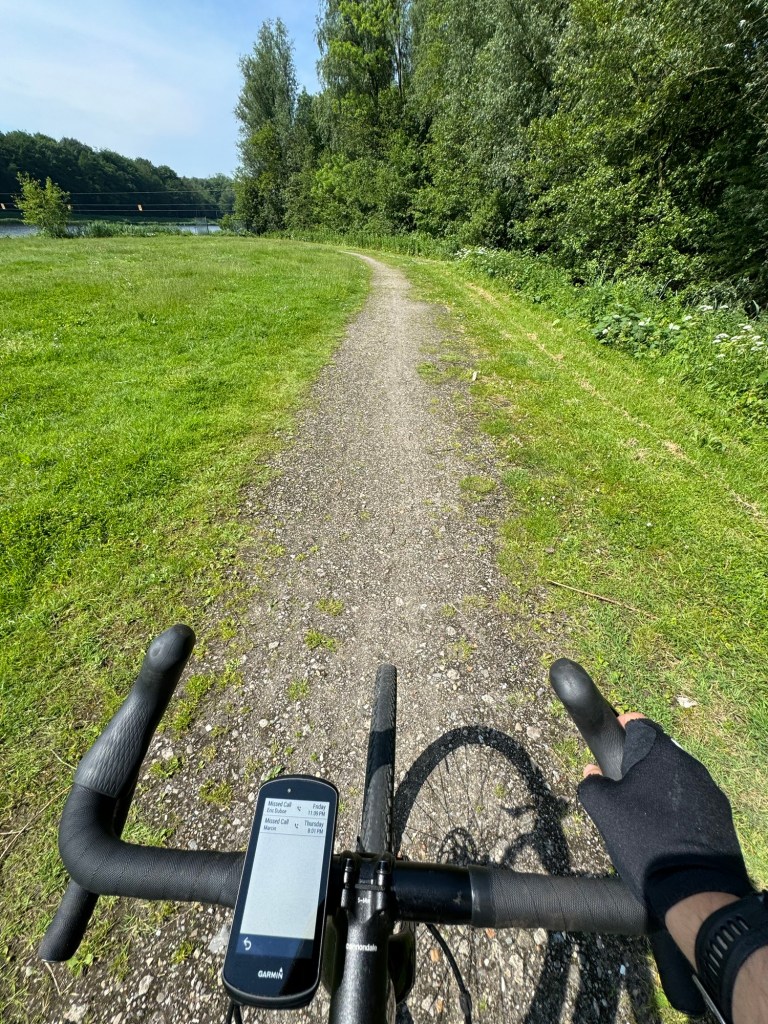
I’d never ridden a gravel bike, the only reason I chose it was because the shop had full carbon gravel bikes but only aluminum for road bikes, and I’m a snob. But I’m so glad I did—I now get why people love them.
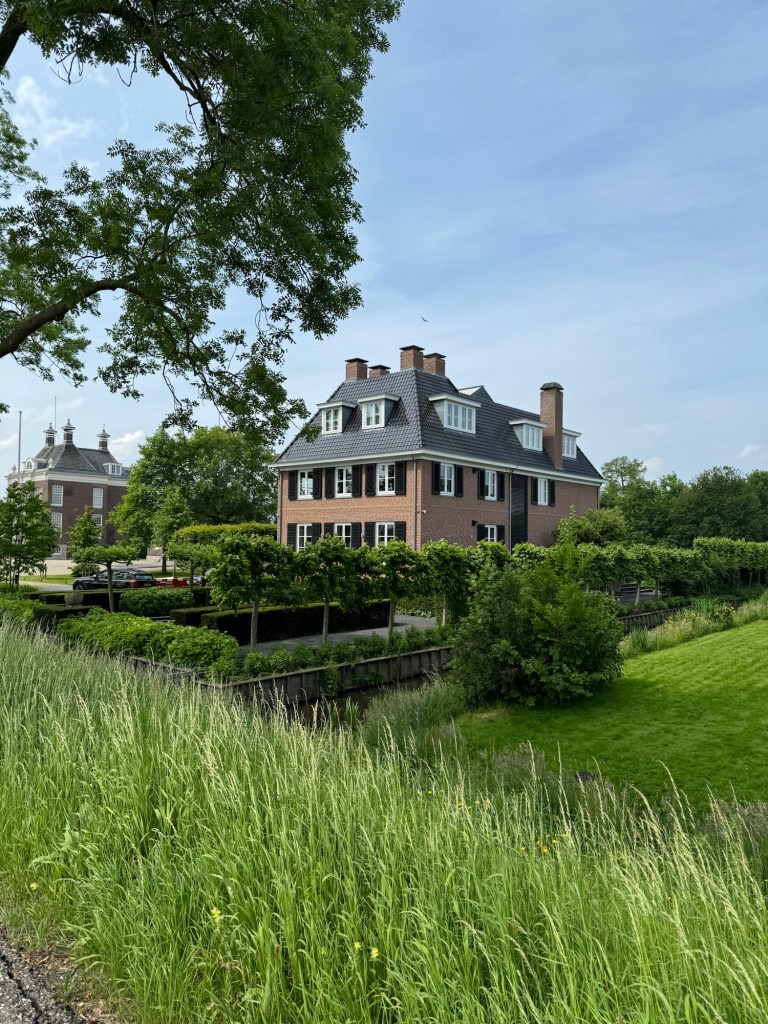
The homes along the Amstel River are absolutely beautiful. I assume they are mostly weekend houses for wealthy people?
Windmills of course.
Worth a detour for a better pic.
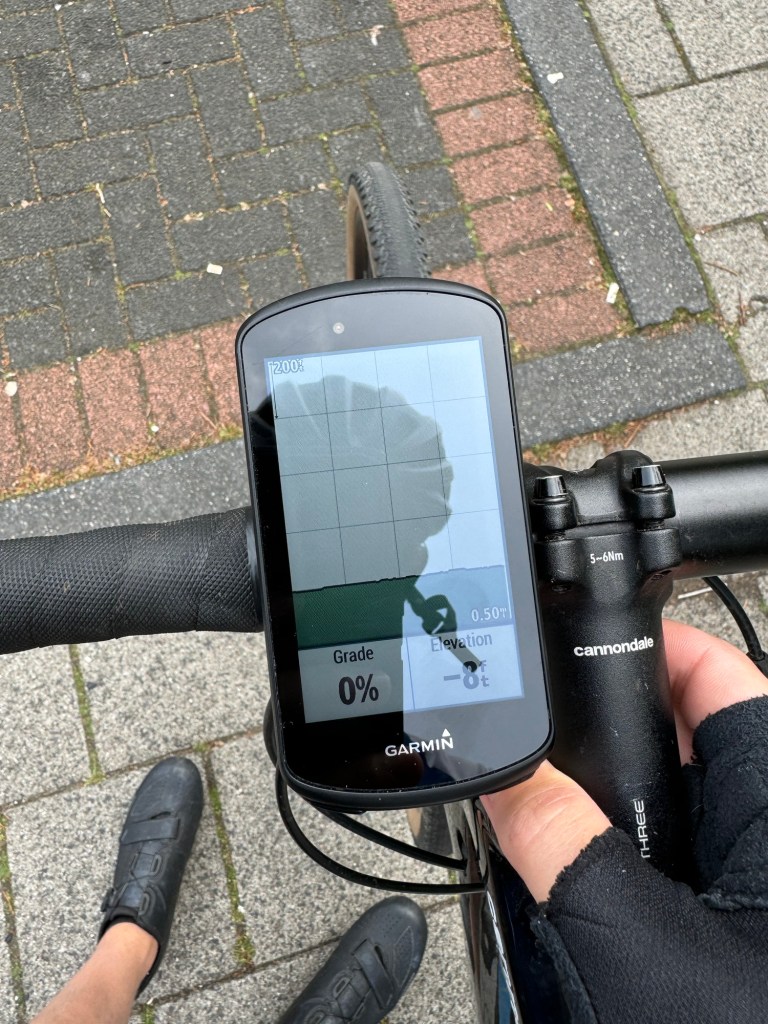
My elevation was negative for most of this ~three-hour ride, meaning I was riding on polders—reclaimed land that would naturally be submerged.. The windmills and canals are part of the system of dikes, levees, and pumps that keep Amsterdam above water.
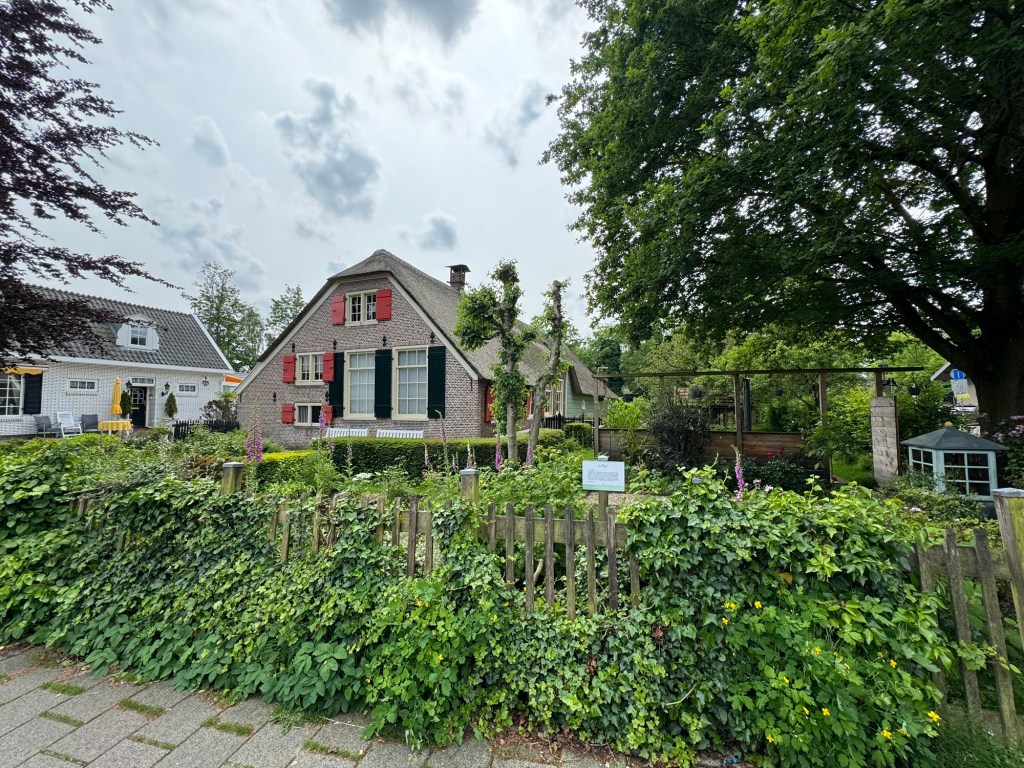
In Ouderkerk village.
This appeared to be some sort of working historical farmhouse / museum.
Apple pie at Bakker Out, a bakery open since 1897, is the traditional refuel for cyclists on this route.
You can’t break with tradition.

Amsterdam observations.

Some observations from my first trip to Amsterdam:

  • If you’re sitting alone in a busy cafe or bar, people will ask to share your table; not because they want to talk to you, just until another table opens up. This happened often, both from Dutch people and tourists. Once another table opened, they thanked me and got up.
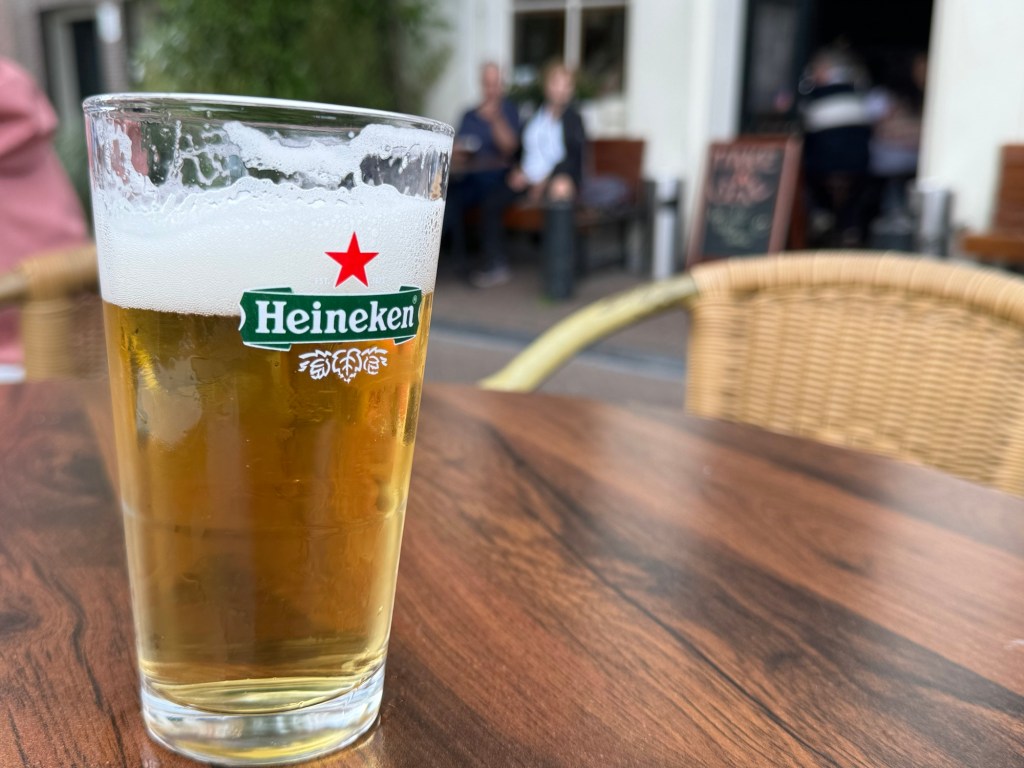
  • The Heineken is much, much better in Amsterdam. Can’t tell if it’s a different recipe than the US version, or just fresher (or placebo).
  • The biking infrastructure is incredible; this will probably get its own post later. Only cities that are older than cars can be this good for bikes.
  • With narrow streets and narrow buildings to match, many apartments are small. People in street level units tend to stand in their doorways, with the front door open right into the living room. They are chatting with friends, smoking, or just watching the street go by. On a nice day, it feels almost like a hallway in a dorm.
  • Overall the food is not great, but the cheese is excellent. “Fancy” restaurants are expensive but the food is average. You’re better off finding a local cafe that looks crowded and not touristy, and ordering a cheese plate or sandwich.
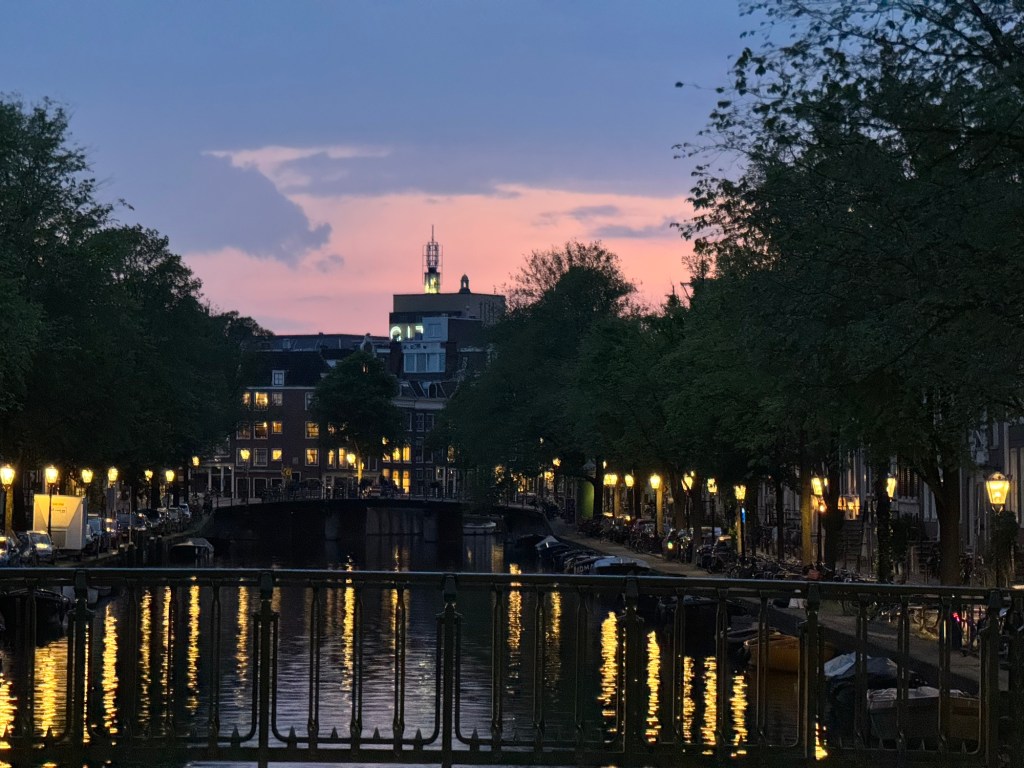
Walking over footbridge after footbridge, canal after canal, is intoxicatingly pleasant.
The Heineken is just better there.
My little Airbnb on the canal.

The best part about a sabbatical.

As my sabbatical comes to an end, and I shift my attention to finding my next job, people have been asking me what has been the best or most rewarding part of this journey. The obvious answers are our wedding and honeymoon. But beyond those, the most rewarding thing I’ve done has been this blog.

Though I’ve fallen out of the habit lately—a dip in creative productivity that I’m taking as another sign it’s time to get back to work—when I was writing every day, a bit of alchemy started to occur.

I felt awakened to a new dimension of experience, which is exactly what I was seeking on this journey. Writing acted as an agent of sublimation for all my sabbatical adventures, pulling together experiences and relating them to each other, so a bigger picture could emerge as if through transmutation.

I hope to find a place for daily or weekly writing in my routine when I get back to work, though I don’t know what it will look like. For now, I’m recommitting to daily writing for the remainder of my time off.

Steve!

I’ve started rewatching Sex and the City. Early in Season 2, the formula is already well-established: the characters meet people, date them, and then Carrie muses and interprets it all for her column (typed on her Apple PowerBook G3, in bed with Chinese food). In one episode, Miranda is complaining endlessly about her luck with men. Guy after guy (including the one she’s interested in) is looking right past her and jumping into long-term relationships with her friends and acquaintances. Just as Miranda’s self-pity is reaching a fever pitch, and Kelly and I were both heckling her through the TV, exhorting her to stop complaining, when something surprising happened.

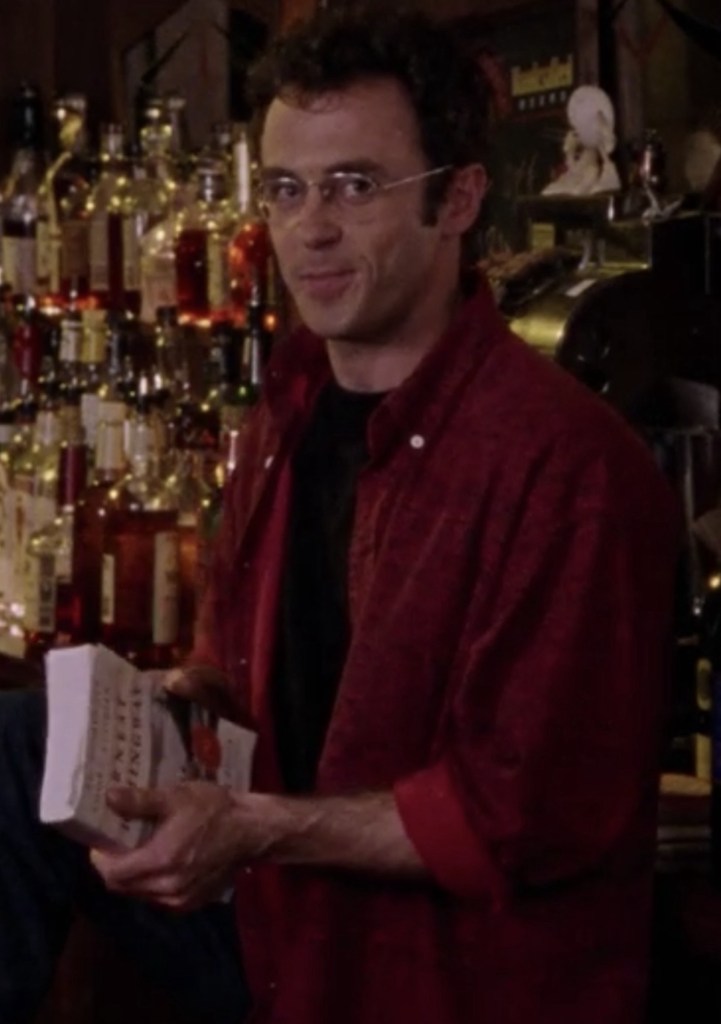
Miranda is awaiting Carrie at a bar for a Girl Date date, but Carrie stands her up; Carrie has forgotten Miranda to have dinner with Mr. Big. Sitting among drunk NYU kids, Miranda decides to indulge her sorrows and orders another glass of wine. The camera pans to the bartender:

Steve!

My viewing partner and I sat up straight and nearly shouted, “STEVE!” I couldn’t believe the reaction we both had to seeing this character for the first time in more than a decade. It was immediate and emotional. Dormant staying power like this indicates great writing, and even better casting. Starting with just a wry smile, actor David Eigenberg’s charisma and charm steal the scene instantly. And he continues to steal every scene he’s in.

My reaction was heightened by Miranda’s threnody-level lamentations, but I’m right where the writers want me to be when we meet this character. This makes me want to rewatch more great shows, especially because so many of today’s good prestige shows are actually bad (yes I said it!).

Just like Curb Your Enthusiasm, Sex in the City is a fascinating time capsule, presenting a sharp vision of popular culture in the early 2000s. To rewatch Curb is to experience how much daily life has changed, because of the show’s reliance on technology and manners for plot devices. Though it’s also a show largely about manners, what you notice rewatching Sex and the City isn’t what has changed, but what has stayed the same. The characters alternate between horrible dates and “Is He The One?” affairs. Dating is often exciting, but usually a slog. Sometimes the men are horrible to the main characters, and sometimes they’re horrible to the men. Sure, an answering machine or pager occasionally shows up, but the episodes aren’t about that. Many of them feel like they could have been written today, excepting for the conspicuous absence of dating apps.

To rewatch Sex and the City is an experience in pathos, which feels less like a time capsule, more timeless.

Trains of thought.

As a kid, I used to lie in bed at night, thinking. I’d imagine things, tell myself stories, or replay the day’s events. Eventually it would be late enough that even my kid brain worried I’d be tired the next day, and I would tell myself to stop thinking and try to sleep.

The thing that usually tipped me off that I’d been “daydreaming” too late into the night was suddenly becoming aware of my current thought, and realizing I had no idea how I’d gotten there. When this happened, I’d play a game of retracing my mental steps before falling asleep. It would go like this:

“… velociraptor, that is definitely the best dinosaur. Wait why am I thinking of dinosaurs? I was thinking of basketball practice tomorrow.”

“… dinosaurs, which came from velociraptor, which came from Toronto Raptors … Vince Carter … I wish I could dunk … basketball practice tomorrow.”

Today I was reminded of how I used to play this mental retrace game. I was listening to my meditation app, and the guest teacher Joseph Goldstein retold a Buddhist proverb that compares the untrained mind to a waterfall, always tumbling down. The metaphor that’s more common in Western speech, he continued, is the train. We lose our ‘train of thought’ all the time, which can happen only when we’re identified with (lost in) thought, rather than observing thought. When our minds wander, Goldstein says, it’s like “hopping on a train, and never knowing the next stop,” or even like “falling asleep on a train and then awakening, not knowing where you are or how you got there.”

Awakening is the practice of breaking the spell, realizing you were lost in thought, and no longer being identified with thought. It was fun to remember back to being a kid, and realize that many nights lying alone, I’d been doing something like meditation practice, without knowing it.

Mother’s Day

Early Sunday morning I was in La Salle Flowers, a little family-owned shop, and one of the few storefronts in my neighborhood that still hints at how the city used to look and feel.

I inched toward the counter, fourth in a line of other last-minute sons and husbands. Behind me a toddler’s dad tried to give an ad hoc lesson that not all flowers are for picking. The shop is so tight, that even when he picked the little girl up, there were flowers within her reach no matter where he stood.

The guy working the counter, probably in his early twenties, stood out somehow. His La Salle Flowers shirt was oversized even on his burly frame. He seemed more invested than a typical summer-job college kid, but also not quite at home, like he belonged there but hadn’t fully embraced it. When helping customers, he seemed to gaze half at them, and half out the window behind them. As he rang me up, I was wondering whether he loved his job and couldn’t admit it, or hated his job but really needed it.

Then the older woman assembling bouquets at the back saw the stems I’d picked out, and kindly but firmly suggested that she might rearrange things, and maybe swap a few colors (she didn’t say why but the reason was obviously to improve on my efforts). I was happy for the help, and the guy stepped aside so she could gather up what he’d been working on.

“Thanks, Mom,” he said.

And suddenly his demeanor made sense. Maybe he’d worked there as a kid, and was just helping out on one of their biggest days of the year. Or maybe he’s full-time, but working for your mom is complicated. Either way, his words had all the history and weight of anyone who’s ever said them: thanks mom. And it was nice to see them working together on Mother’s Day.

Sometimes you get caught in the rain.

My friend Joe invited me on a bike ride yesterday, and we had a great time catching up and chatting for an hour or two. (He’s in great cycling shape, so I was gasping more than chatting toward the end). We rode south, stopped to say hi to his partner Sunni, and then I turned back north to head home.

It was starting to drizzle started at I left Joe’s, but the rain just got stronger. 10 minutes into the ride, it was pouring. Halfway home, it was at monsoon levels. I thought it couldn’t get worse. Then it started coming so hard that the drops were stinging my arms, like there was maybe some hail mixed in. By this time I was hungry and cold, passing 18th & Halsted, so thought about stopping for tacos in Pilsen and waiting it out. But that was a trap–I was already soaked to the bone, and knew I’d get so cold sitting inside that I’d never get back on the bike.

So I just had to grit it out. Turn off my brain and keep peddling. Dream of a hot shower. Sometimes you get caught in the rain, and that’s all you can do.