You should sit in meditation for twenty minutes every day—unless you’re too busy; then you should sit for an hour.
Dr. Sukhraj Dhillon
I saw the above quote in a book years ago. At the time, my interest in meditation had begun, but I had not practiced very much or very consistently. The advice sounded nice, but I couldn’t imagine believing it myself, let alone following it. I was just too busy, and the things I was busy with just too important.
Years later, this advice still sounds difficult to follow. But it also feels (to me) more achievable, and much truer. Its meaning has deepened for me as well, such that I can now read this quote in several ways, all of them seeming true.
I think this is a good definition of wisdom in general. Wisdom is a type of knowledge that gets truer the more experience you have with it, the more you believe in it, the more you adhere to it.
We were at a wedding this weekend—the first one we’ve attended since our own. It was a beautiful day with great friends. And it had me reflecting on our first few months of married life.
A question people like to ask couples in the weeks and months after their wedding is, “do you feel different?”
Day-to-day life doesn’t feel different. But we do feel different. After completing a ceremony and ritual like that, in front of all your friends and family, something does change in you. Taking a vow, crossing a threshold of nearly universal human experience.
Attending a wedding also feels different to me now—deeper and more meaningful.
When I started getting into chess a during covid, I had this vision of future weekend trips with friends at a lake or beach house, where there’d be a chess board, and people would play games throughout the weekend between more active activities.
We’re staying this weekend with friends at an Airbnb, for a wedding in Carmel, CA, and my vision has become reality.
We have some chess players in the house, and although I’m 0-3-1, I’m having so much fun. Playing a few games with friends during downtime, just hanging and talking, it’s exactly what my vision depicted.
In The Varieties of Religious Experience (1902), psychologist William James wrote:
It is true that we instinctively recoil from seeing an object to which our emotions and affections are committed handled by the intellect as any other object is handled. The first thing the intellect does with an object is to class it along with something else. But any object that is infinitely important to us and awakens our devotion feels to us also as if it must be sui generis and unique. Probably a crab would be filled with a sense of personal outrage if it could hear us class it without ado or apology as a crustacean, and thus dispose of it. “I am no such thing,” it would say; “I am MYSELF, MYSELF alone.
James is saying that we resist pointing the intellect at matters of the heart, or in this case the spirit. He goes on to say that although this reaction is normal, it’s unnecessary. We can separate the “existential” analysis (what is the thing, where does it come from, how does it behave) from the “value” analysis (is it good or bad). In the end, the value analysis for mental states is intuitive. We can tell the good states from the bad. We don’t need to prove it with science. But in his time, people twisted themselves in knots trying to find anatomical or otherwise deterministic support for arguments that were, at bottom, value-judgments. And people still do this today.
More from James:
Medical materialism seems indeed a good appellation for the too simpleminded system of thought which we are considering. Medical materialism finishes up Saint Paul by calling his vision on the road to Damascus a discharging lesion of the occipital cortex, he being an epileptic. It snuffs out Saint Teresa as an hysteric, Saint Francis of Assisi as an hereditary degenerate. George Fox’s discontent with the shams of his age, and his pining for spiritual veracity, it treats as a symptom of a disordered colon. Carlyle’s organ-tones of misery it accounts for by a gastro-duodenal catarrh. All such mental overtensions, it says, are, when you come to the bottom of the matter, mere affairs of diathesis (auto-intoxications most probably), due to the perverted action of various glands which physiology will yet discover. And medical materialism then thinks that the spiritual authority of all such personages is successfully undermined.
In short, the most moving, inspiring, devout, holy people in history—people he calls “religious geniuses”—likely all would have been diagnosed with a mental disorder today. And their suffering was real. But the results of their feelings, the impact of the world, and our judgments of their value, are not pathological.
A true suburban 90s kid, the first piece of clothing I coveted was of course a pair of baggy Tommy Hilfiger carpenter jeans. You remember the ones, with embroidered logos on both the back tag and the carpenter loop. That was the fourth grade, when fashion was more about fitting in than standing out.
I wanted these SO BAD. My mom got me a pair and saved my 10-year old social life.
Like anyone, my look changed as I figured out the identity I wanted to project to the world. Preppy in college (Ralph Lauren and Vineyard Vines), upscale casual in my first job (Billy Reid), and, finally, full tech bro (Patagonia, Lululemon, and company swag).
Lately I’m feeling like I need a new look. It’s probably not a coincidence this is happening as my work identity is in flux. But also I think I’ve just been lazy in how I dress for the past few years. I used to care a lot about my wardrobe, but in the past few years I’ve cared a much less. Making more opinionated clothing choices gives you a “look.” And there are benefits to having a look:
You’re more memorable
Your personality is more salient, making interactions more successful
You can find more and more interesting margins to explore in your wardrobe; not just “I’d wear that” or “I wouldn’t” … new possibilities at or just beyond your comfort zone
I feel like I don’t have a look right now. Maybe soon I’ll find a fresh one. If you have suggestions, let me know! Everyone should have a look.
I lovehorrormovies. Part of the genre’s fun is in imagining what you’d do differently as you watch the characters navigate their world. Of course, we all believe we’d be smarter than at least first victims–we wouldn’t open that door or answer that phone.
But last night, I learned I shouldn’t be quite so confident. I was leaving my improv class. It was late, dark, cold, and rainy. As I unlocked my car, there was a sound. It was just like a car door closing. It came from just a few feet away, but there were no other cars around. The block was deserted.
I looked at the car. I’d been half-distracted, still on some adrenaline from class. So I focused up and tried to replay the sound in my head, wondering whether I’d imagined it. Had someone been crouching behind my car and gotten in? Almost certainly I’d misheard. That I knew. So I got in the car. Still it nagged me.
“Obviously, no one is here. But I may as well check.” Phone flashlight on. Back seats clear. “May as well finish checking.” Out of the car, open the trunk, all clear.
I could see the whole block under the yellow street lamps, there was nothing around, nowhere to lurk. There was only one more place to check–under the car. But now my heart rate was way up. In the horror-movie version, the killer would be lying prone on the street under the car. I knew there was no one, but still I had to psych myself up to look …
… all clear.
Or was it? (yes it was)
The best horror movies create a world in which the character has options, but none of them are good. You the viewer can’t imagine what you’d do differently.
I could have started home, 99.9% sure I had no unwelcome passenger. But probably I’d have arrived home only 99.5%. If I’d still resisted checking once in the garage, I’d have been thinking about it as I lay in bed.
In the moment on the street, I was more embarrassed at myself than I was scared. In the gentle light of day, I’m laughing at myself. I’m replaying it again, enjoying memory like a little movie in my head. But on that empty block, in that yellow light, just a few blocks away from the actual setting of many famous horror-film murders, I wasn’t 0% scared.
Ask not what Brown can do for you … but why other companies can’t. The other day I walked into the UPS Store in a huff. I’d ordered two new pillows from one of those online sleep product companies with a 30-night return guarantee, and I needed to exercise that option.
The pillows were just badly designed products. I’d always been a die-hard featherhead, but Wirecutter’s review of Nest’s customizable shredded foam pillow was compelling enough that I decided to try it. Huge mistake. Adjusting the filling makes a huge mess, I could never get the pillow to be thin enough to sleep on, and the more I tried, the less comfortable it got.
Despite the return policy, the Nest is really bad at returns. From requesting a shipping label to repacking the product, everything was difficult. You have to email someone to initiate a return, and when you do, they try to talk you into keeping the product! Then you have to restuff the pillows, which makes a huge mess with all the shredded foam. After I thought I finally had it set, I realized they’d sent only one label, but the pillows had separate return bags.
Cue Elliot at UPS. Elliot greeted me with a smile and asked how he could help. I explained the whole thing and he looked me right in the eye and said, “I got you, just give me the pillows and the return label, I’ll make it work.”
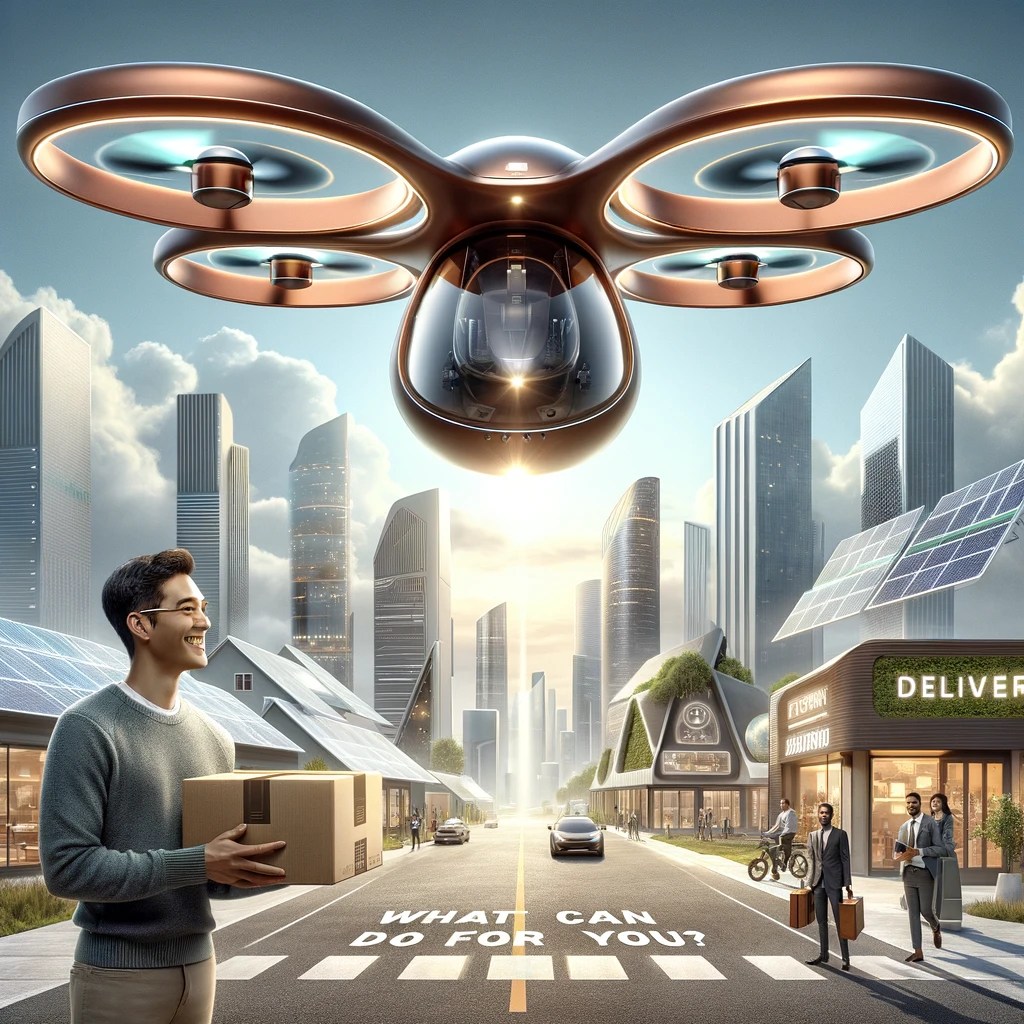
I didn’t realize Dalle now enriches prompts for you, inferring what you’re after and filling in more details. I asked Dalle for an image of a “What Can Brown Do for You? ad for 2024.” It titled the file: “Envision a modern advertisement showcasing the slogan ‘What can brown do for you_’ for the year 2024. The image features a futuristic, sleek delivery.jpg”
I love UPS. Because this is how it always how it is, they just make life easier. So Elliot made my day. And though Nest Bedding really frustrated me, I was also comforted knowing they will either become better at helping their customers, like UPS is, or they will not be around forever.
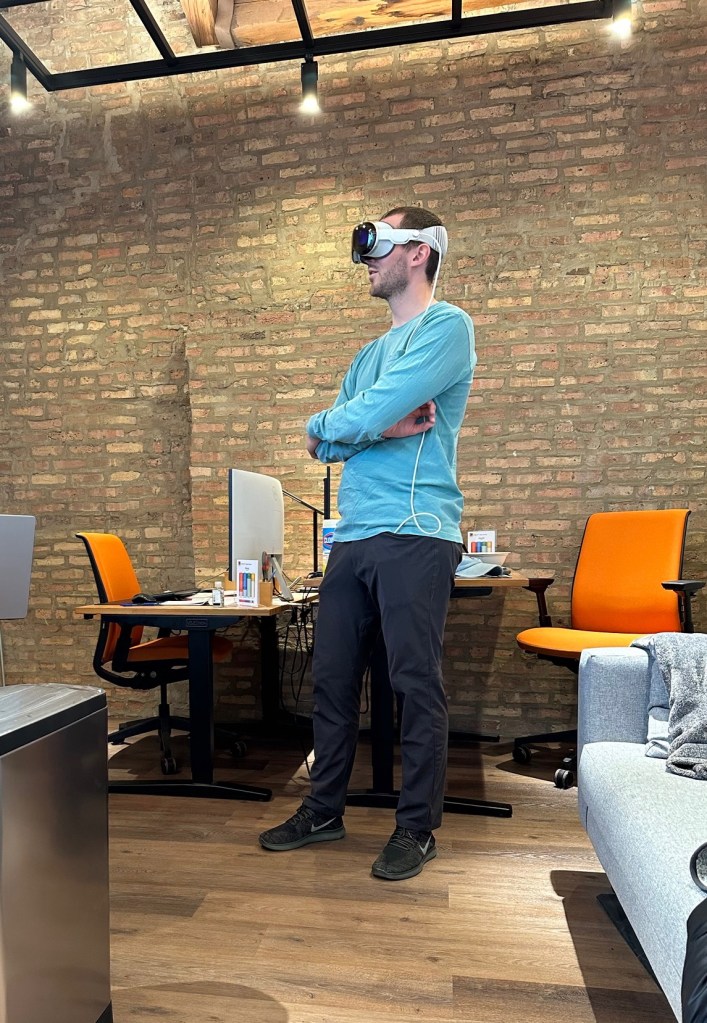
“Base reality blows.” … that is scratched into the bathroom mirror at one of my favorite coffee shops in Chicago. It’s also what I said after my very first test session on the Apple Vision Pro. A friend got one and was kind enough to let a few of us demo it yesterday. I was mostly joking, but my first experience on the thing was certainly enough to make me ponder that message on the bathroom mirror.
Here are the first impressions from my two friends and me:
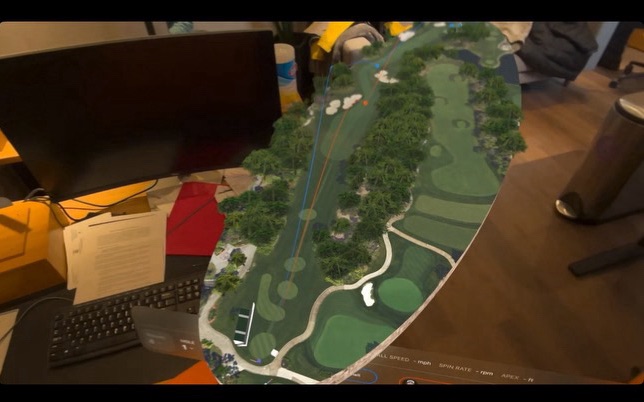
The Engineer: “My very first impression was that it feels like a proof of concept, not a “real” product yet. All the polish you’d expect from Apple hardware is there, that’s what makes Apple … Apple. Learning the eye-tracking and hand gestures was initially challenging and buggy. But that was before we realized how important it is to redo the Eye- and Hand-Detection set-up every time you switch users. After that, it’s much smoother. I can see why this will be really nice for programmers. It feels a clear step ahead of the Meta Quest. The most impressive experiences are the few pre-loaded demos from Apple and their launch partners: taking apart a life-sized F1 car; standing in Alicia Keys’s studio while records a song; standing on a slack line 2,000 feet above a mountain lake in New Zealand; practicing open heart surgery; looking down on a table-top PGA Tour golf-course while the leaders play around the course simultaneously. Right now, there’s not a ton to do with it, other than those demos and watching videos. But they are enough to make you a believer in what the future holds.”
The PGA tour app gives you a tabletop view of the course, from which you can jump into any hole and “walk the course.“
The Visionary: “There are little moments that are just mind-blowing, like when I realized I could physically walk over to a screen in the room and tap on it. Right now (in base reality) we’re in a small room, and virtual reality I have YouTube on one wall, iPhoto on the opposite wall, and Apple TV+ on a third wall. Looking around at my different screens is effortless and natural. The gestures and commands for interacting with them aren’t 100% nailed yet, but you get used to them in a couple of hours. There are almost no third-party apps, but it will be interesting to see what developers do with it eventually. It feels like there’s more opportunity for voice commands. The number of units sold is still so small (200K so far), but still it feels like there are a bunch of businesses you could build on this thing as more people buy it.”
The Optimist (Me): I had read and listened to a ton of reviews and discussion of the device, so I was probably as primed as anyone could be on what to expect–both the good and the bad. Still, the experience of using it exceeded my expectations. There’s not just one mind-blowing moment, but a quick succession of them as you get used to the different things you can do. The one letdown was viewing Spatial Video that I’d captured myself. We just happened to be on our honeymoon when the iOS update supporting Spatial Video dropped, so I started capturing some in the Torres del Paine National Park in Chile. The timing was lucky–if I’d gotten the update three days later, I would never have had such an epic laboratory to experiment in. Still, I had no idea when I’d get to use a Vision Pro, so it was awesome that I got to try one so soon. But I found the Spatial Video to be not necessarily better than any other iPhone video. And Pano photos were surprisingly as good, if not better.
Quibbles aside, my expectations were shattered. I am truly impressed. My biggest take away is that, if I had one of these, it would likely be enough to get me to switch from Windows back to Mac for my main PC. I left Mac after college, and never looked back. So this is a big change. The productivity potential, especially when traveling or working anywhere other than my main workspace, feels immense. But with a price tag around $4,000 with tax, I won’t be buying one any time soon.
So, while base reality is not yet obsolete, my prediction for how much time I’ll spend here just went down. And my understanding of it may change too. Driving home after playing with the Vision Pro for a few hours, the world looked somehow both more and less real.
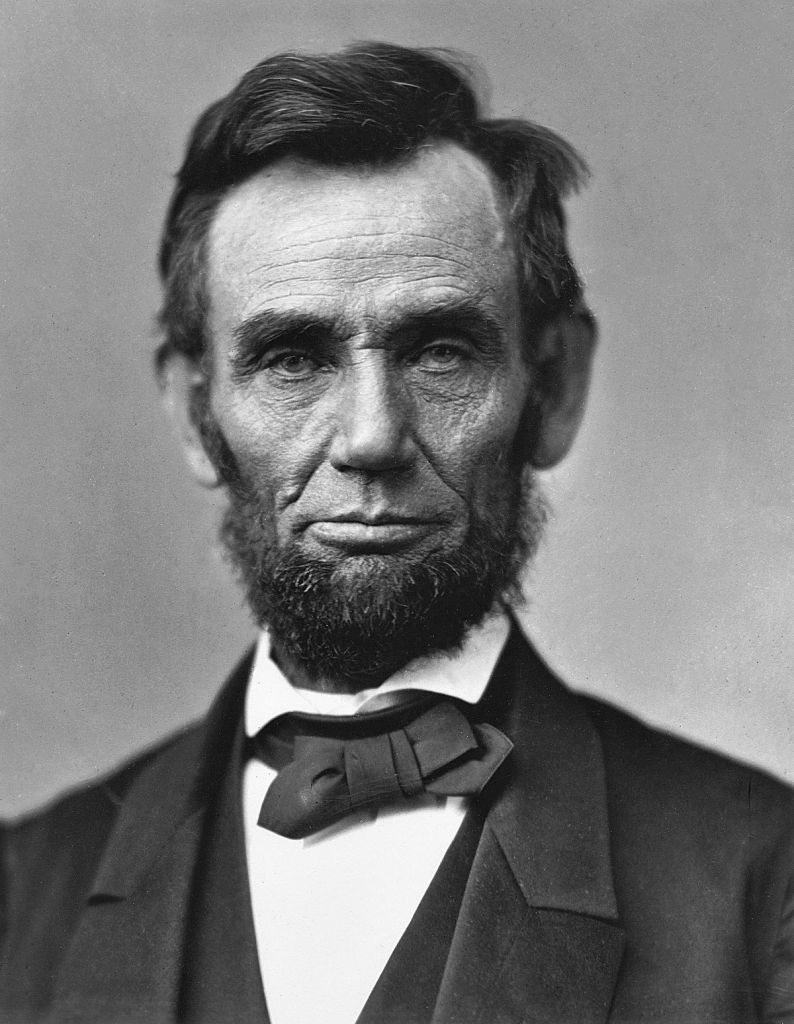
“I don’t like that person. I must get to know them better.” On a podcast today I heard Cass Sunstein attribute this quote to Abraham Lincoln. It stuck with me, and immediately I want to make it a permanent habit.
Hearing this got me thinking of people I’ve disliked in my past. In calling just two people to mind, I was surprised how powerful the negative emotions came on, even though I haven’t seen one in at least 10 years, the since high school, 20 years ago. Reflecting, I why good old Honest Abe’s advice resonates with me. When we don’t like someone, we tend to rehearse the things we don’t like about them, or our specific negative interactions with them, over and over again.
Before, during, and especially after our interactions with the person, we’re talking to ourselves about the things we don’t like. Sometimes for decades.
Abe’s antidote (which I now call it in my head) seems like a memorable, straightforward way to short-circuit that routine before it takes hold. That doesn’t mean it will be easy for everyone. But I’ve been lucky in my adult life that there are few people I dislike, and even fewer I need to interact with on an ongoing basis (actually right now, zero). For everyone I meet from now on, I hope in 20 years to feel about no one the way I feel about those few early antagonists. With this new heuristic, I actually think zero is an attainable goal. And if I ever bump into either of the two people I thought about today, I’ll try to get to know them better.
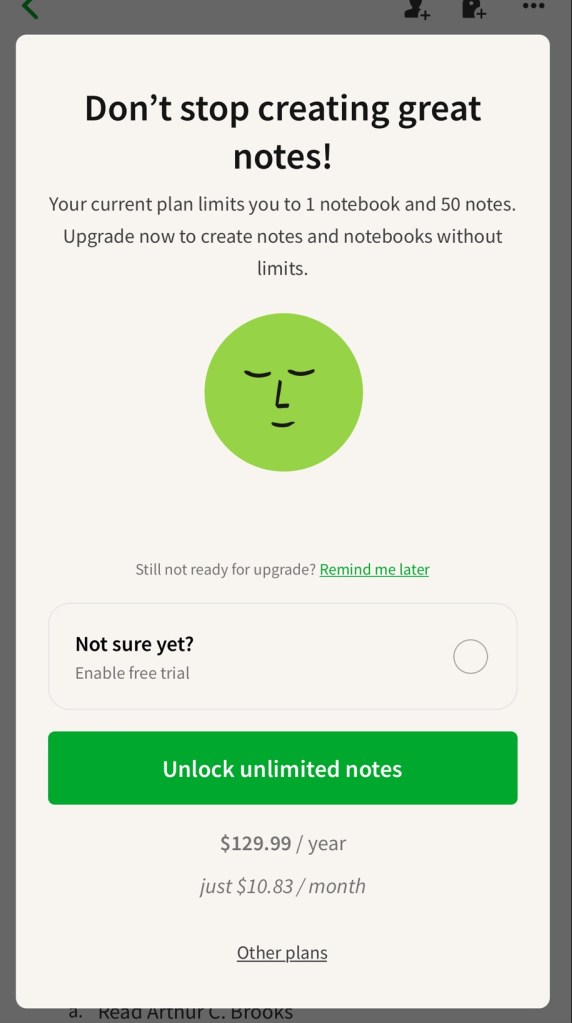
One of my favorite companies is trying to dump me, and I get it. I’ve been using Evernote for over 10 years, and suddenly they really, really want me to upgrade, or leave. Every time I open the app, I get a full-screen pop-up like this:
I have WAY more than one notebook and 50 notes.
Part of me does feel jilted … at ~20 years old, this company is one of the longest-running freemium consumer businesses on the internet. Now, the constant bombardment with upgrade pop-ups feels a bit like they’re punishing their free users for opting into that model.
But, I won’t listen to that part of me, because I understand what the company is dealing with. Evernote supports over 200 million users (!), with the vast majority on the free version. The company has weathered 2008, COVID, the latest tech bubble burst, and everything in between. Not to mention thousands of competitors with VC dollars to burn. In the meantime, the product has gotten better every single year, and I have consistently loved it.
Reading the announcement that preceded this upgrade campaign, I wasn’t surprised to learn that I use much more data and more functionality than the typical free user. This is why I’m part of the annoy-till-they-buy-or-quit cohort. And I have to give the Evernote team credit: six months into this, and it’s still just barely below the pain threshold that would have made me either upgrade or leave by now. They could have made it much less tolerable than a pop-up, or straight up forced me to upgrade or lose my data. Instead, I’ve been allowed to keep using the app, even though I’m way over the newly defined free tier. To their further credit, they understood they’d definitely lose some users doing this. They were honest about that in the blog, and they remain committed to users’ data ownership and data portability.
Like all software companies, Evernote is operating in a much tougher economic environment, and they could no longer support so many free users and so much free data. I’ve enjoyed almost 11 years of usage and improvements, at no cost. For all that time, Evernote worked hard to build the best app they could, and erred on the side of giving free users too much value, not too little. Now it’s time for me either to give back some of that value, or upgrade. I will probably upgrade … eventually.



 sabbatiblog