Yesterday’s post was first handwritten on my Remarkable2, then auto-transcribed to text, emailed to myself, and pasted into WordPress.
It’s been at least six months since I tried Remarkable’s writing-to-text service, and the improvement is, well … remarkable!
It still doesn’t recognize bulleted or numbered lists well, or even simple paragraph breaks. But after I pasted the text, I made only one correction to one mistranscribed character in this entire post; it even recognized ‘Tetlockian‘! I took the slightest bit of additional care to write neatly, but not enough to slow me down or distract from writing. And I wrote in my normal ~80/20 mix of cursive and printing.
I wonder if the improvement was the integration of newer and more powerful models, tuning, or if I’m just imagining it?
Previously, the Remarkable service struggled to recognize my writing’s characters themselves and struggled to identify word breaks properly, meaning it never was quite good enough justify using it. I would have to spend more energy on writing extra neatly than was worth it to get the transcribed text. So I would use the Remarkable2 only for my own notes, never when I would need the text. This is supposed to be a huge value prop of the platform, so I’m glad it’s working so much better now. I think it will reinvigorate my usage of the product.
Last year, for the first time since 2018, I did not set New Year’s Resolutions. But for good reason.
2024 for me was one big Resolution: I took the year off from work, guided by a vision to Pursue Spiritual and Intellectual Clarity. In that pursuit I wrote, read, travelled, reflected, learned, and practiced new skills.
In 2024 I also succeeded in several efforts that had been repeat-failures as Resolutions in years past. This time I succeeded because these things were incidental to my greater purpose, and because I had few other obligations.
In 2024, I …
Kept up near-daily writing and meditation habits
Read a lot of books
Made real improvements in diet and reductions in drinking
Worked out a lot
Invested in the spiritual dimension of my life in a way I never had before
After last year’s reset, I am back to formal resolutions for 2025. We’ll see if the accountability from posting them somewhat publicly increases my success rate. (In a few days I’ll try to post a recap of my success/failure rate in prior years).
In 2025, I will …
Boot up on classical music. I have had this thread pinned to my personal email all year and never got to it. But today I started.
Make predictions and measure my accuracy. In the Tetlockian/Rationalist tradition. This is another one I’ve had good intentions around for years, but have never quite gotten to. This will get its own post.
Do a programming project with new AI & web tools. This will also get its own post.
Complete five formal public speaking engagements. Can be anything, as long as it’s part of an event and there is an audience. Public speaking has been my most consistent personal growth focus for several years now.
Finish 10 books; sample and but not finish 10 others; attend six movies/concerts/shows. Review all of them here.
Reengage with the pursuit of spiritual clarity. If I do it, this will get its own post as well.
Get down to race weight. Even if I don’t race this year.
In the past I’ve broken my Resolutions into primary and secondary sets. This year I am just listing them in roughly descending order of priority.
Bittersweetly, my sabbatical will come to an official end in a couple of weeks. I’m still figuring out whether I’ll post here, elsewhere, or both. I do plan to keep writing in some capacity.
And I do hope there are more sabbaticals in my future. The dream is to begin my next 10-year+ work journey now, and then be able to take another extended break.
In the meantime, I’ll post here at least when I travel or vacation. And a guest-poster or two may be writing here soon as well. I’m excited to see what they have to say!
The range of human passions runs both broad and deep.
If it can be climbed up, slid down, flown, or ridden; if it can be thrown, caught, stacked up, knocked down, pushed, or pulled; if it can be assembled, dissembled, timed, measured, predicted, or drawn at random; if it can be discovered, hidden, organized, jumbled, or deciphered; whatever we can do with our environment, we will do it.
And whatever we do, we will make a game of it. Homo habilis, or “skilled human,” was the early hominid first associated with tool use. We, homo sapiens, are the “thinking humans.” But we can understand ourselves equally well as homo ludens, the game-playing humans.
The games we play, and the communities and subcultures we create around them, make us who we are. Within our games can be found all of our humanity. They teach us cooperation and competition. Communities built around games help us to belong, but also to stand out. Playing sports, we lose ourselves in the moment, achieve a flow state, and brush up against the infinite—our whole being a machine, mind fused to body as one, tuned to one activity in real time, and also outside of time. But games also teach us to strategize, to think long-term, to aim toward goals hours, weeks, or years away. Simon Sinek’s concept of the infinite game, with ever-changing rules and players, is as good a metaphor for life as any.
We tend to assign an air of seriousness to big games with mass appeal—once normal games that have been elevated to cultural events: the NBA Finals, World Cup, or Tour de France. And we sometimes denigrate the most niche games and communities as silly, nerdy, a waste of time. But I think the most niche pursuits reveal the purest beauty in our game play.
The next time you see the cup stacking, cheese rolling, or Tetris world championships on YouTube; or the cornhole world series on ESPN 2; or an ad for a local Magic, The Gathering tournament, don’t think of how many hours the competitors have spent with their plastic cups, or how many dollars on their card decks. They aren’t trading their time and money only to be the best at Tetris or cornhole. They’re trading it for belonging, community, and achievement in general, but expressed narrowly. And for a brush with the infinite.
Years ago when I first started at Relativity, we had an amazing engineering leader named Security Bill.
Security Bill taught us a lot. For instance, he knew our most likely breach scenario was low-tech: someone tailgating into our office behind a polite door-holder, then sticking a USB into an unlocked machine. So Bill set out to create a new norm. Everyone would badge into every door, every time. If you were walking back from lunch with your best work friend, and the CEO happened to be walking behind you? All three must badge in, one at a time. If the CEO was distracted, late, in a rush, and forgot to swipe his badge, it was your duty to remind him he needed badge in. Even if you were just an intern. This would usually mean stopping right in the doorway and physically standing in his way. It was a hard norm to enact in a company of a few hundred people, but Security Bill was a patient and persuasive man. Leadership bought in first, and slowly the new norm stuck. Within a couple of months, the whole company was badging in, and holding each other accountable.
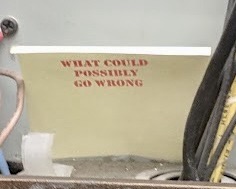
But the badge norm protected against only the first half of the threat, and still wasn’t foolproof. So Bill also had a custom stamp with a red ink pad. He carried the stamp and ink in a little case, along with a fresh set of yellow sticky notes. If you stood up for a drink or bathroom break and didn’t lock your computer, and Security Bill happened by, you’d return to find a sticky note on your monitor. On the yellow paper would a red stamp that read in block letters “WHAT’S COULD POSSIBLY GO WRONG?”
And Security Bill was always willing to describe for you what could possibly go wrong.
Security Bill taught us other things, beyond how to have a security mindset. I was once asked in a meeting to do something that was outside my skill set and comfort zone. I said something like, “I’m not very technical, I don’t think I can own this.” Bill encouraged me to try, and offered to help if I got stuck.
After the meeting, he pulled me aside and told me a story. “When I was young, my parents sent me to work on my uncle’s farm for a summer. For the first two weeks, every day I was asked to do something I had never done before. What would he have said to me if I’d told him, ‘I’m not very agricultural, I don’t think I can do this.’ Some things are hard. But we’re smart, and we figure them out.”
Security Bill created a permanent security mindset at Relativity. Throughout his career he also helped me and hundreds of others learn how to build a culture of excellence; how to fight an uphill battle and win; when to be a careful thinker, and when to jump in and figure it out.
As I exit my sabbatical, I’ve spent more time thinking about what’s next. These thoughts tend to with come hopes, desires, and worries. But they don’t have to.
This year has been the first time in my life I haven’t had a plan or timeline for my next phase. That openness has helped me appreciate the present, and be wary of the future. I’ve learned to notice when I’m ruminating on the future (rather than taking practical steps along my desired path). It gives me an uncomfortable feeling, like leaning too far over high ledge.
In my meditation app recently, I heard this advice:
“You cannot become happy. You can only be happy, in this moment, right now.”
We should still make plans and follow through with them. But we shouldn’t confuse those plans for living a good life.
On the last morning of my recent trip to Amsterdam, I had time to check out one more coffee shop before leaving for the airport. Google Maps is a blessing and a curse, because you can always find something good, but by the time you get there, you often know so much about the place that the sense of discovery is all gone.
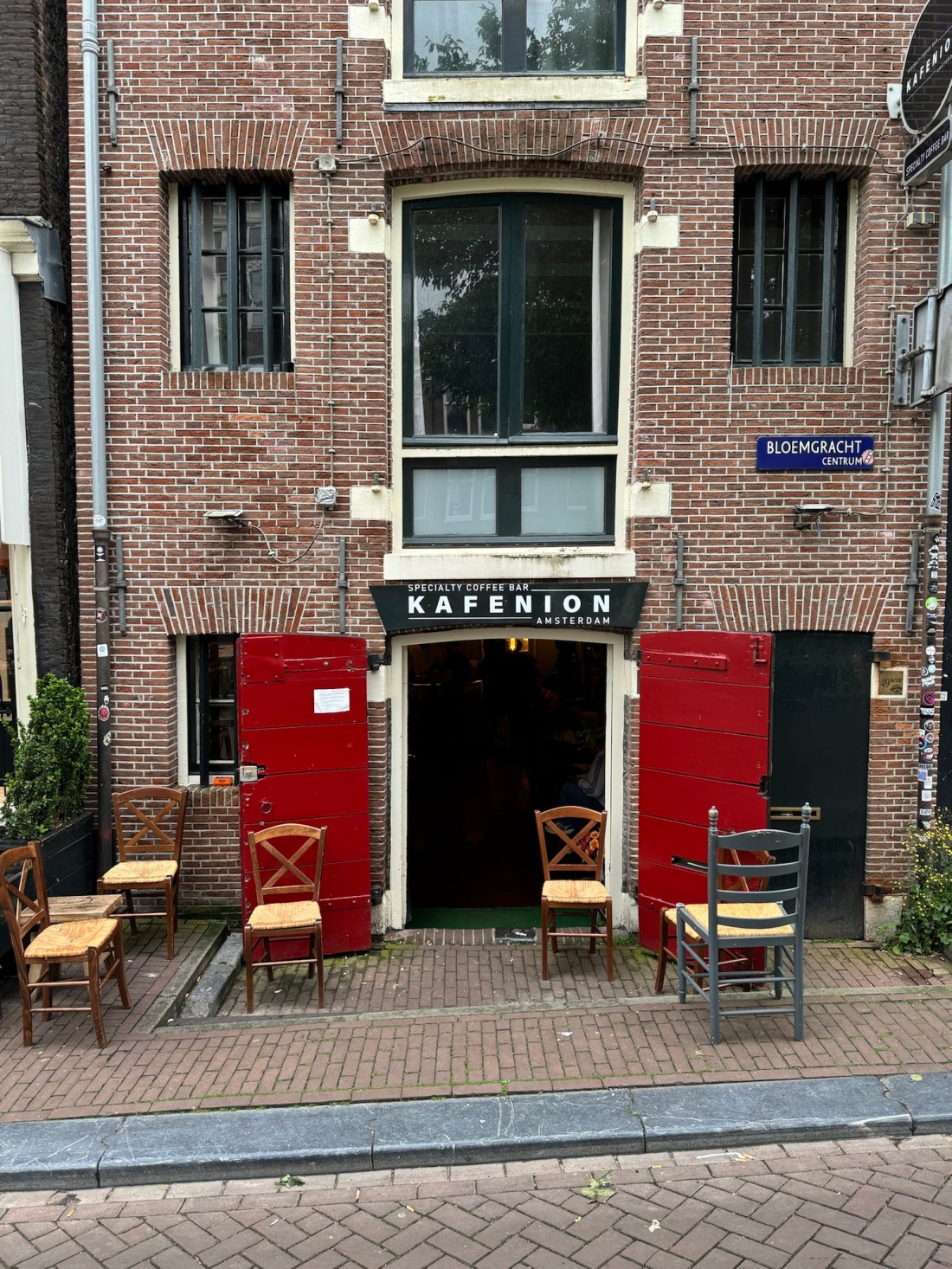
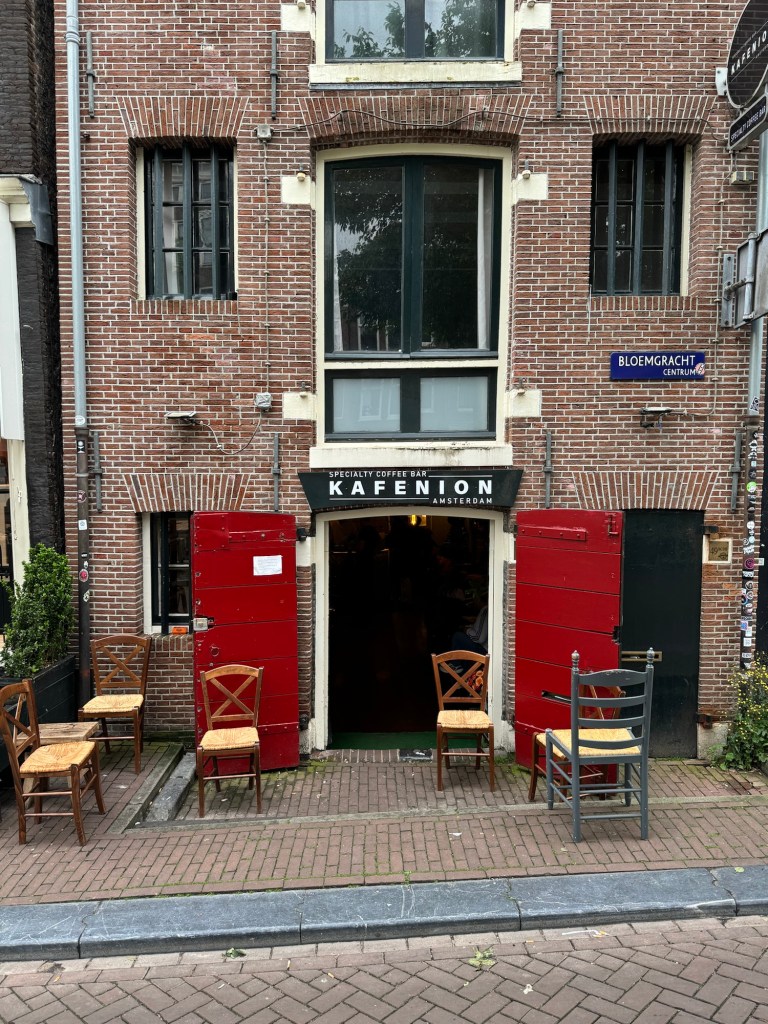
There was a coffee shop called Kafenion right next door to my Airbnb, which I’d poked my head into on my first day. It was absolutely packed, a good sign, but looked kind of old school and had a strange vibe. So I found another place that seemed more modern.
This last morning, as I looked through Google Maps, there were a bunch of options I hadn’t tried, all within a short walk.
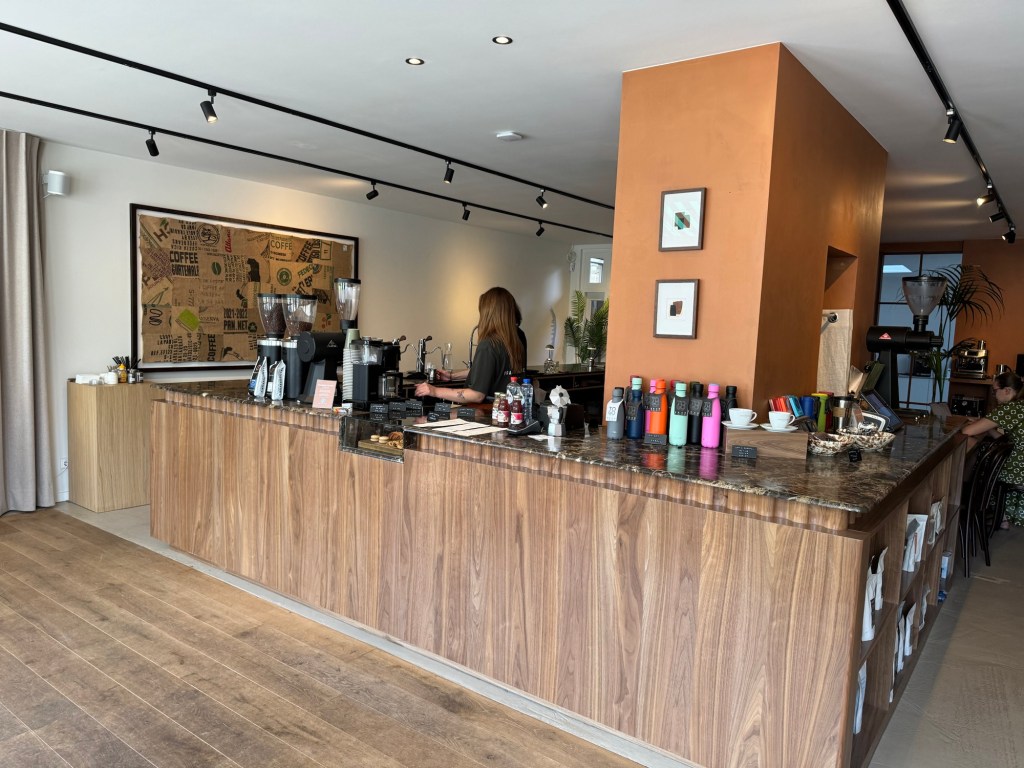
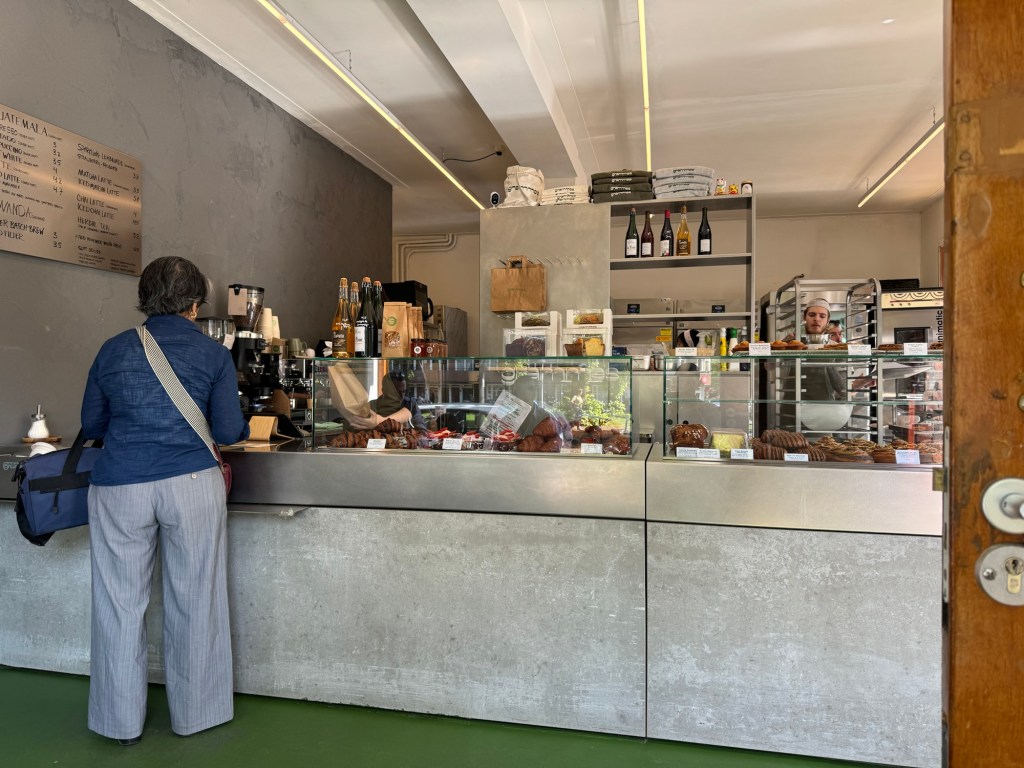
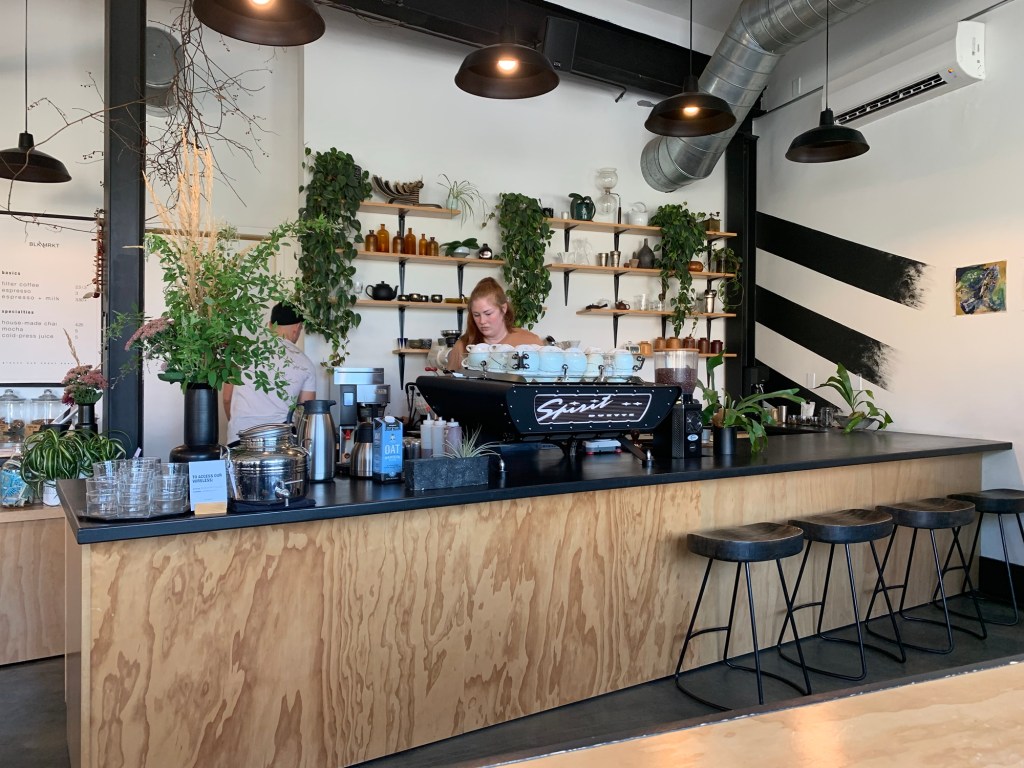
But, they all pretty much looked like this.Or this.Or this.
… natural wood, airy, brass, granite, stainless steel, minimalist. Don’t get me wrong, I love hanging out in places like this, and loved each of these individual places when I visited them.
But it’s a bit of a bummer when you’re traveling, looking for new experiences, and you’re hanging in a bunch of places that from the inside could be in New York, Chicago, London, Amsterdam, Buenos Aires, or Tokyo. Lots of people have written about the loss of local character and increasing “sameness” of many great cities, and that morning, I was feeling it. Of course, if there’s a problem here, I’m part of it: I always do my research on Google Maps, always look at the pictures, and had already visited five different modern espresso cafes with Scandinavian minimalist design and single origin beans.
So, I decided to try Kafenion, the place right next store that had been packed, but seemed a bit weird. I figured, best case it’s great and different, and interesting. Worst case I don’t love it but it’s still coffee.
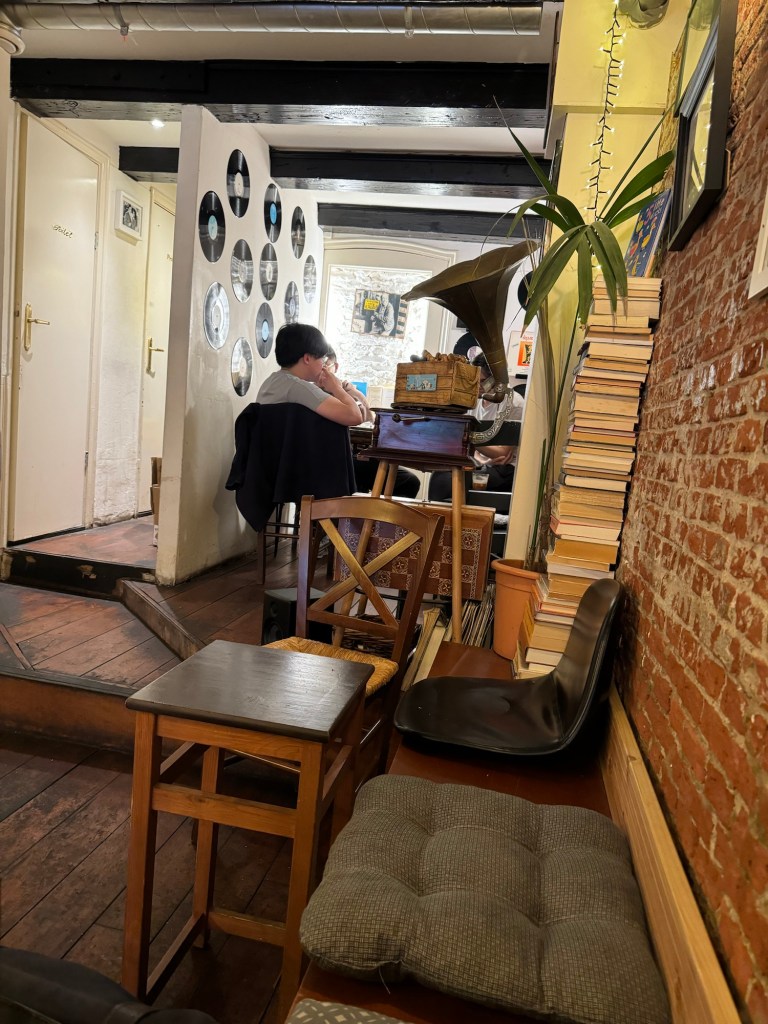
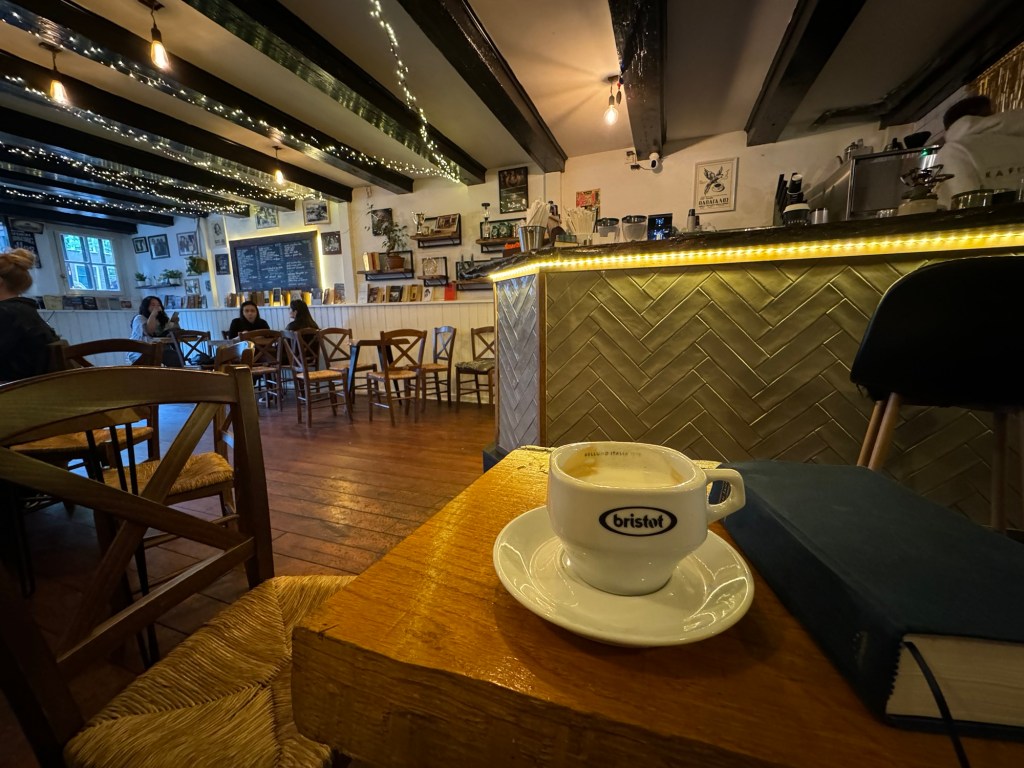
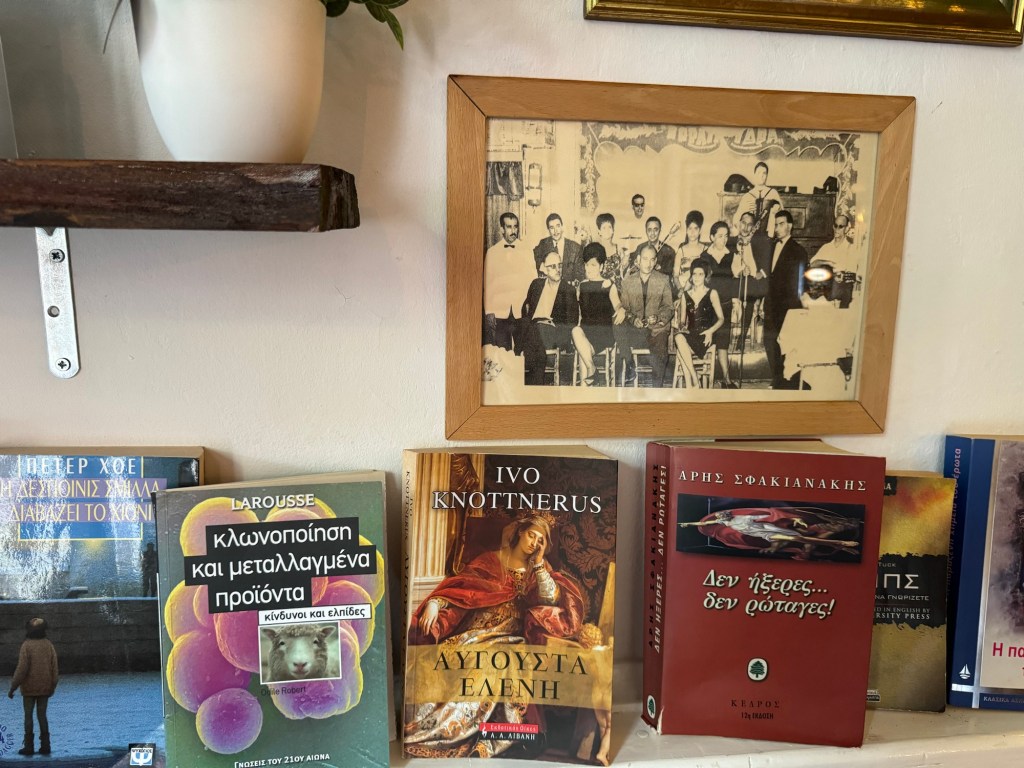
I walked in, and it’s a big space, but nearly every seat was taken. It seemed to be 50% hip young Amsterdammers, and 50% old Greek guys. There was no latte art, no bronze fixtures, no blonde wood, and no neon. It was dark, with dark wood, black and white photos, stacks of books in Greek, and a bunch of chess boards (another very good sign). The seemed to be high-quality Italian, but not exotically grown and locally roasted. The only thing artisanal was the olive oil (I’ll get to that).
The barista/manager/owner(?) took my order. I later got his name, Omar. He asked me a question I don’t usually get asked at coffee shop, “Is strong okay?”
I thought he meant a dark roast, and I said whatever he recommends is fine. He looked at me kind of funny, so I asked, did you mean the roast? No, he said, the caffeine content. I told him yes! Strong is great. I was low on sleep and had a long travel dat ahead. Then he gave me that look that tells you someone is sizing you up a little. He apparently decided I was open enough to suggestion, and he ask, “Do you want something kind of weird? If you don’t like it, I’ll make you something else.” Now we’re talking. Yes! This is what I came for.
Omar started doing his thing, making the espresso, steaming the milk. Then he measured and poured in two spoonfuls of something thick. I assumed it was some kind of homemade syrup, and I really don’t like sugar in my coffee, so I was prepared to not like it but pretend to, because I didn’t want to hurt his feelings. When I tried it, it was unexpected—great coffee, something strange about it, but definitely no sugar. I asked what was in it.
“It’s olive oil, a very special olive oil from my family. You can’t taste it much, but it makes everything very smooth and nice.” I told Omar I loved it, he fist bumped me, and then I stayed and enjoyed the atmosphere and the drink, and ordered another for the road.
It was a perfect cap to a great trip, an experience I wouldn’t get anywhere else, and a reminder to take more chances and do less research.
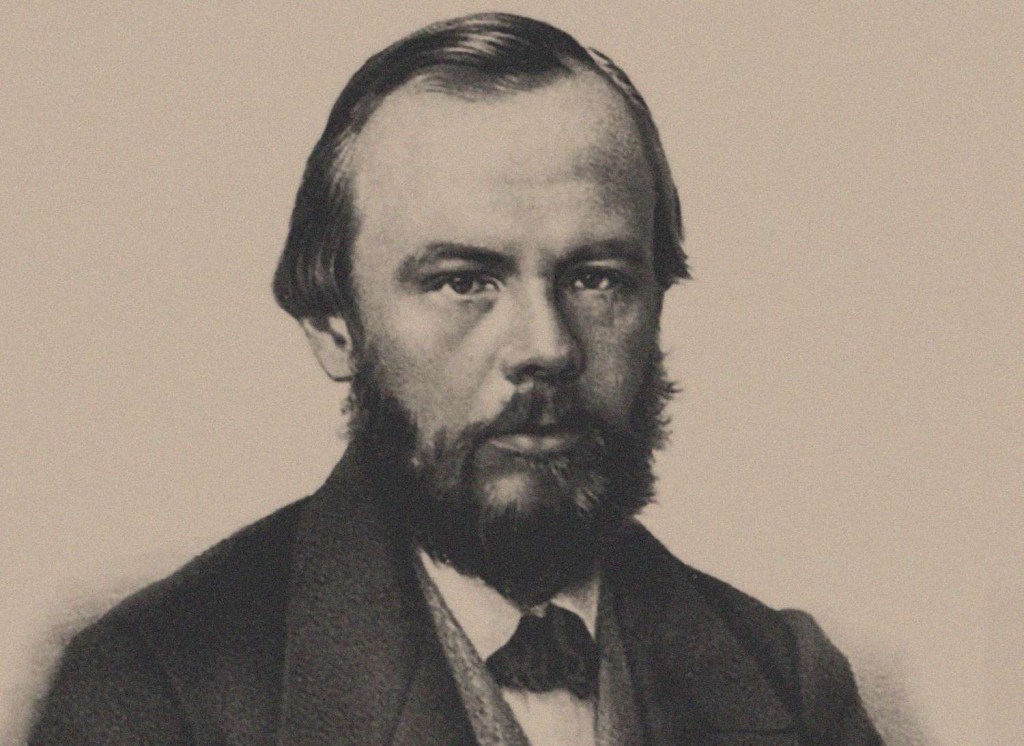
Hours after he stood in front of a real firing squad in what turned out to be a mock execution, Fyodor Dostoyevsky, wrote to his brother Mikhail:
When I look back at the past and think of all the time I squandered in error and idleness, lacking the knowledge I needed to live; when I think of how I sinned against my heart and my soul, then my heart bleeds. Life is a gift, life is happiness … Every moment could have been an eternity of happiness! If youth only knew. Now my life will change, now I will be reborn.
The execution was staged to make Tsar Nicholas look merciful when the actual sentence was handed down for Dostoyevsky’s political subversion: four years of hard labor in a Siberian prison camp. In the letter, he is describing the feeling that grabbed him in what he genuinely believed were his last moments on earth. As he saw the sunlight glinting off of a church steeple, the people moving through the square, and other everyday sights, he tried to fully experience each moment, stretching each into a brief infinity.
I’d heard the story of the mock execution, but only learned about the letter a few weeks ago, and the novelist’s turn of phrase has been rattling in my head ever since. It has become an effective mindfulness device. “Every moment an eternity,” I think to myself lately, any time I manage to catch a moment of mindfulness amidst the normal rush of daily life.
Meditation trains our minds to be present, not just in the few minutes of actual practice each morning, but throughout the rest day. Breaking the spell of distraction, over and over again, is the only goal. And this thought has helped me succeed at that goal more often over the past few weeks.
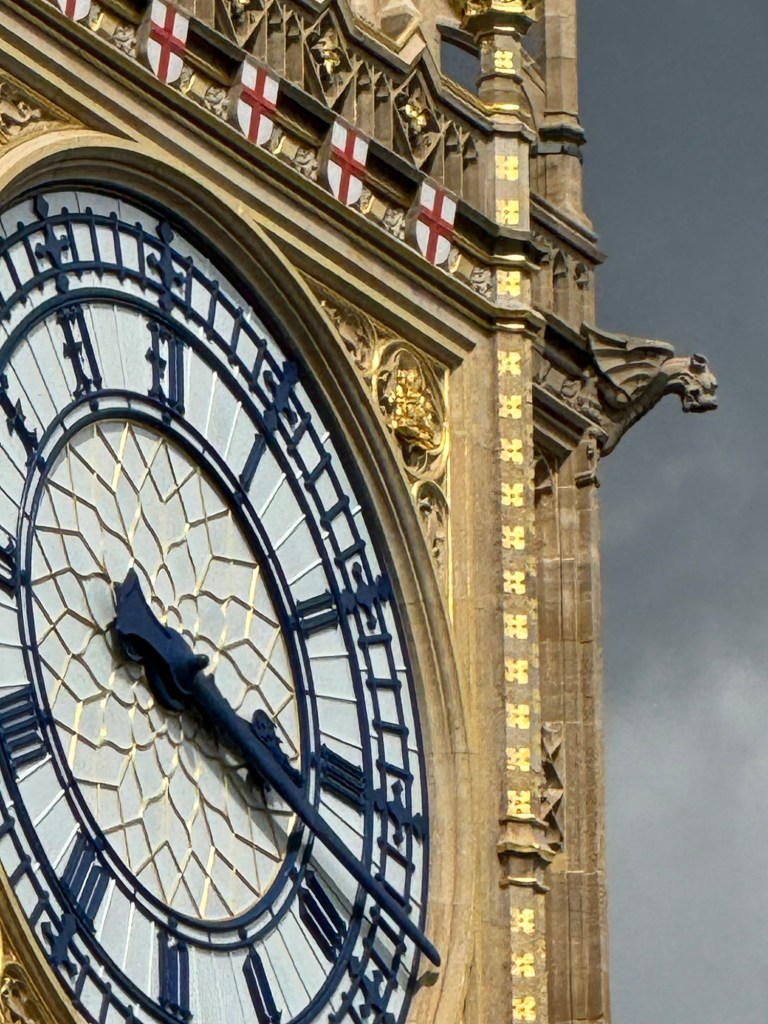
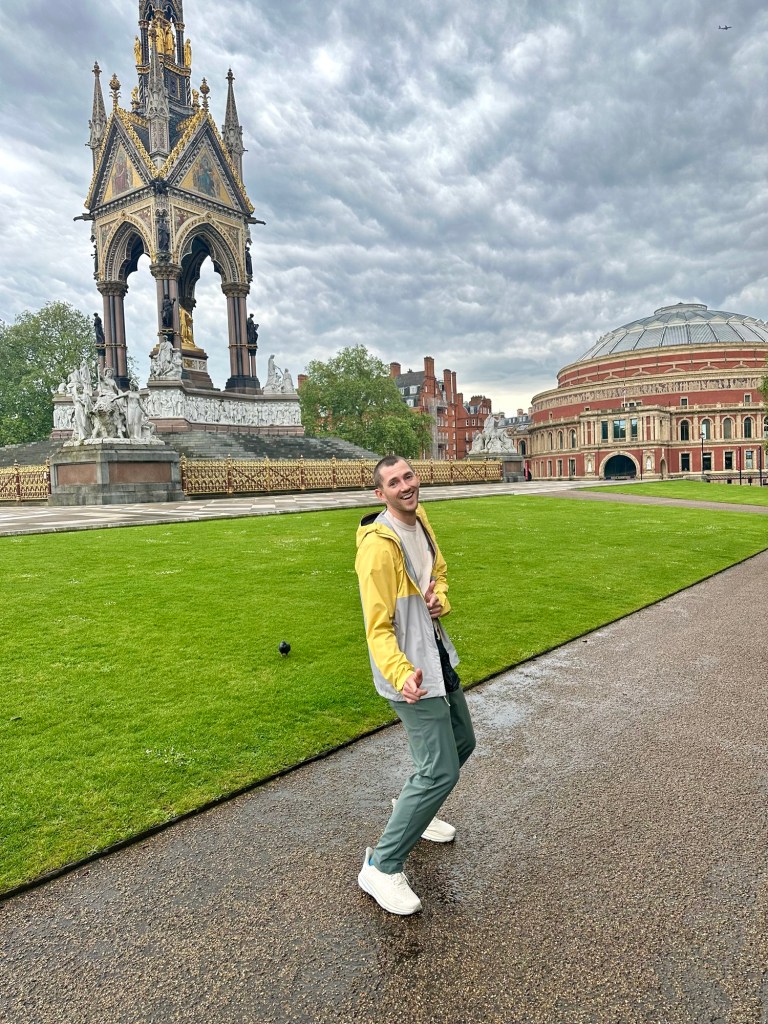
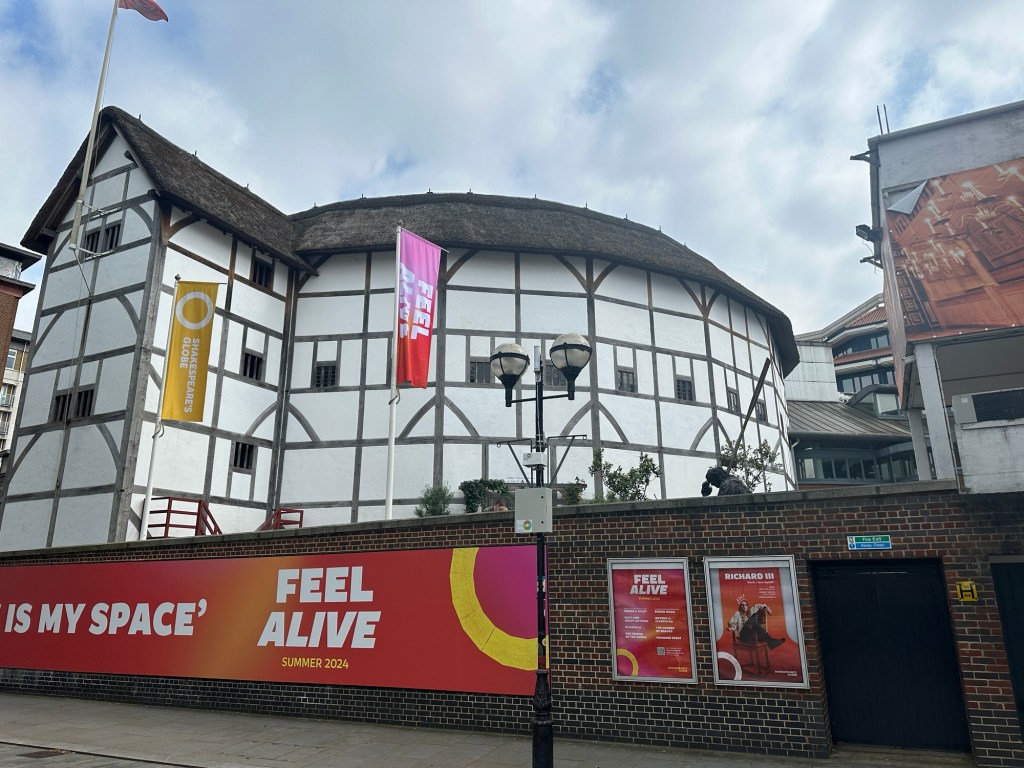
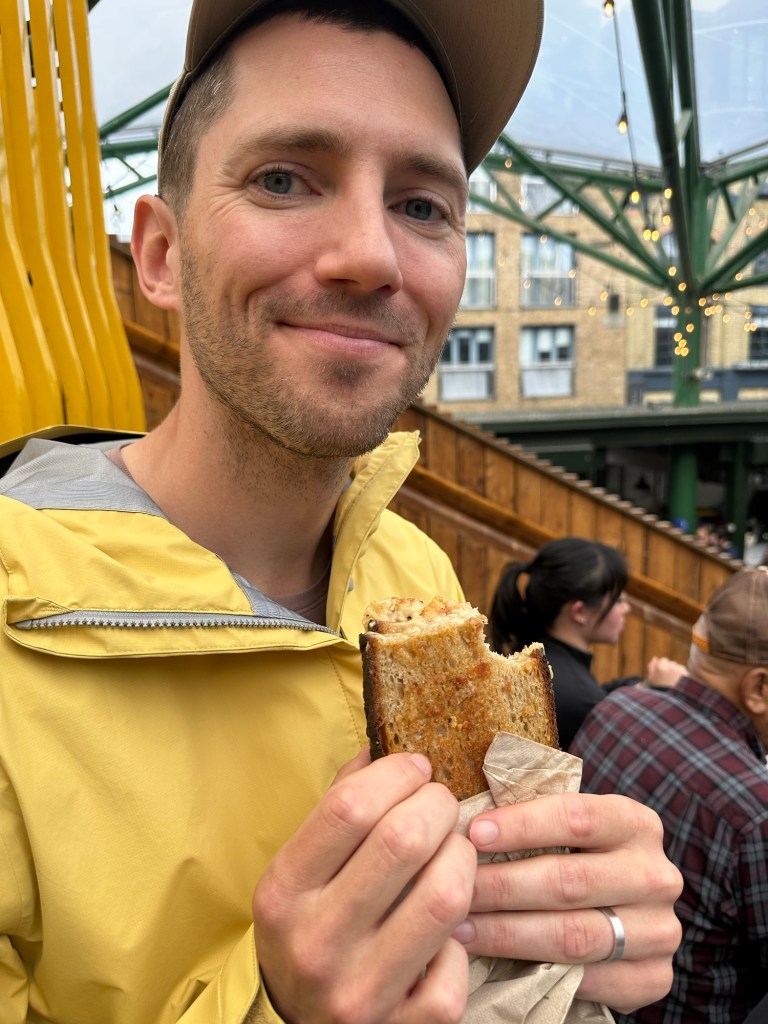
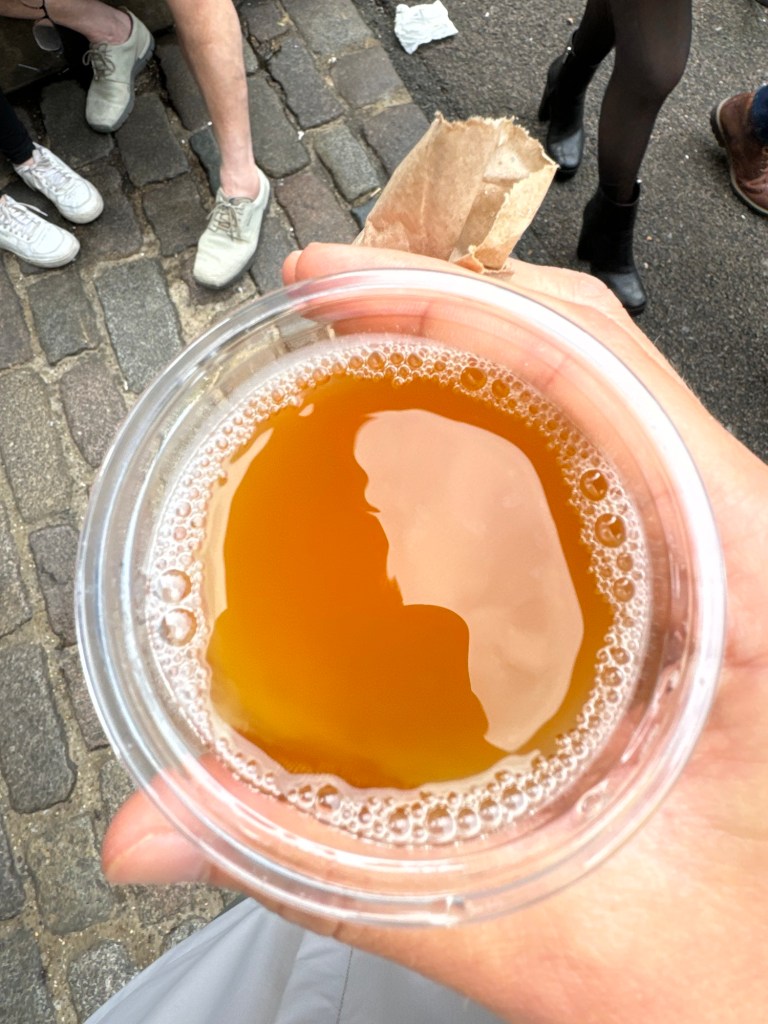
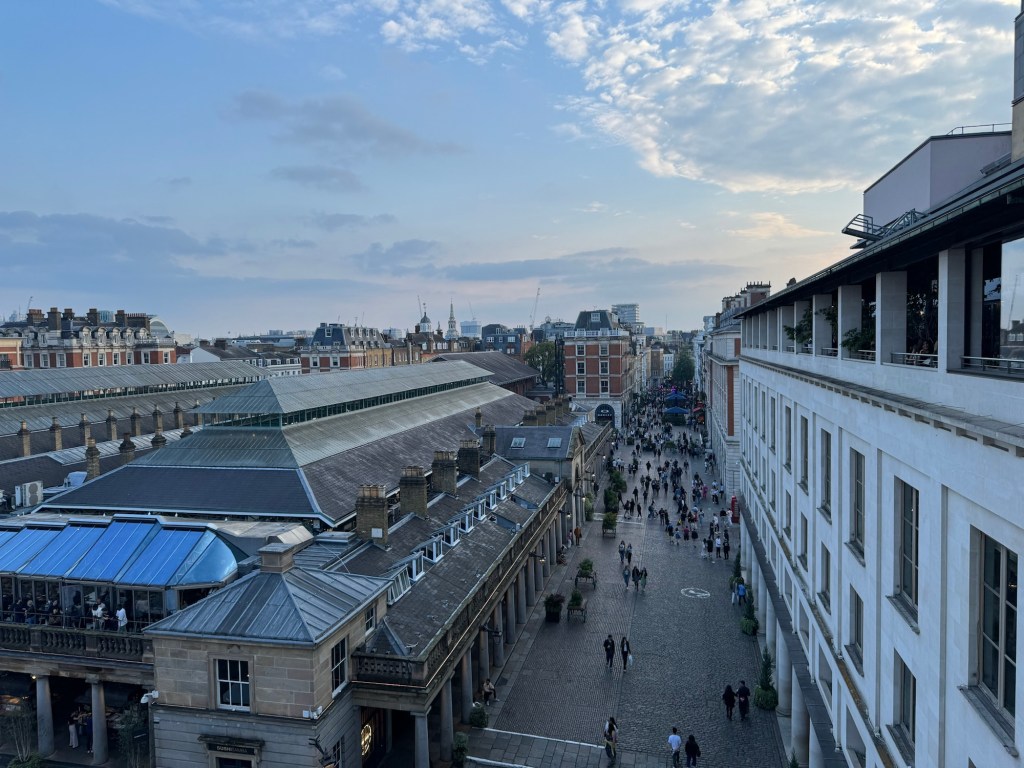
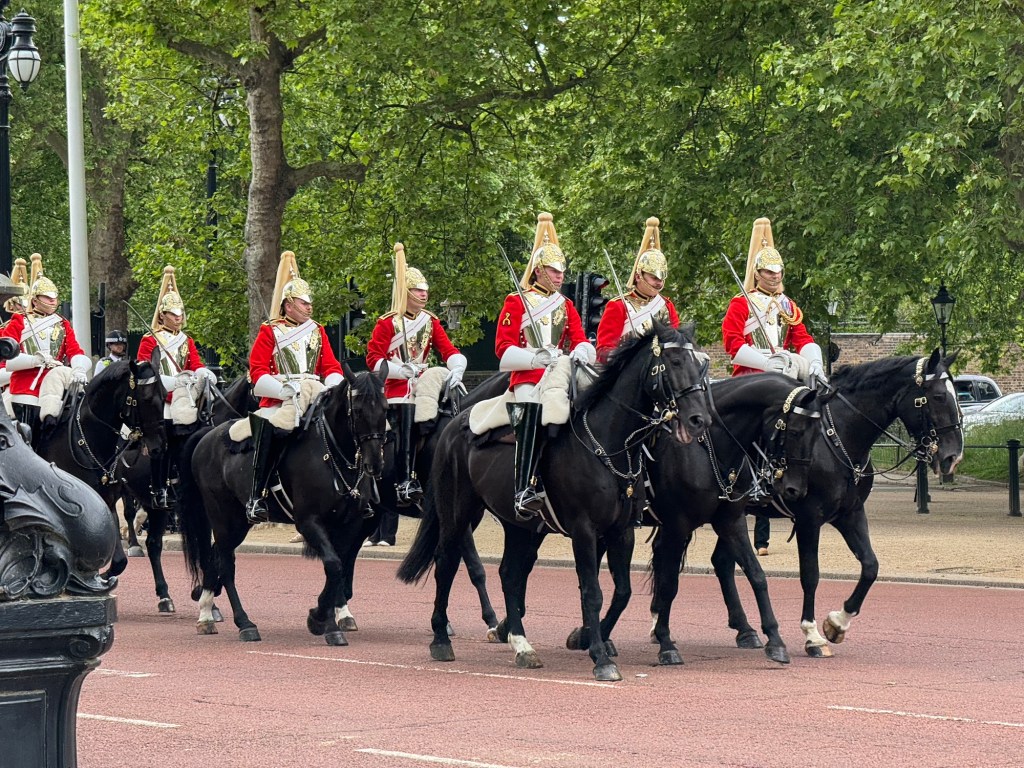
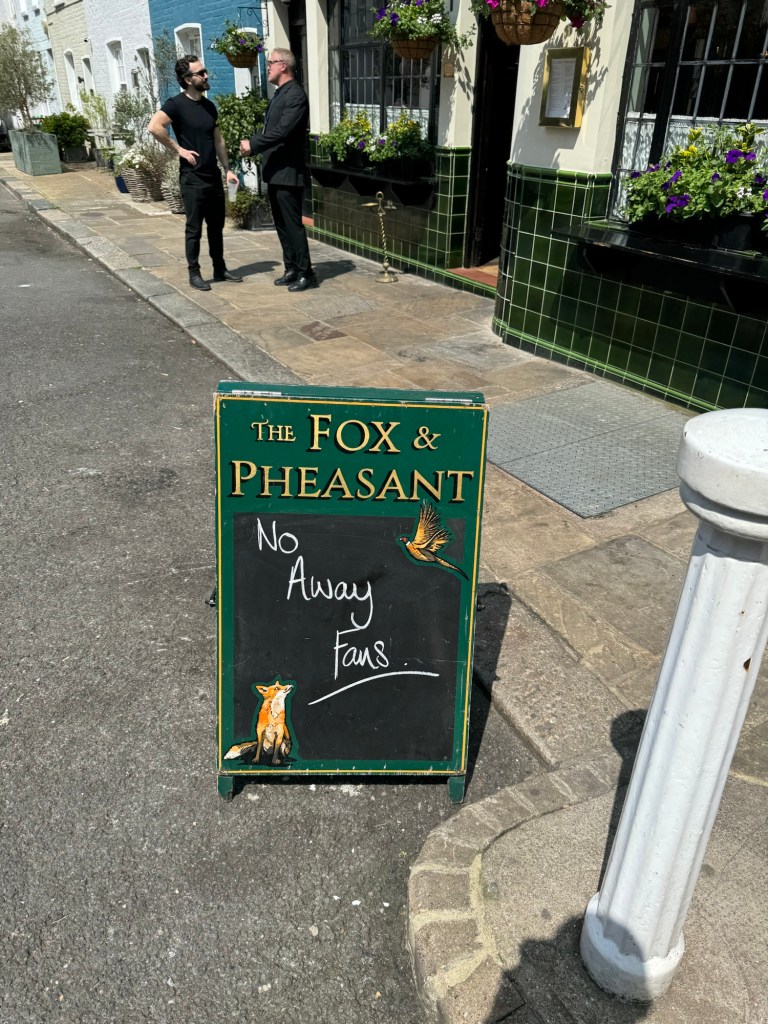
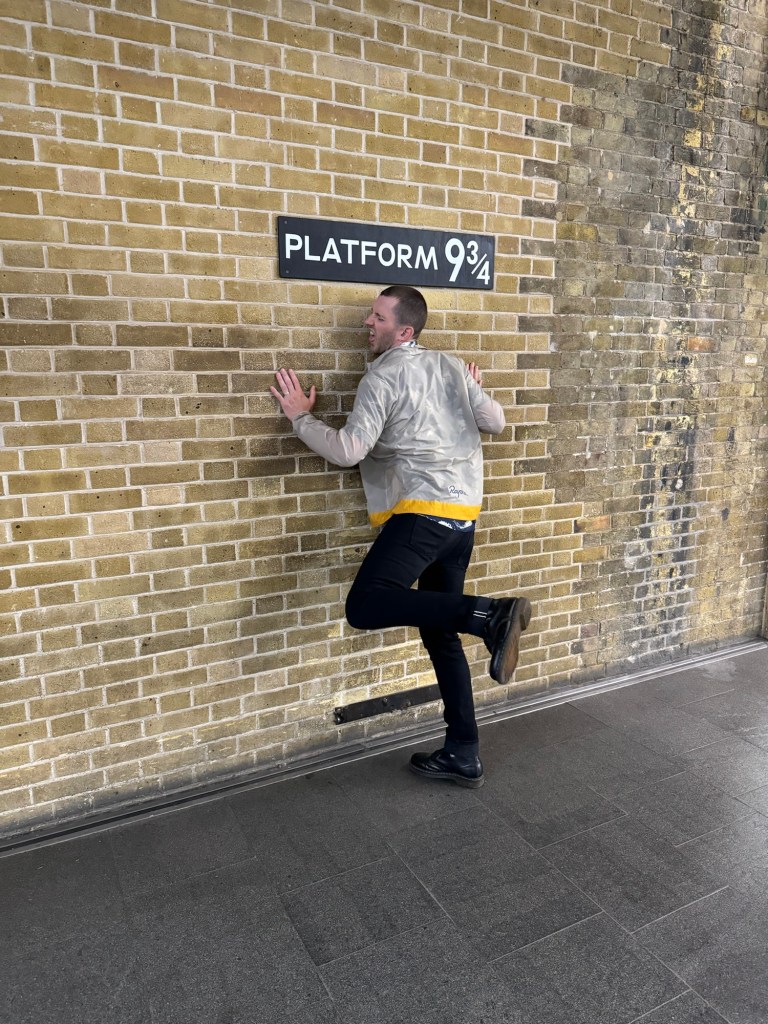
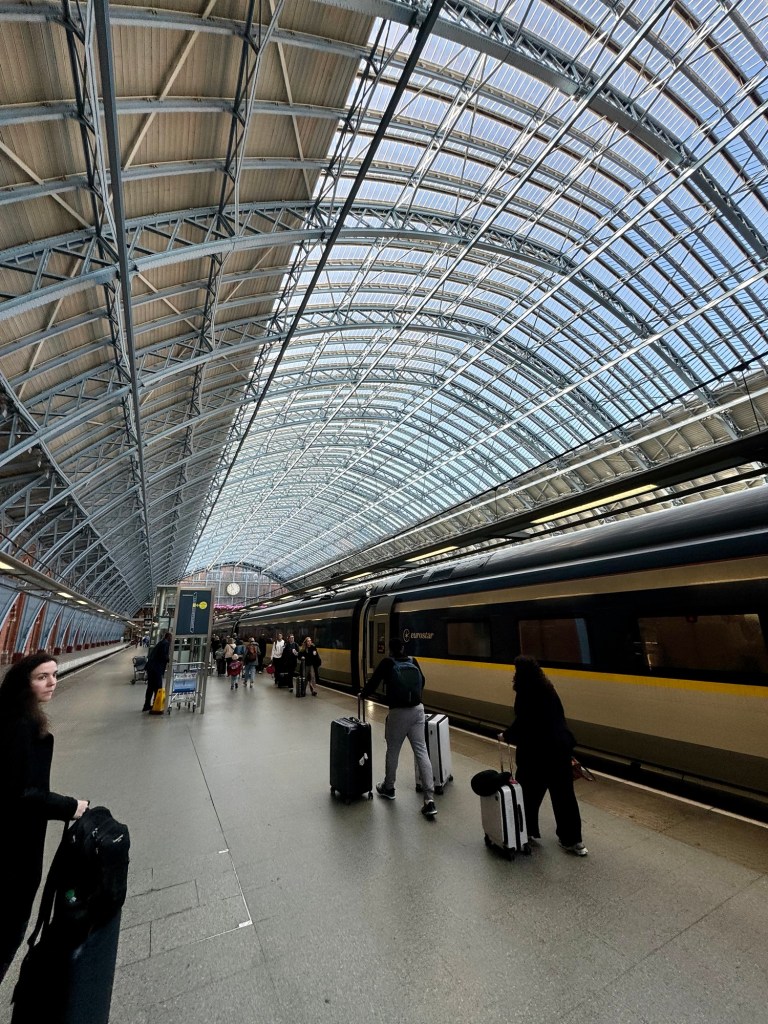
Big Ben after its Covid facelift. I’ve been fascinated since childhood by gargoyles, and these may be the coolest I’ve seen in person.Shoutout iPhone 25x zoom!Goofing around in front of the Prince Albert Statue and Royal Albert Hall in Kensington Gardens. Queen Victoria commissioned the monument in memory of her beloved husband.Shakespeare’s Globe Theater, rebuilt replica of the original, lost in the fire of London. Borough Market from above. Food and drinks worth fighting the crowds. Famous cheese toastie from Kappacasein Dairy in the market. I had one ~8 years ago, and have been waiting for my chance to get back. Bone dry cider … the proprietor tried to convince me to taste before buying, because so many people send it back. It’s a strange experience to get apple flavor with zero sweetness, but I loved it. Where’s Waldo?Drinks at the bar on the London Opera House balcony. The type of thing you see near Buckingham Palace. In Chelsea on a game day. Birthday brunch for a friend, at one of the best pubs for the famous Sunday Roast, traditional dishes and Real Ales. Ordering a Real Ale with an American accent (cask ale with natural carbonation, served not that cold), the bartenders will usually try to politely ask if you actually know what you’re in for. I love them, they are fresh and drinkable!The Opera House. Sort of a bummer, there used to be a Harry Potter luggage cart and scarf here for a free photo opp. Now there’s a gift shop and they only have the props out during the day, and you have to wait in line. Luckily we were there after hours. Leaving for Amsterdam by train. Traveling cross-border on trains in Europe is such a pleasant and calm experience, there’s nothing like it.
For someone who already loves cycling, doing it in Amsterdam for the first time is a peak experience. For someone who grew up in Amsterdam, you may be ruined for cycling almost anywhere else.
Only a city built before cars can have bike infrastructure so fundamental to its design. By comparison, Chicago, New York, and other US cities are maddeningly bad. It’s so easy to do this up front on streets built for people and horses, but so hard to retrofit streets built for cars.
The feeling of riding there is impossible to describe, it’s a different dimension, like skiing on ice your whole life and then discovering powder. It’s like visiting a new planet, where everyone is nice to each other all the time, and can’t imagine being mean. Here are my observations of what makes Amsterdam so special for cyclists:
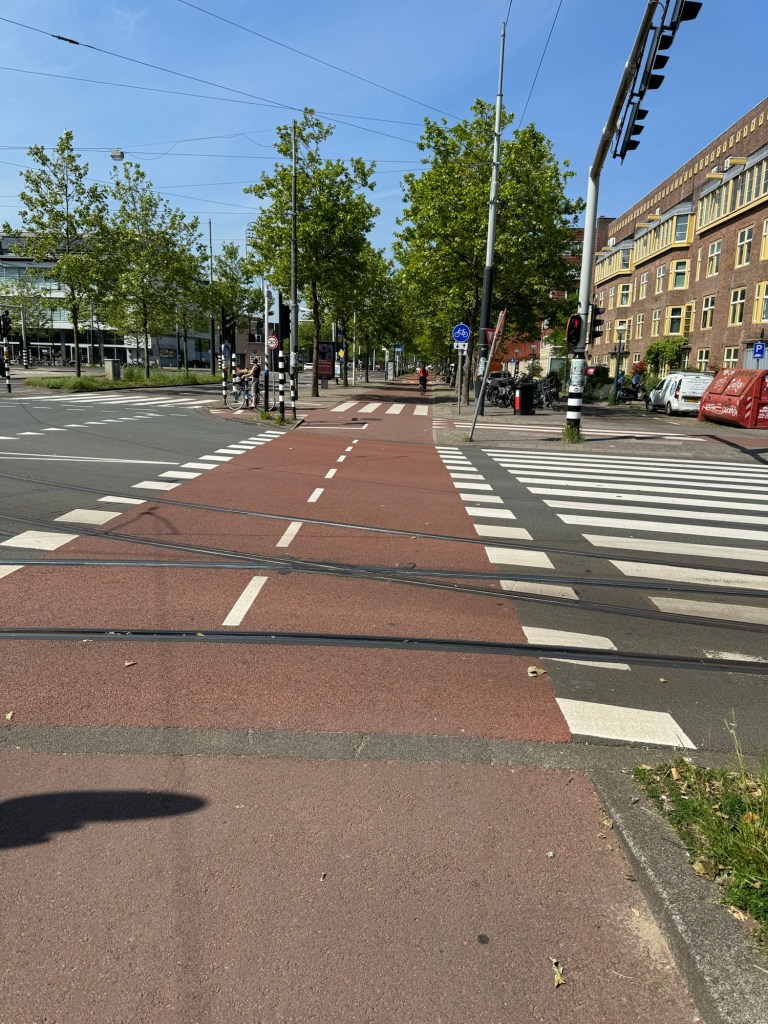
Three levels, for each its own. In the second photo below, you see a typical street near the city center. The sidewalk, bike path, and road are three distinct surfaces and/or levels. It’s impossible to overstate the feeling of safety and ease this creates, when your entire ride, not just portions, are protected. And when the protected areas are not carved out of a road or sidewalk, but there by design.
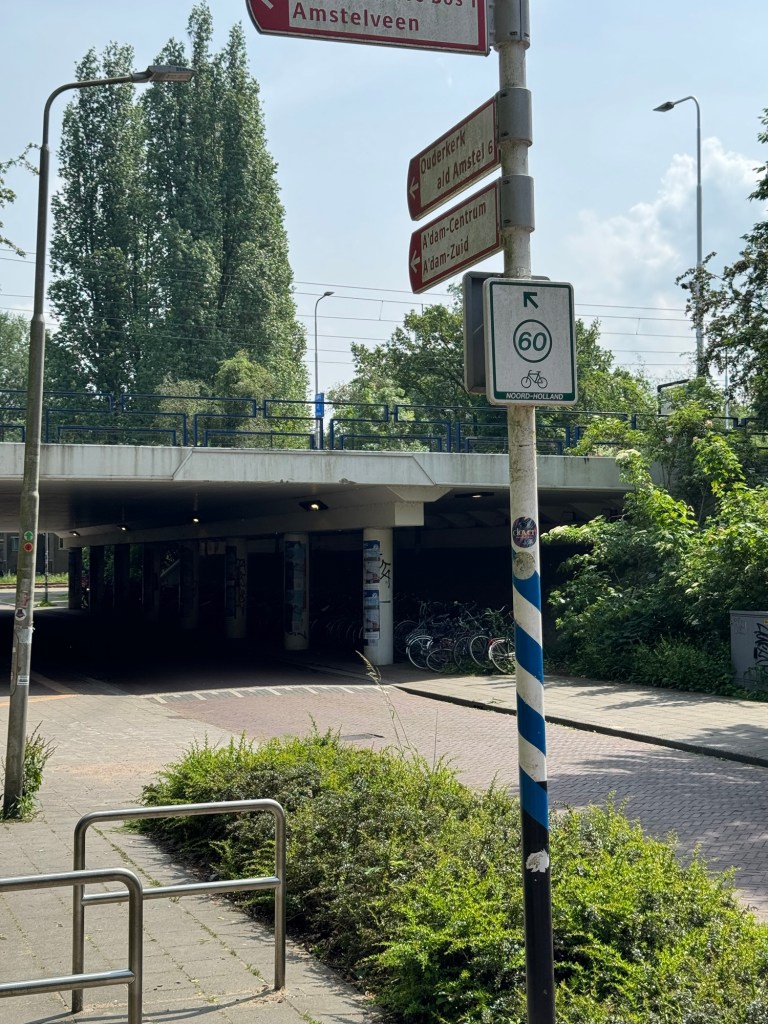
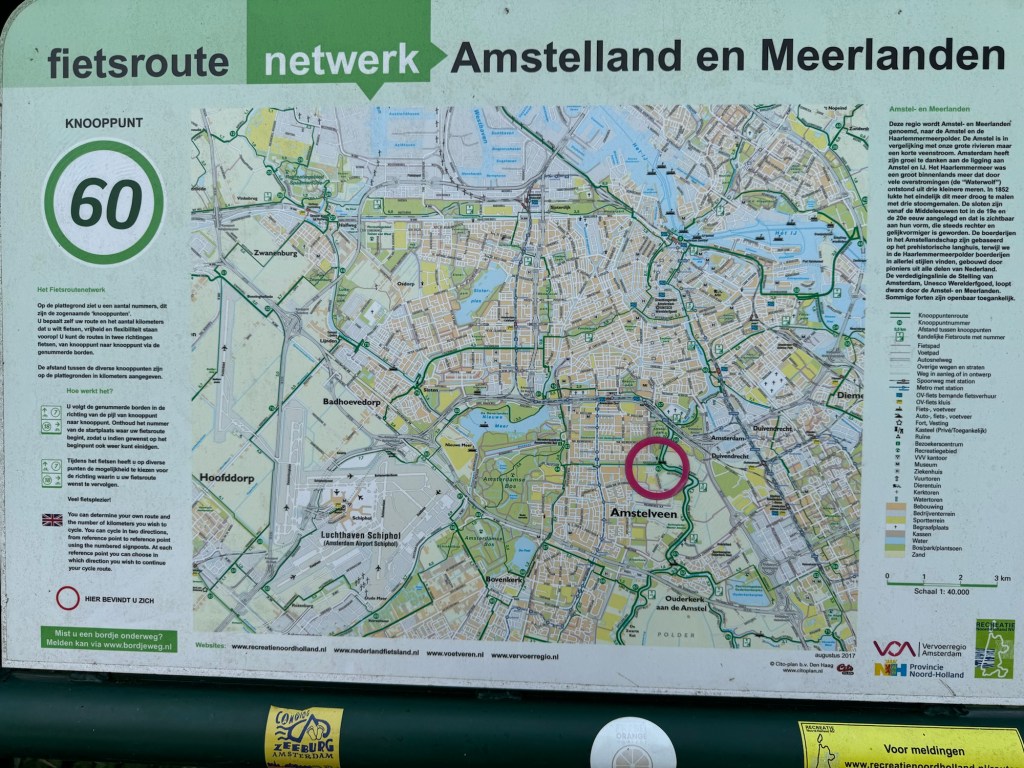
Bike grid and handy maps. Also pictured below, you can see the fietsroute (bike route) system, where major destinations are numbered, and highly visible signs guide you along your route. Major intersections and numbered destinations have large, easy to read maps, to help you find your next waypoint. Once you have it, just follow the signs with your number, and go!
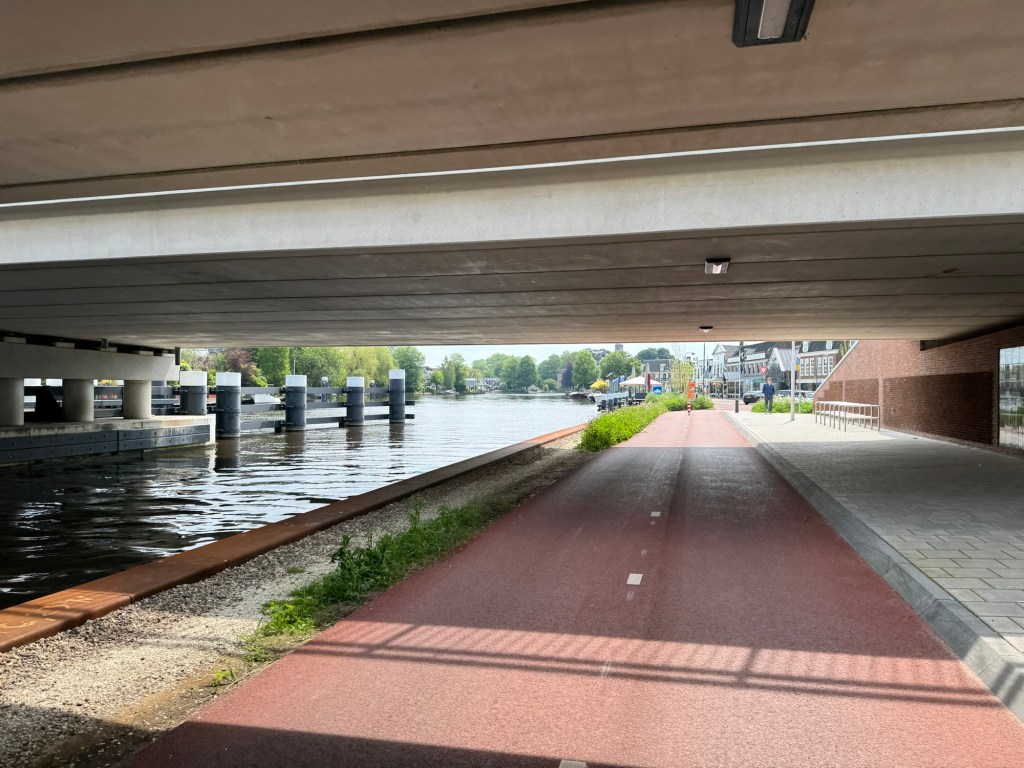
Ped&bike bridges and interchanges. Most canal crossings are pedestrian and bike only, and along the greenway bike routes, all highway crossings have dedicated interchanges always separate from the road. Again, the feeling of safety is so pervasive that it feels like you’ve been doing something wrong most of your life.
Strength in numbers. Cyclists and bikes are just everywhere. Hundreds are bikes are parked in busy areas and tourist destinations. You can spot a tourist because we’re the only ones who forget to check before wandering across a bike lane.
Bikes of all shapes. Cargo bikes, commuter bikes, road bikes, cruisers, and any thing else you can think of. The Urban Arrow style of commuter bike is super common, and it’s a happy feeling to be constantly passing by moms and dads touting kids. I saw a pair of guys riding with full sets of golf clubs on their backs.
Streets are for people. In the city, cars really do feel like visitors with precarious status. They drive gingerly, inching through intersections and around corners, giving people, bikes, scooters, trams, and strollers the right of way. Many cars are miniature. I felt wrong calling an Uber to pick me for the airport, and I wasn’t even certain it would be able to reach me because I’d seen so few cars on my street.
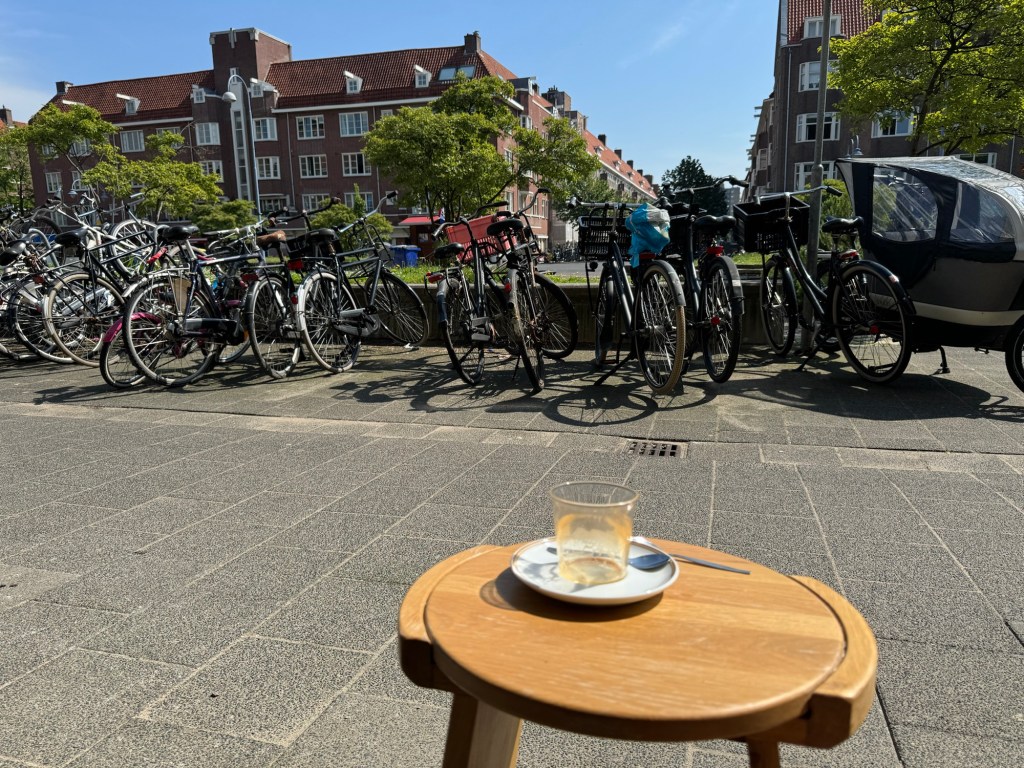
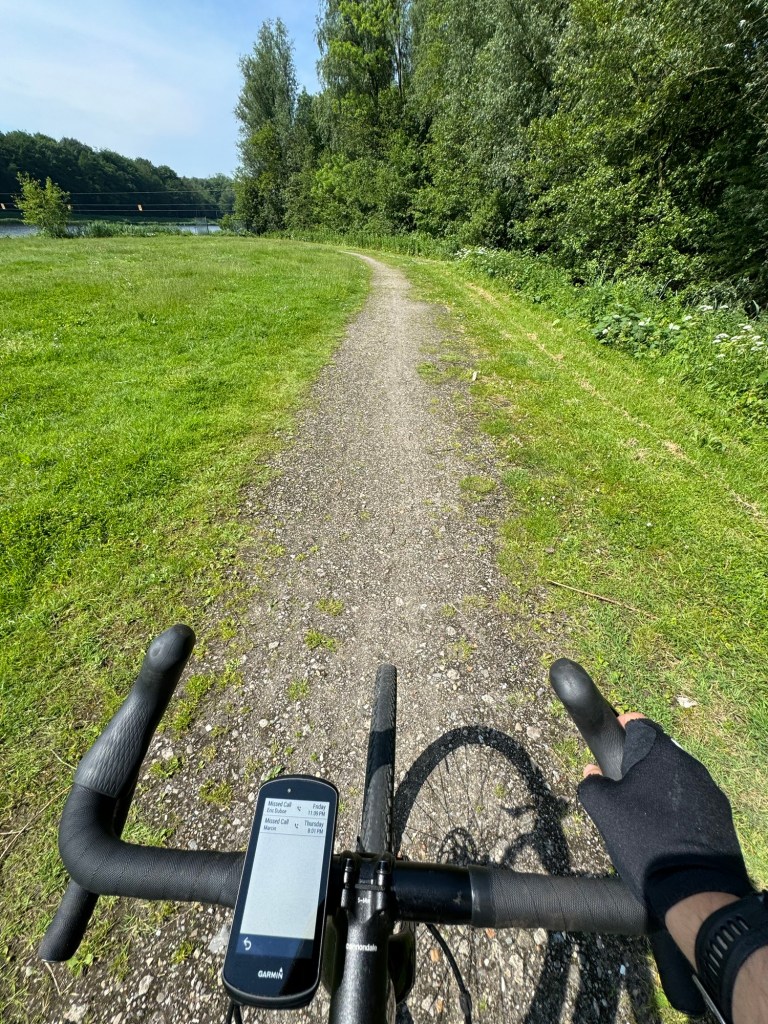
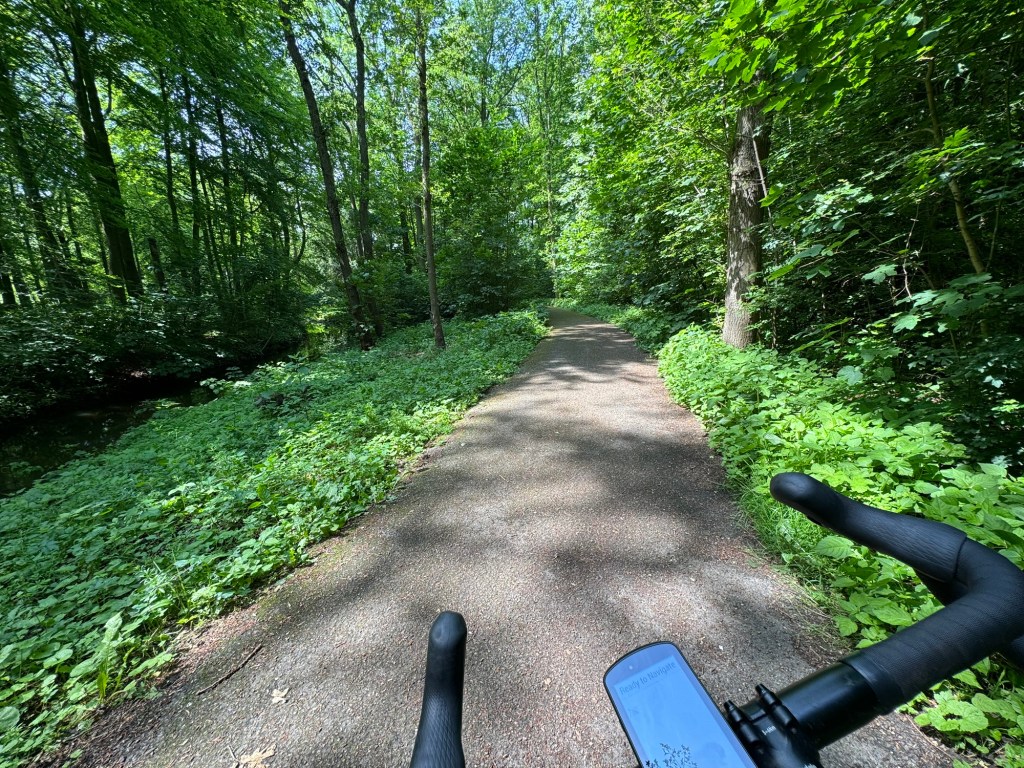
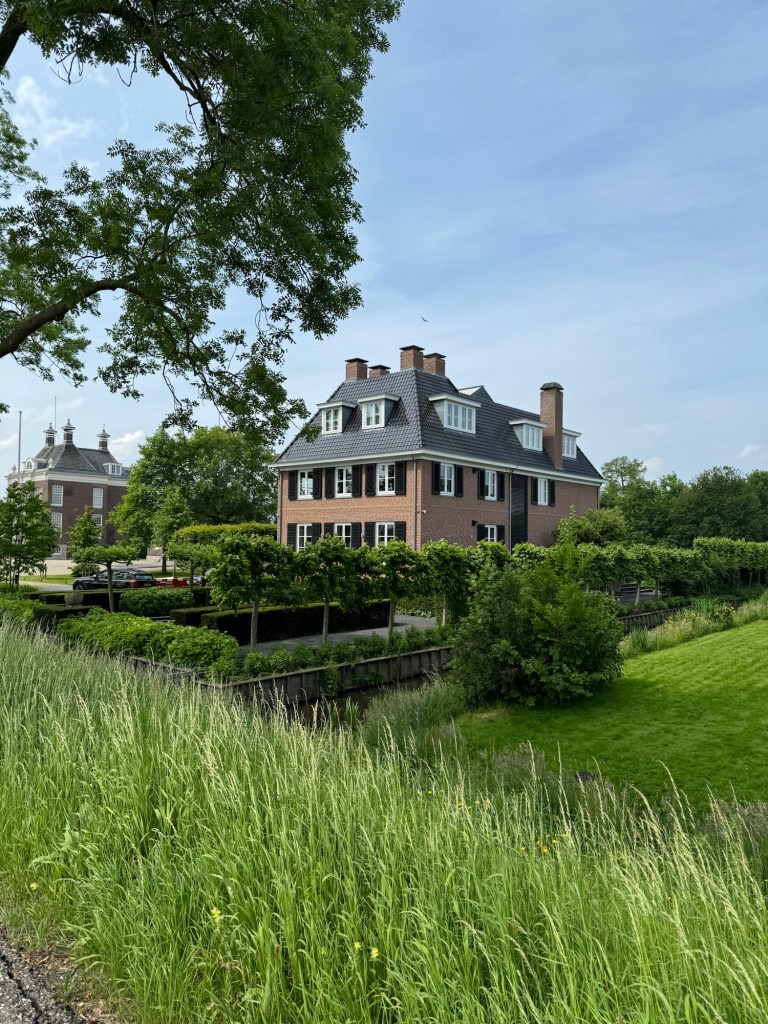
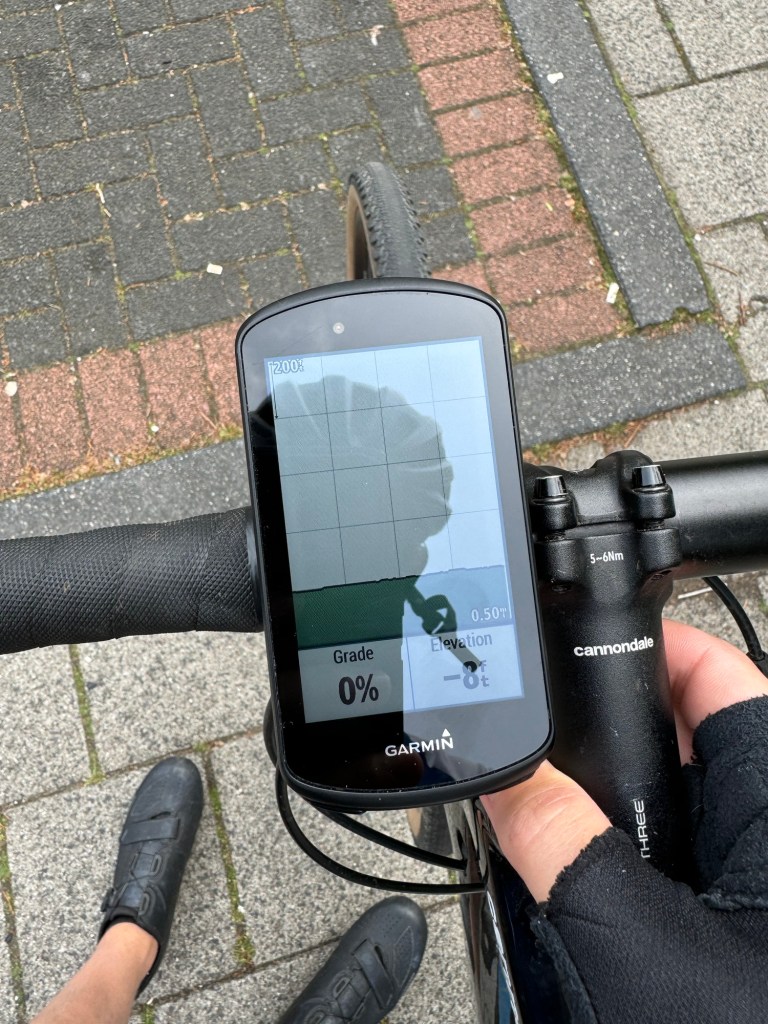
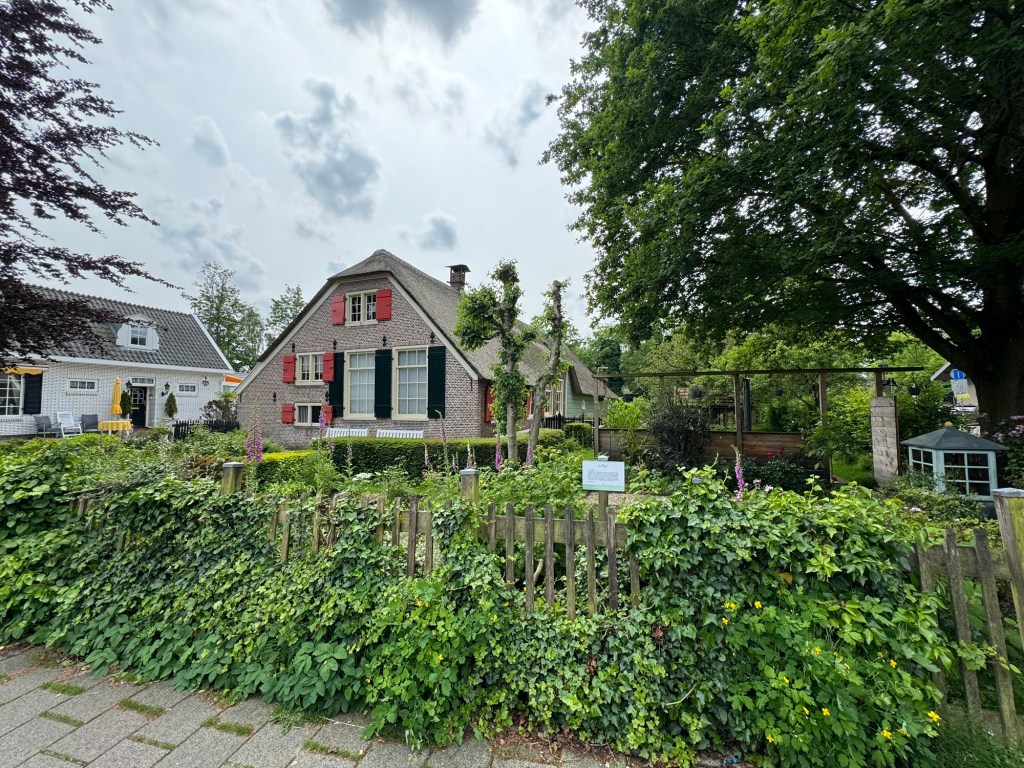
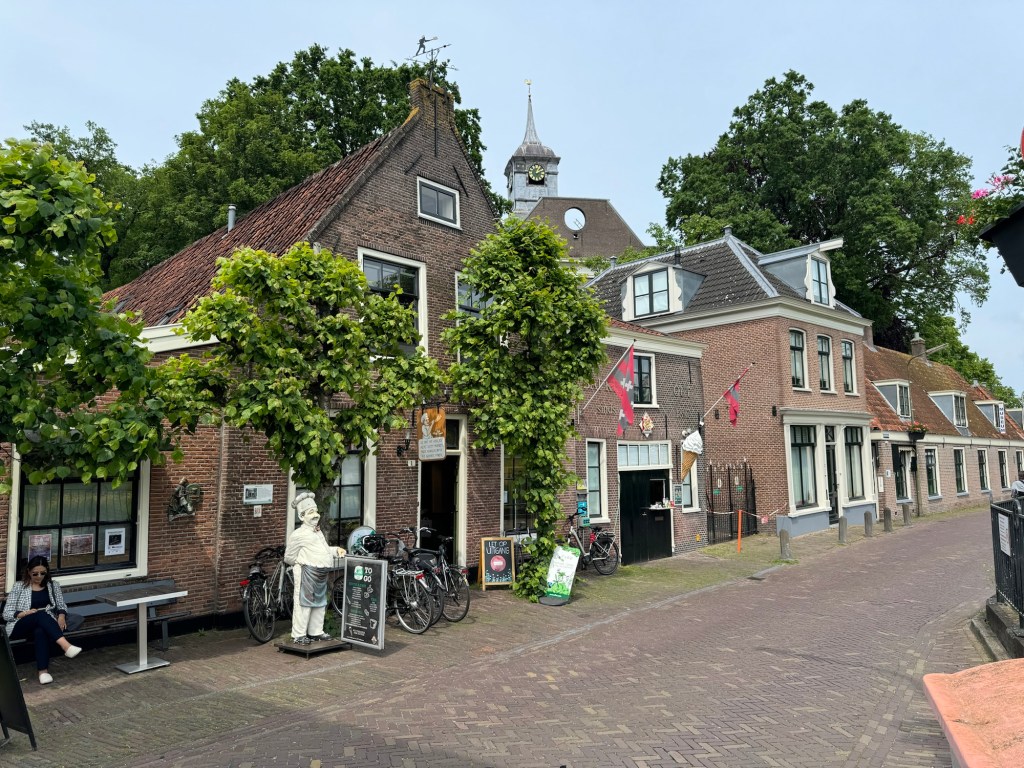
A pedestrian bridge cover one of the ubiquitous canals. Sidewalk, then bike path, then road. Kicking of my bike adventure. Typical bike parking. This sight is everywhere. On my long ride, I was never sharing a surface with cars for more than about 40 feet at a time. Signs along the bike network guide you to your destination. 60 was the number for the quaint village of Ouderkerk aan de Amstel (pics below), about 9 or 10 miles outside the city.I took a different route back to the city, following the river and waypoints 50, 57, and then 56, then I was back!Above is a major highway which would have separated me from the village. The underpass is nice, but there’s also a bike interchange above, allowing you to cross the river without ever going near the actual road. Riding through Amsterdamse Bos (Amsterdam Forest), a giant wooded park on the south side of the city. I won. I’d never ridden a gravel bike, the only reason I chose it was because the shop had full carbon gravel bikes but only aluminum for road bikes, and I’m a snob. But I’m so glad I did—I now get why people love them. The homes along the Amstel River are absolutely beautiful. I assume they are mostly weekend houses for wealthy people?Windmills of course. Worth a detour for a better pic. My elevation was negative for most of this ~three-hour ride, meaning I was riding on polders—reclaimed land that would naturally be submerged.. The windmills and canals are part of the system of dikes, levees, and pumps that keep Amsterdam above water. In Ouderkerk village. This appeared to be some sort of working historical farmhouse / museum.Apple pie at Bakker Out, a bakery open since 1897, is the traditional refuel for cyclists on this route. You can’t break with tradition.

















 sabbatiblog