I’ll cover about a day-and-a-half with this post to tie up the rest of the time I spent in Kyoto before heading to Sydney. We covered a lot, including seeing the the incredible torii gates at Fushimi Inari as well as the Nishiki Market, both of which have been photographed by so many talented photographers and bloggers so I’ll spare the additional photos and more on a few observations that leapt to mind while I was there.
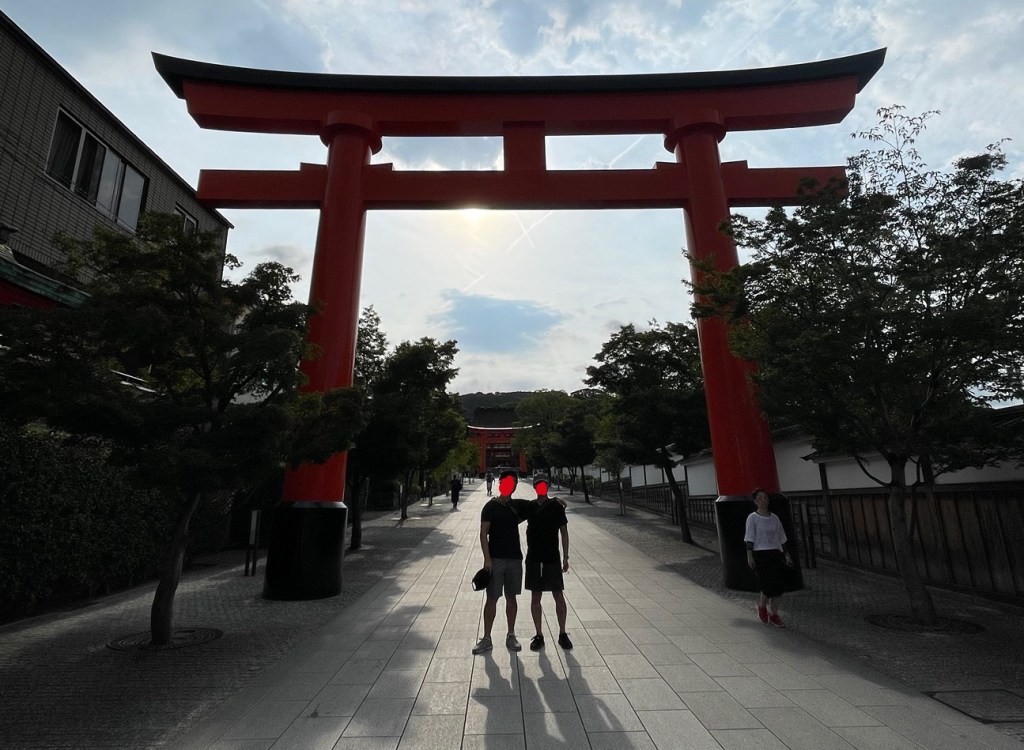
Don’t stop believing. In my first post, I reflected a lot about holding on to the principle of journey. At Fushimi Inari shrine, that principle seemed to come alive. With its estimated 10,000 Torii Gates (source: link), the shrine seems to invite you into a space that is in-between – inside a winding corridor but also outside and exposed to the elements, of this world but also of something else in warding off evil spirits, deeply spiritual yet also innately commercial with the names of people and business sponsors etched onto the back of each gate.

I found myself doing a lot of reflecting for myself while walking the path under the torii gates, of my own self being in-between, from where I came from and to wherever I will go. Each gate passed was a milestone (particularly in the heat, although the day we went was blessedly cloudy with a slight breeze), but also firmly pointing to the steps ahead to the next gate and all the subsequent ones to follow.
We talked about our lives and careers but also mused – with a small twist, the path around the shrine could easily become a nightmare. Imagine the repetition and the familiarity of passing gate after gate and if there was no end. The comfort of the familiar would take on a whole new light…
Waiting for the bus. In Chicago, I hate riding buses. I’ve had multiple times waiting to get home for the number 8 bus, getting ghosted by 40+ min, giving up and getting an Uber, only to have the bus saucily saunter up just as I’m getting in the car! 🤬
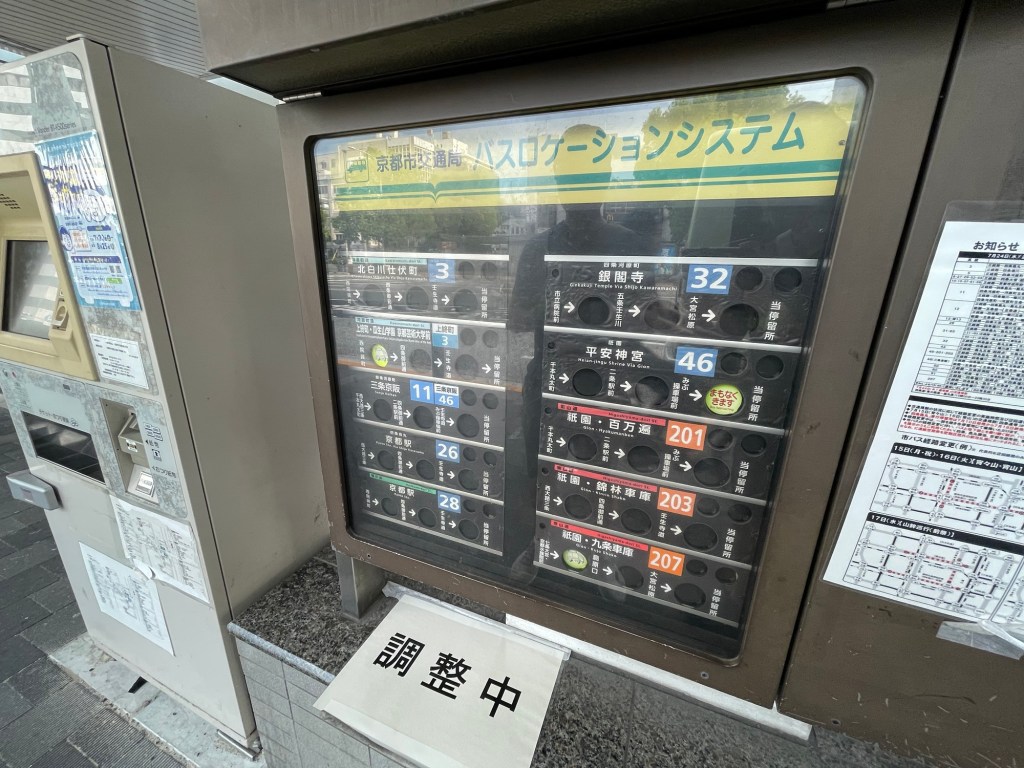
In Kyoto, that is not a problem because each station has a sign that forecasts when they will be arriving with these analog bus station signals for each bus. They flip up in real-time and – most importantly – are accurate.
Who needs GenAI/LLMs, when you have analog things like these that just work?
Finding new meaning in getting Lost in Translation. On my last half-day in Kyoto before heading to Australia, we went on a mission to find all the Kyoto sites that appeared briefly in Lost in Translation. TL;DR, we found the sites and I got super excited (yes, I am a bona fide nerd).
In Lost in Translation, Charlotte lightly jumps across stepping stones in a pond. The shot is beautifully framed, which was true to form when we got there. What I didn’t expect was how beautiful the surroundings are – the stepping stones are themselves located in a well-kept garden surrounding the Heian Shrine. To get there you walk on a small trail beside a small stream gently tinkling to the soundtrack of cicadas (on the level of cicada-pocalypse in the US), see serene lilies blooming quietly in a pond – then you get to the steps.

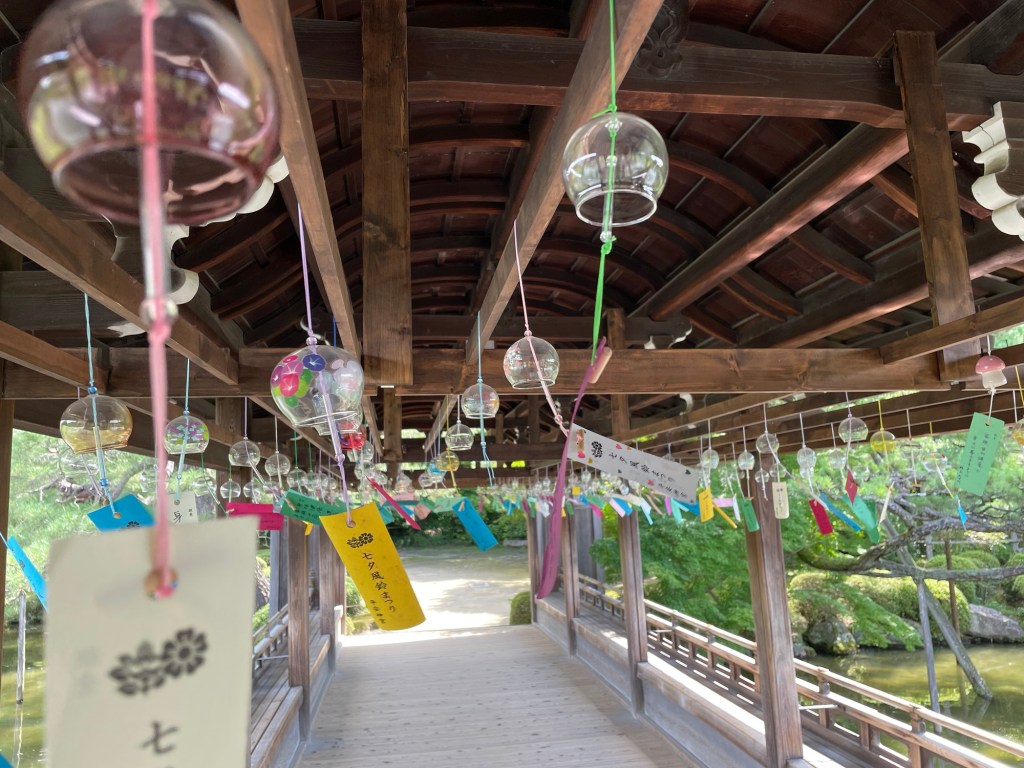
One of my favorite moments for the whole trip was then as we were finishing the walk around the garden, there is a small bridge that crosses over the pond. Hanging in organized rows on both sides of the bridge are what basically seem like glass “wishing bells” (I don’t know what the real word is, will look that up later). As we hung out there to take a few pictures, swig some water in the shade, the breeze kicked up – and the whole bridge came alive with the sound of these bells clinking gently with the breeze.
When I closed my eyes, I could hear the wind and the bells around me – and, for that brief moment, I felt surrounded by playful laughter and joy. It’s not like anything I’ve felt before.
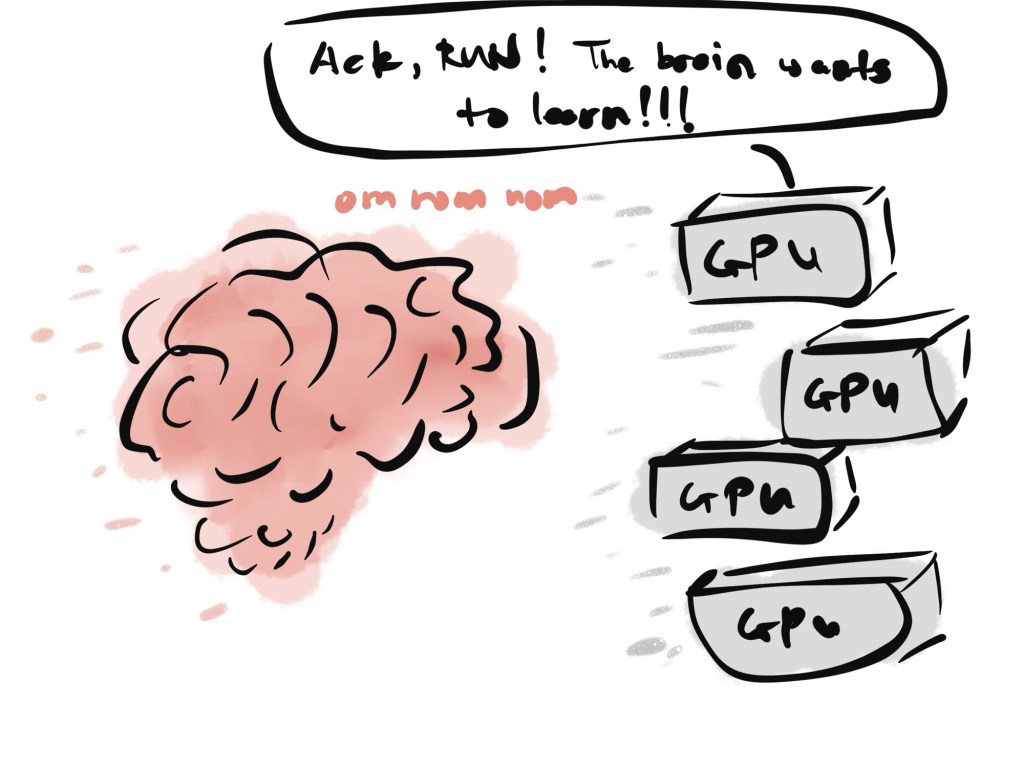
Disclaimer: No GenAI, LLMs, and/or Chatbot interfaces were used to write or assist in this post. Just the squishy neural network of my own brain.
 sabbatiblog