For someone who already loves cycling, doing it in Amsterdam for the first time is a peak experience. For someone who grew up in Amsterdam, you may be ruined for cycling almost anywhere else.
Only a city built before cars can have bike infrastructure so fundamental to its design. By comparison, Chicago, New York, and other US cities are maddeningly bad. It’s so easy to do this up front on streets built for people and horses, but so hard to retrofit streets built for cars.
The feeling of riding there is impossible to describe, it’s a different dimension, like skiing on ice your whole life and then discovering powder. It’s like visiting a new planet, where everyone is nice to each other all the time, and can’t imagine being mean. Here are my observations of what makes Amsterdam so special for cyclists:
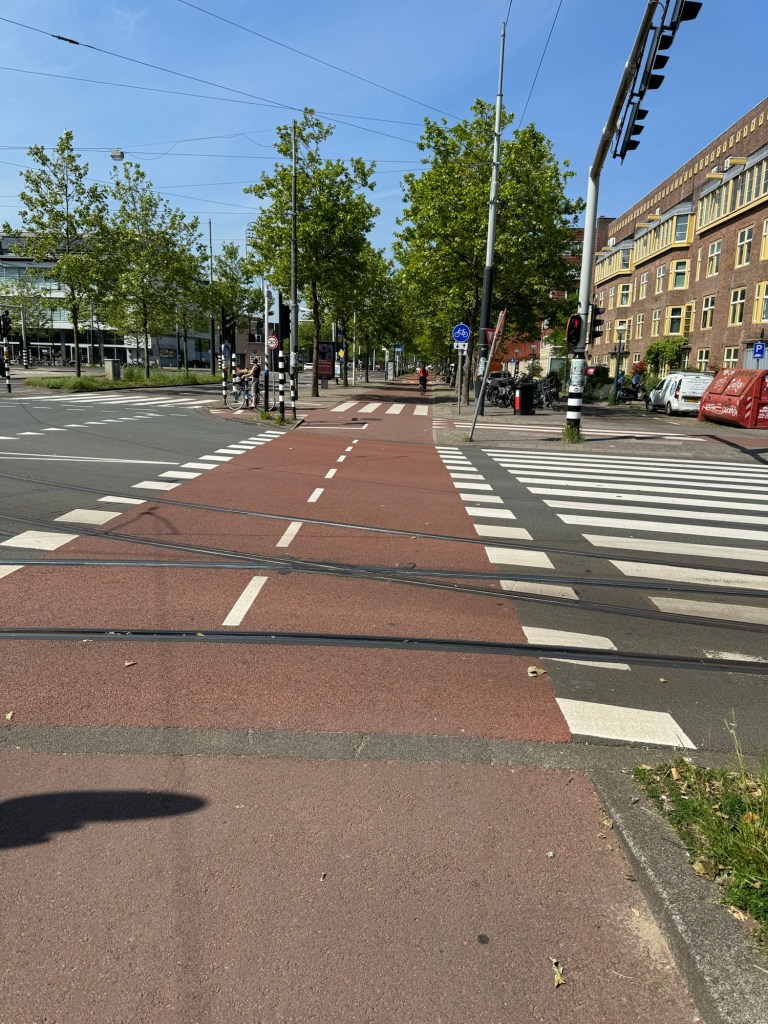
- Three levels, for each its own. In the second photo below, you see a typical street near the city center. The sidewalk, bike path, and road are three distinct surfaces and/or levels. It’s impossible to overstate the feeling of safety and ease this creates, when your entire ride, not just portions, are protected. And when the protected areas are not carved out of a road or sidewalk, but there by design.
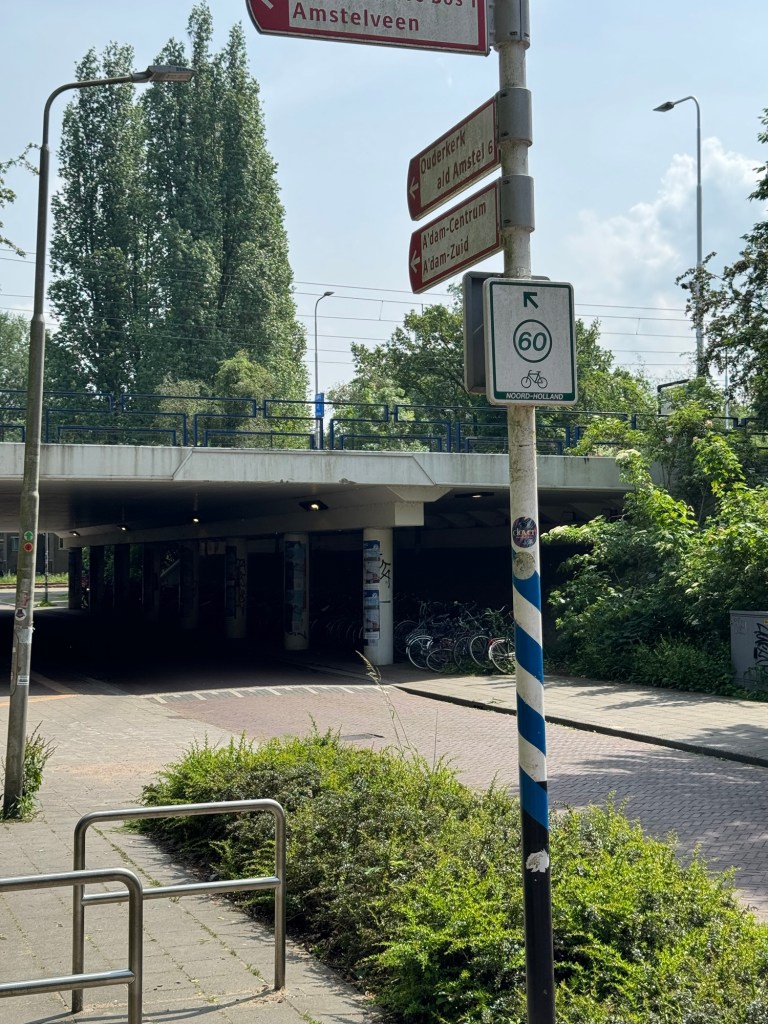
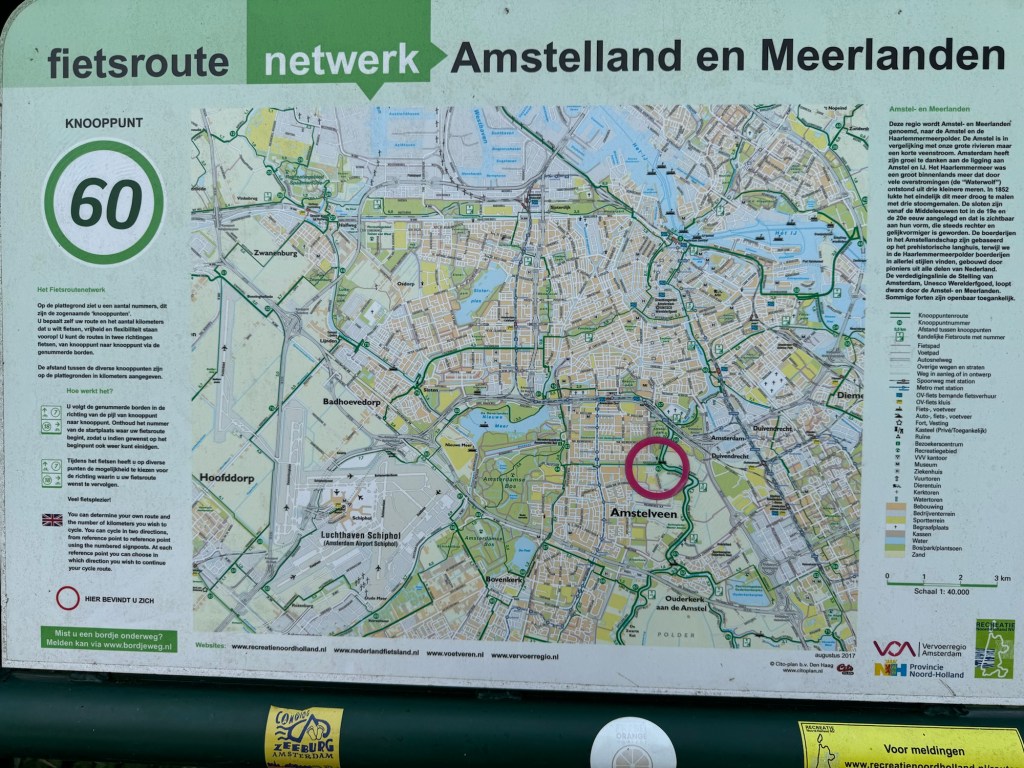
- Bike grid and handy maps. Also pictured below, you can see the fietsroute (bike route) system, where major destinations are numbered, and highly visible signs guide you along your route. Major intersections and numbered destinations have large, easy to read maps, to help you find your next waypoint. Once you have it, just follow the signs with your number, and go!
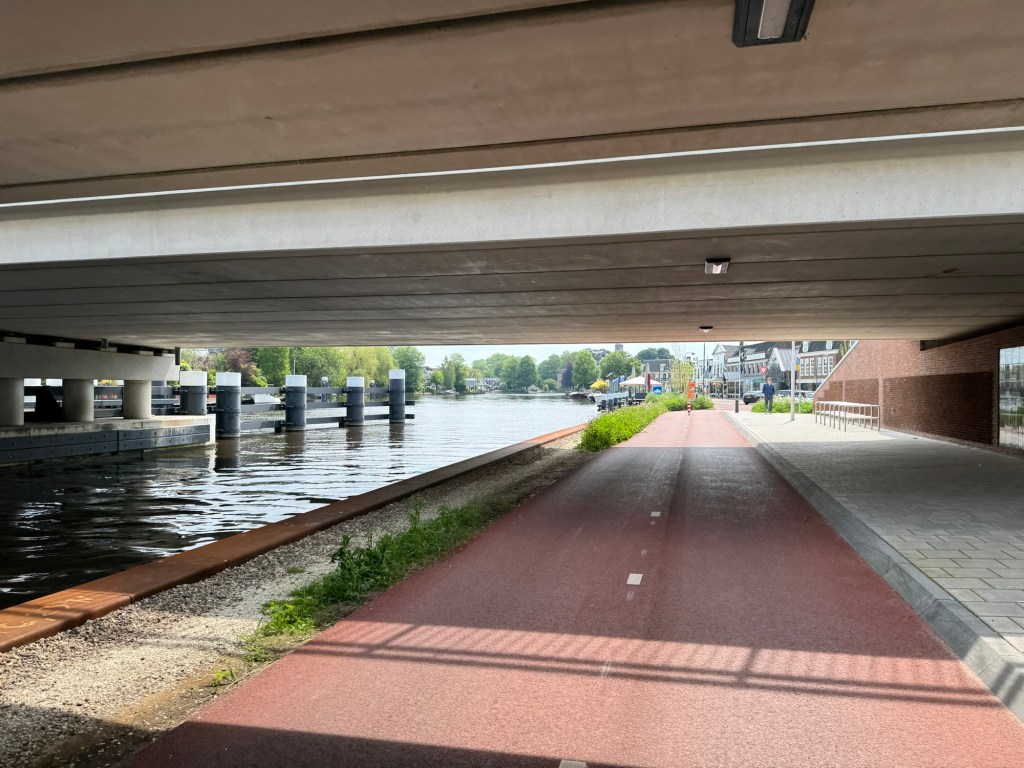
- Ped&bike bridges and interchanges. Most canal crossings are pedestrian and bike only, and along the greenway bike routes, all highway crossings have dedicated interchanges always separate from the road. Again, the feeling of safety is so pervasive that it feels like you’ve been doing something wrong most of your life.
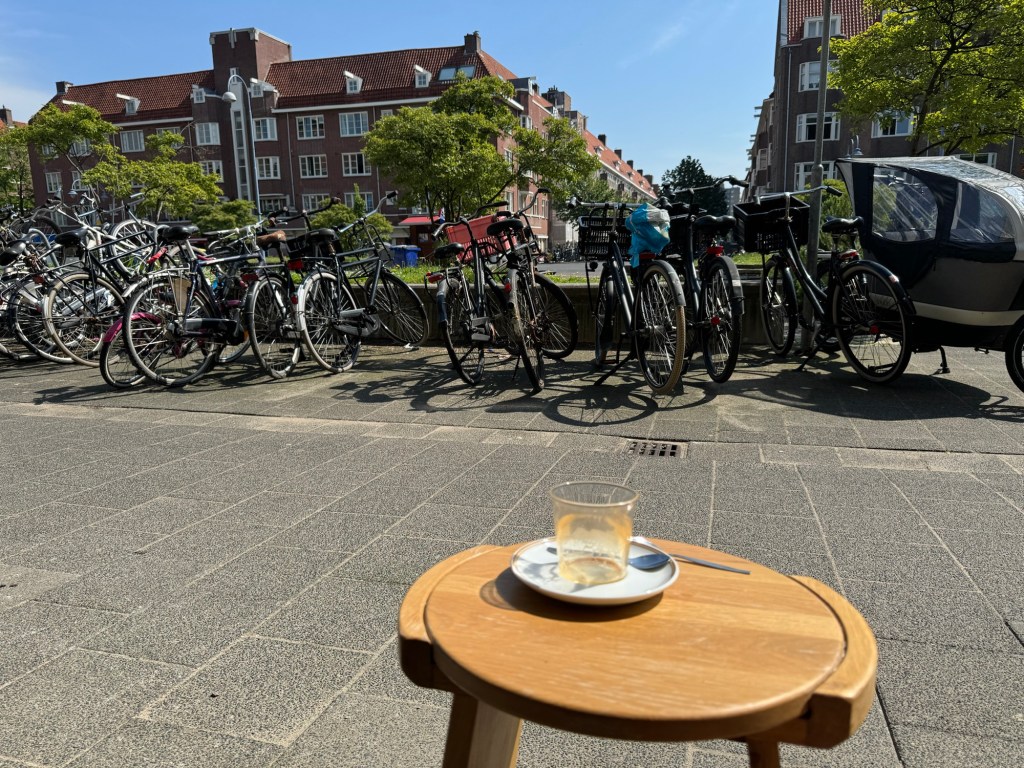
- Strength in numbers. Cyclists and bikes are just everywhere. Hundreds are bikes are parked in busy areas and tourist destinations. You can spot a tourist because we’re the only ones who forget to check before wandering across a bike lane.
- Bikes of all shapes. Cargo bikes, commuter bikes, road bikes, cruisers, and any thing else you can think of. The Urban Arrow style of commuter bike is super common, and it’s a happy feeling to be constantly passing by moms and dads touting kids. I saw a pair of guys riding with full sets of golf clubs on their backs.
- Streets are for people. In the city, cars really do feel like visitors with precarious status. They drive gingerly, inching through intersections and around corners, giving people, bikes, scooters, trams, and strollers the right of way. Many cars are miniature. I felt wrong calling an Uber to pick me for the airport, and I wasn’t even certain it would be able to reach me because I’d seen so few cars on my street.









 sabbatiblog